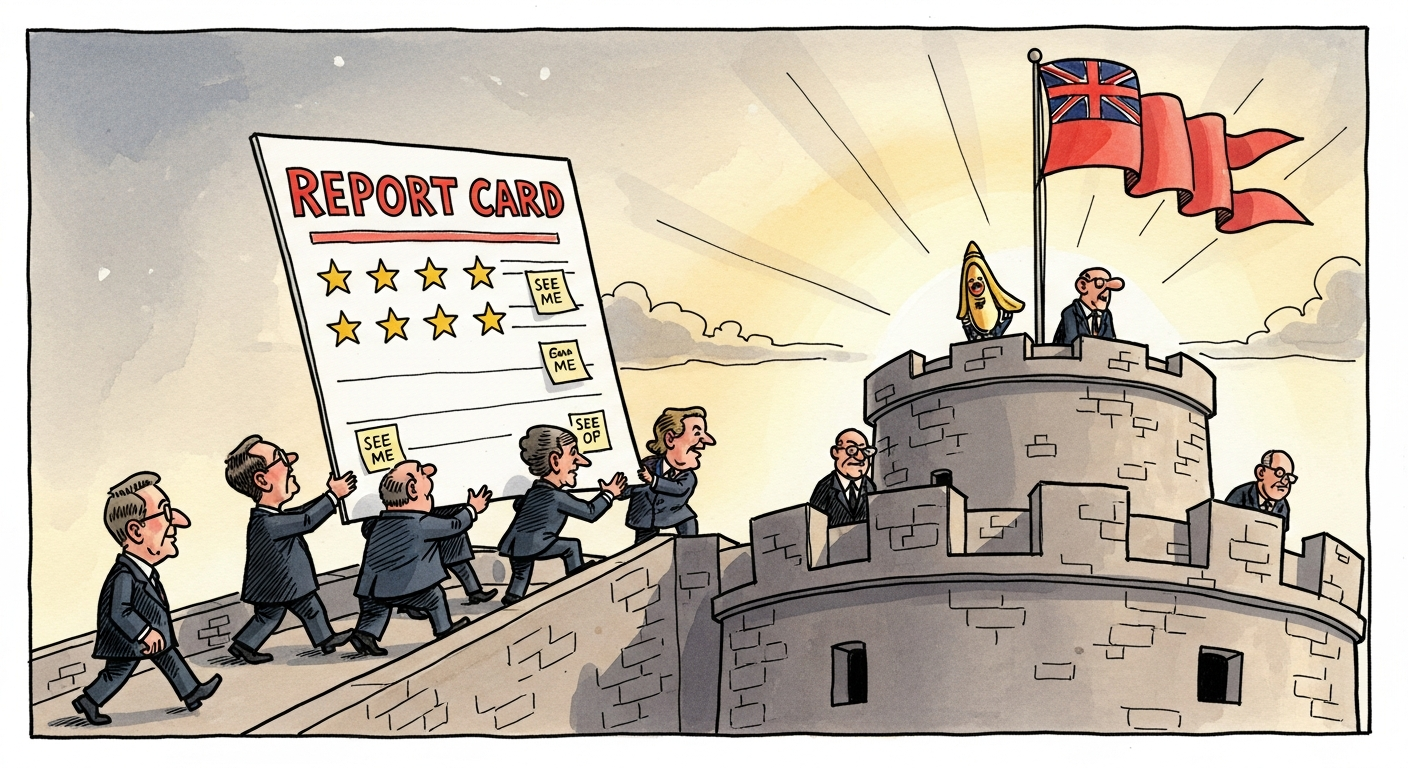
An Independence Day address from the Red Fort is a report card whose author also assigns the grades, and every government reaches for the gold stars. With three weeks to the ramparts and the milestone-setting speech already being drafted, the useful exercise is not to predict the boasts — those write themselves — but to ask a harder question: what would the speech say if the data held the pen, and where would the numbers refuse to give the marks the podium wants?
Start with where the data would happily agree, because on several fronts it genuinely would. The macro report card is strong and not spin: inflation at 3.9 percent after an oil-war quarter that could have wrecked it, a record investment quarter with the Japan corridor compounding, a policy-continuity premium that has global capital treating India as a ten-year bet rather than a two-year hedge. A government that claimed macro stability as its signature achievement would be claiming something the numbers actually support, which is rarer in Independence Day speeches than one might hope.
The manufacturing story earns real marks too, with a caveat the podium will omit. The first chip-packaging line shipping commercial units and the fab running its second lot are genuine milestones — India is fabricating and packaging silicon on its own soil for the first time — and the electronics exports past $45 billion are the downstream proof. The caveat the data would insist on is that the fab's yield curve, not its ribbon-cutting, decides whether this becomes an industry, and a speech that declares semiconductor victory would be grading a course that is only two lessons in.
Defence and diplomacy would get strong marks with an asterisk. The export order book going global, the Mk1A in squadron service drawing its first foreign inquiry, the Muscat machinery turning a regional crisis into a managed corridor — these are real, and they map a coherent strategy. The asterisk the numbers would add is delivery: an order book is a promise, a recovered Mk2 timeline is not yet a flying aircraft, and a diplomatic footnote is not a settlement. The achievements are genuine; several are also still in progress, and honest grading marks the difference.
Then the subjects where the data would withhold the star the speech will award anyway. The GST reset is a bold reform, but whether it reaches the household or stops at the shelf is unknown until the pass-through is tested through the festival quarter, and a speech claiming the consumer win in advance is grading an exam not yet sat. The welfare redesigns are smarter than their predecessors, but their success lives in refill logs six months out, not in enrolment counts three weeks from now. The data's verdict on both is the same: promising, unproven, ask again in October.
And the subject the speech will handle most carefully, because the numbers there are political rather than economic: delimitation. The census machinery is demonstrably ready, which the government will say; the federal settlement that makes a population-faithful redraw fair is not yet struck, which it will not. An honest report card would grade delimitation "incomplete pending a bargain," and the distance between that grade and the triumphant version is the distance between governing and campaigning.
What the data-written speech would ultimately say is that this is a government with a strong, genuine record on stability and capability-building, and a set of large bets — tax, welfare, chips, delimitation — whose grades are not yet in. That is a more impressive report card than the all-gold-stars version, precisely because it is credible, and a government secure in its real achievements would not need to pre-grade the unfinished ones. The ramparts, of course, rarely reward that kind of restraint.
The value of grading honestly is not modesty for its own sake — it is that an unproven claim, asserted too early from the highest platform, becomes a hostage. A government that declares the tax cut a consumer win before the festival quarter tests it owns the failure if the pass-through stalls; one that claims the semiconductor victory before the yield curve matures owns the embarrassment if the ramp slows. The disciplined move, for a government with a record this genuinely strong, is to bank the achievements that are real and frame the large bets as bets — ambitious, in progress, to be judged on delivery. That framing is not weakness; it is the confidence to let unfinished work be unfinished, and it is the single hardest thing to do from a rampart three weeks before an anniversary, in front of a country that came to hear certainties rather than honest incompletes.
The speech is three weeks out and the drafts are circulating. We will read what is said from the Red Fort against what the numbers actually support — the gold stars and the see-me notes alike — on our India desk.



