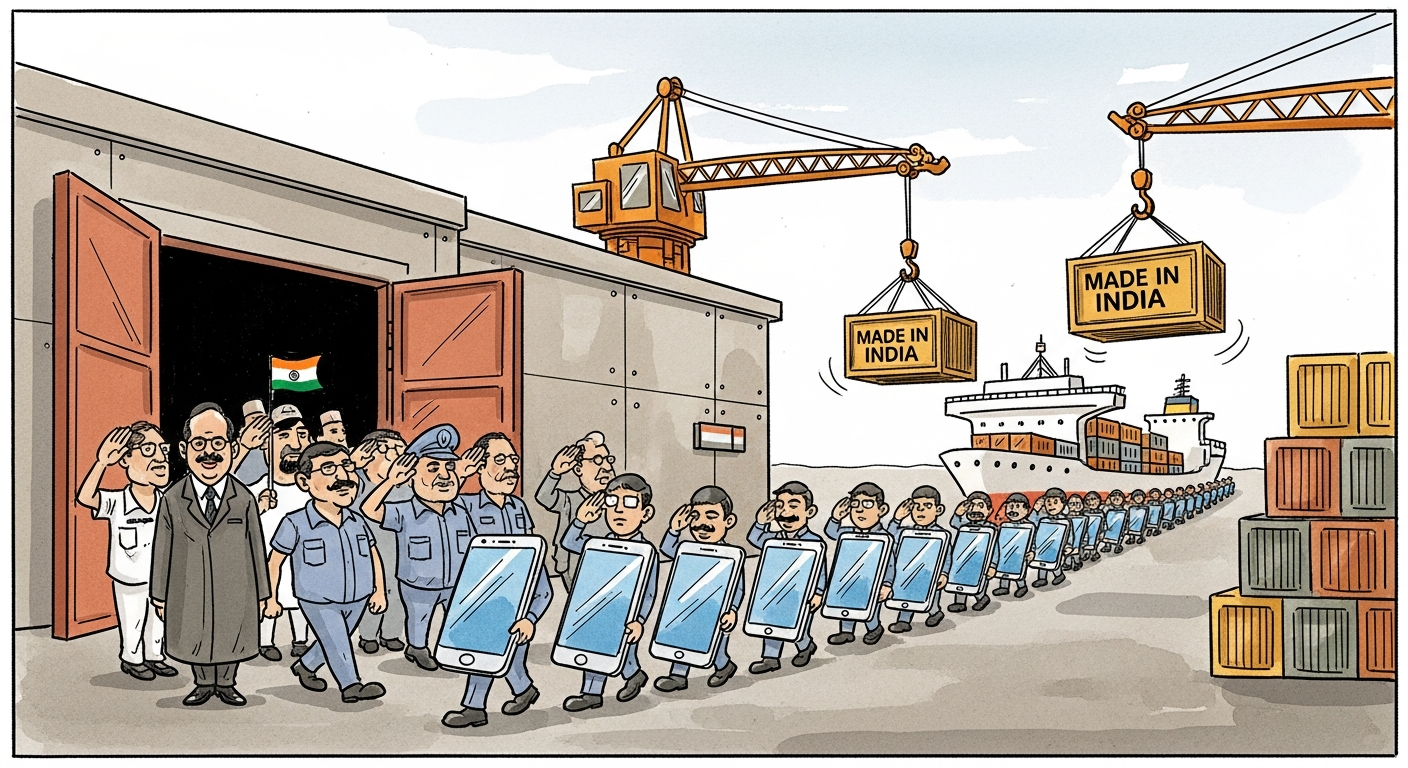
Electronics exports crossed a $45 billion annualised run-rate in the June quarter, the commerce ministry's trade data shows — a number that would have been dismissed as fantasy when the production-linked incentive scheme launched to a chorus of scepticism five years ago. The critics' catalogue — subsidy-chasing assembly, screwdriver plants, import-dependence merely relocated — has gone conspicuously quiet, and the quarter's composition explains why.
Smartphones still lead, but the mix has deepened in precisely the way the scheme's defenders promised and its critics denied. Component exports — displays, camera modules, chargers, PCBAs — grew faster than finished devices for the fourth consecutive quarter. The localisation share of India-assembled flagships has climbed from the mocked 'box and screws' teens into the mid-thirties. And the server and telecom-gear lines added under PLI 2.0 shipped their first meaningful export volumes this quarter, diversifying a story that was once one American company's supply-chain decision.
Dholera's test wafers connect the last arc. Mature-node chips — the power management and display drivers every assembled device imports today — are exactly the fab's first product lines, contracted to the assembly ecosystem the PLI built. The scheme that started at the final screw is walking backward up the value chain on schedule.
The fiscal accounting, the critics' last redoubt, has inverted: disbursed incentives across the scheme's life now stand against export earnings, direct employment past a million, and a tax base the two-slab GST will harvest more cleanly.
Industrial policy's global rehabilitation has many fathers — chips acts, green deals. India's version was earlier, cheaper and paid on output. The run-rate is its receipt.
