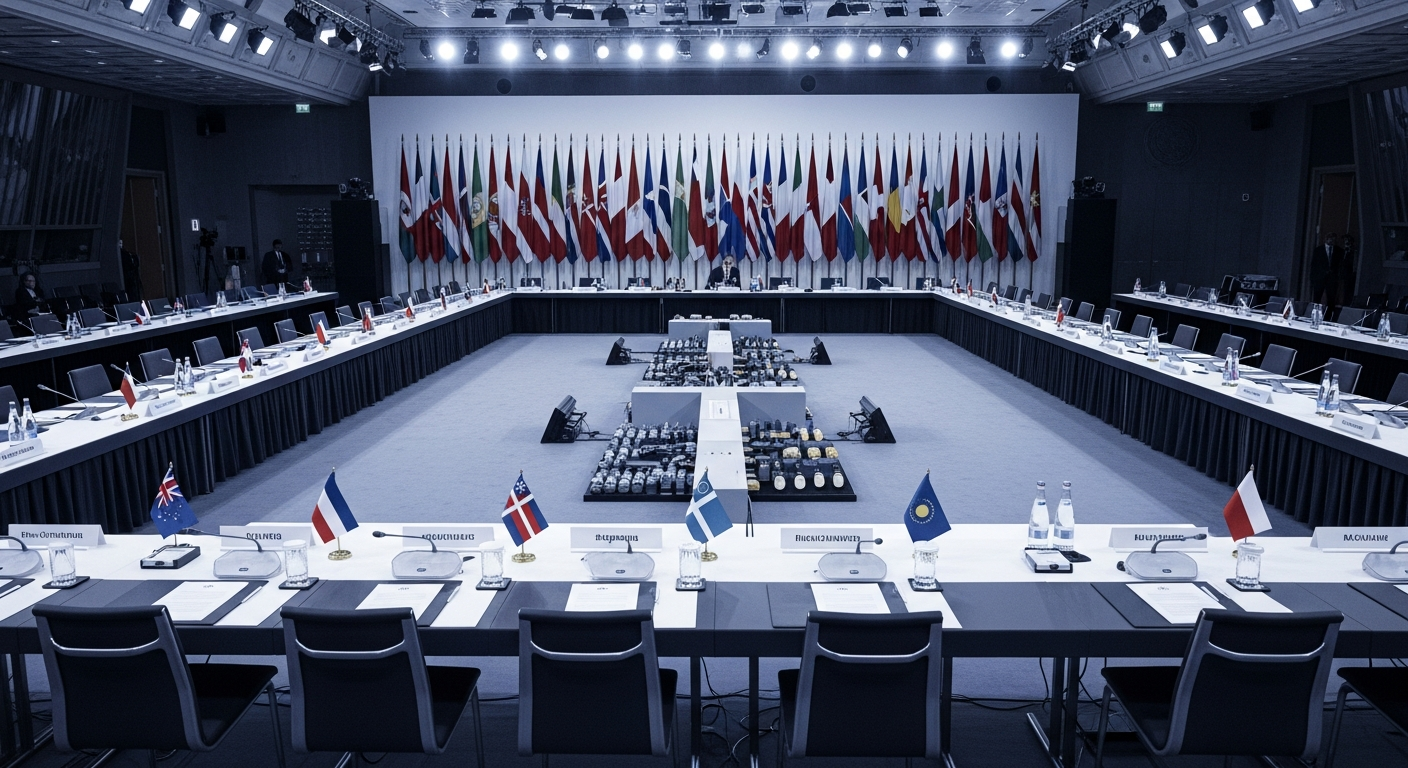
The third round of Omani-mediated talks between Iran and Israel concluded Friday with the outcome participants had signalled all week: no agreement on substance, standing machinery to keep disagreeing safely. Five working groups — corridor permanence, strike-cessation verification, the nuclear file, sanctions sequencing, proxy limitations — will meet on fixed calendars through the autumn.
The round's one hard deliverable is the decoupling. The Strait of Hormuz corridor's December mandate renewal is now formally insulated from progress on every other file — the item each side needed protected from its own brinkmanship. Iranian negotiators had spent two rounds linking renewal to sanctions relief; the retreat, Gulf diplomats say, followed a blunt accounting of who loses first when the lane closes: Iran's own oil exports move through the corridor its rhetoric threatened.
The verification group inherits the hardest file. Eleven weeks of ceasefire have produced three recorded violations and three competing attributions; the group's mandate — a joint incident-review cell with third-party technical staffing — imports the corridor's most successful feature, the UN coordination cell, into the war's most contested domain.
India's equities ran through the round without India at the table. Sixty percent of its cooking gas and half its crude transit the lane the decoupling protects; two Indian frigates sail in the escort rotation the mandate funds; and the diaspora west of the strait — whose March panic moved remittance markets — constitutes a domestic constituency for exactly this outcome: a truce boring enough to bank on.
The rounds resume in September. Nobody in Muscat used the word peace. The word the closing statements shared was 'predictability' — the commodity the region has been shortest of, and the one the working groups are designed to manufacture.