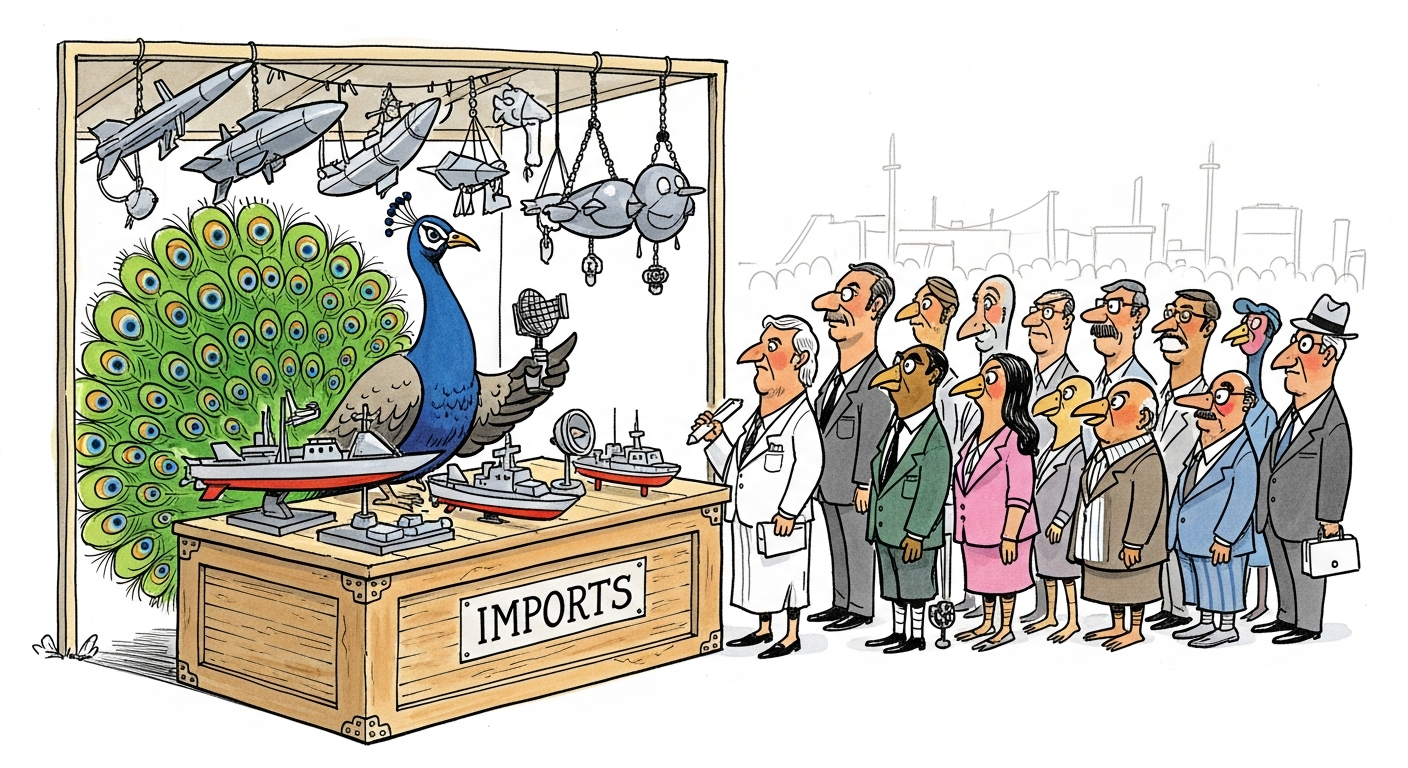
Defence exports crossed ₹30,000 crore in the last financial year, the ministry confirmed this week — a tenfold rise in a decade — and the current order book suggests the number compounds: the BrahMos follow-on for a second Southeast Asian customer, the Akash system's West Asian contract entering delivery, artillery and radar lines sold across three continents, and the naval laser whose Malabar Shield intercepts generated, per the ministry, 'commercial follow-up from three participating and two observing navies'.
The transformation's structure matters more than its headline. A decade ago Indian defence exports were spares, small arms and goodwill; today's book is systems — the missiles, radars and electronic-warfare suites that carry margins, service tails and strategic relationships. The customer map tells the same story: Southeast Asian states pricing Chinese pressure, Gulf states diversifying after the war, and European buyers whose rearmament outran their own production lines.
The pipeline behind the book is the domestic build-out working as designed. The Tejas supply chain's 60-percent indigenous content is also an exportable vendor base; the emergency wartime orders that surged production lines created the spare capacity export contracts now absorb; and the war quarter itself became an involuntary trade show — systems demonstrated under fire price differently from systems demonstrated at expos.
The honest asterisks stand: ₹30,000 crore is a tenth of the leader board's entries, engines and high-end sensors remain imported, and export licensing must navigate end-use politics the established sellers finesse with practice India lacks.
But directionality is destiny in defence industry, and the direction has reversed. The world's largest arms importer built an arms industry by buying from itself first. The order book is what happens next.