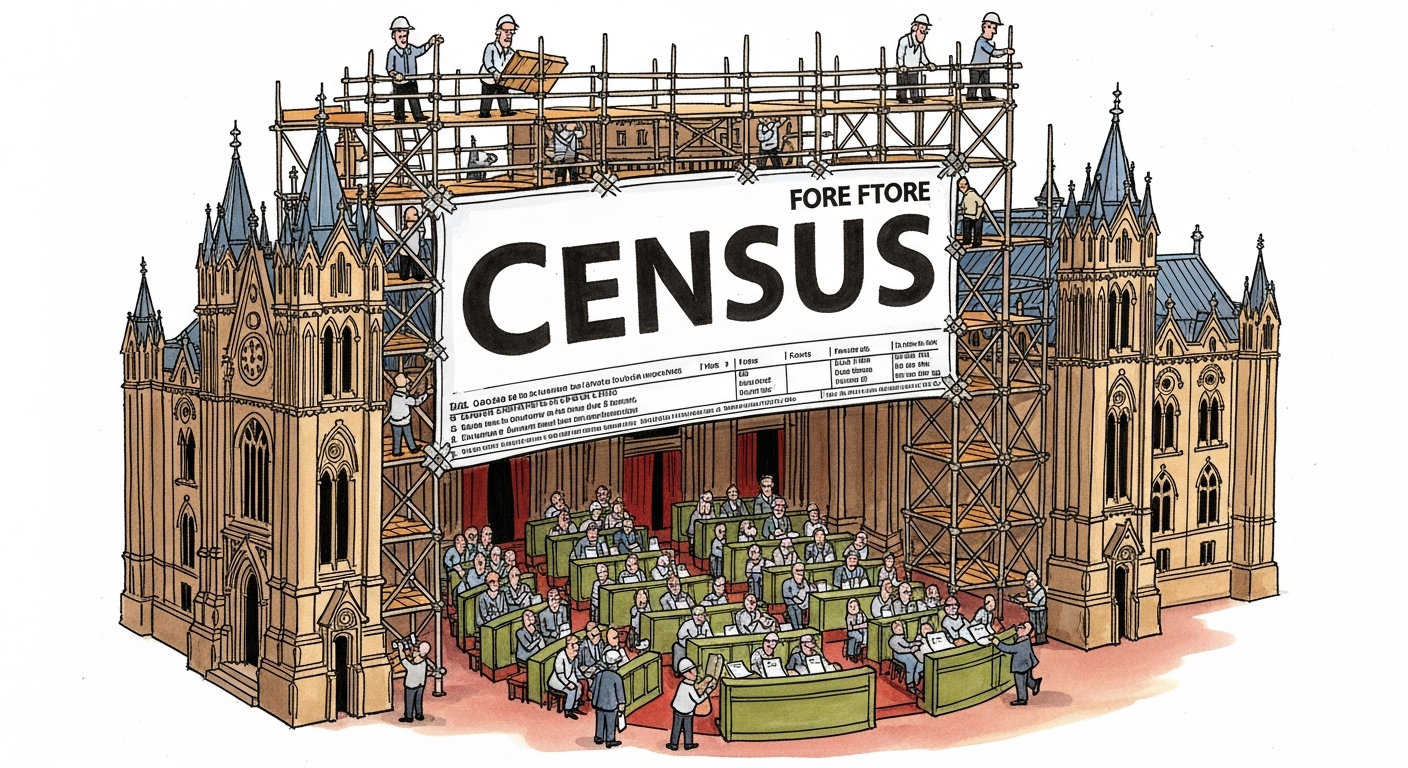
The most misleading word in Indian politics this year is 'sabotage' — the opposition's preferred description of a bill whose purpose is to let the Lok Sabha reflect the country it governs. Strip the rhetoric and the delimitation project is maintenance: the routine democratic upkeep that every comparable federation performs each decade, and that India suspended in 1976 as a temporary measure now approaching its second half-century.
The arithmetic of the freeze is the scandal nobody defends on its merits. A member from Uttar Pradesh answers to two and a half million citizens; a member from a southern state to under a million and a half. Equal citizenship, the constitutional promise, has quietly become a function of postcode. No principle of federalism requires that a Bihari's vote weigh less than anyone else's — and it says something that the freeze's defenders argue consequences, never principle.
The government's revised bill answers the consequences honestly. No state loses a single seat — the 850-member house absorbs all rebalancing. The women's-reservation schedule rides on the same timeline, now in justiciable statutory text. And the whole package sits before a joint committee where every objection, southern dilution included, gets a drafting table instead of a walkout stage.
The South's real anxieties — fiscal weight, Rajya Sabha balance, the reward-for-good-governance argument — deserve engagement, and the committee's terms of reference contain the instruments for it: the review clause, the upper-house examination, the weighted-formula evidence the committee may take.
What they do not deserve is a veto dressed as victimhood. Democracy's first arithmetic is one person, one vote, one value. A parliament that fears counting its own people has forgotten whose house it is.
