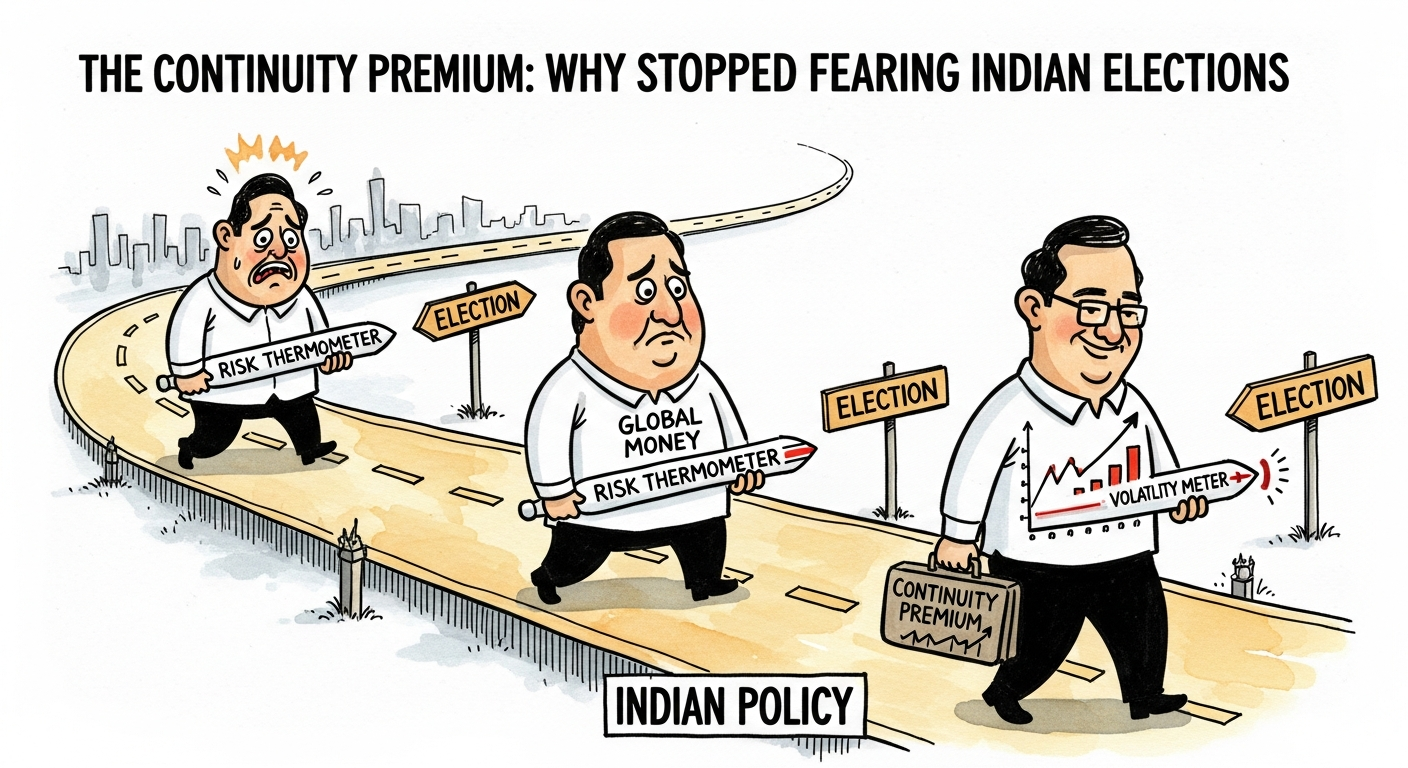
Every emerging market carries a discount for the question "what if the policy reverses?" India's, the record quarter's board minutes suggest, has quietly compressed to zero — and that is a bigger story than any single deal.
The evidence is behavioural. The battery complex that scored India highest on "regime unchanged across three elections." The fab consortium citing the PLI's "multi-cycle consistency." The war-quarter stress test — a blockade answered with excise calibration rather than expropriation reflexes — read by risk committees as character evidence.
The mechanism is dull and cumulative: GST always simpler, PLI always output-paid, insolvency code intact through three parliaments, digital rails compounding. Reversals, not rates, were the historic enemy; the reversals stopped.
The comparison shop matters too: rules-lawyered tariffs in the West, sovereignty-priced capital from China. Predictability became scarce globally exactly as India accumulated a decade of it.
Premiums return the moment they are taken for granted — one retroactive tax would reprice everything. Continuity is an asset precisely because it is always one decision from worthless. Analysis continues on the economy desk.