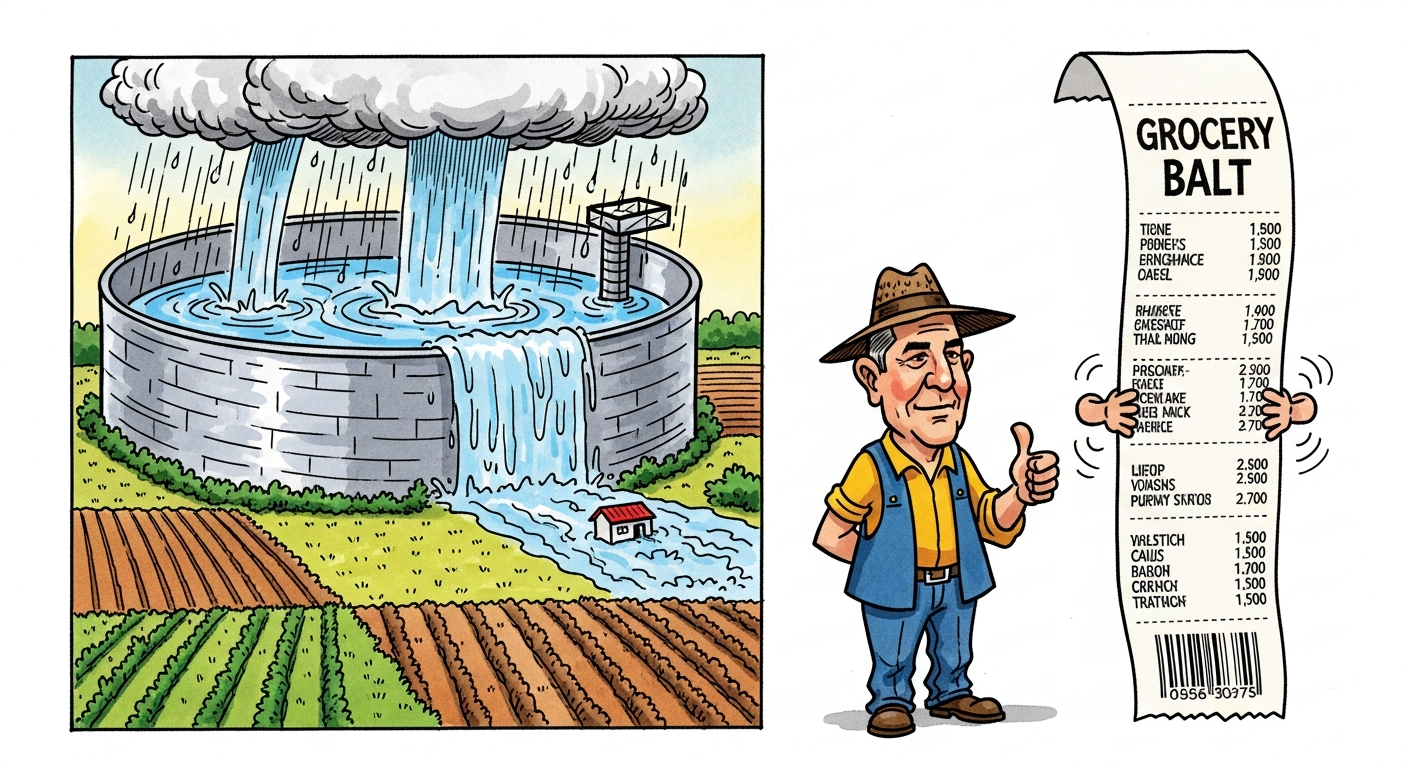
Forget the central bank for a second. The single most powerful force in what you pay for food is the rain — and this year it has behaved. Reservoirs have filled close to schedule, and that unglamorous fact is worth more to your monthly budget than most policy announcements.
Storage matters more than rainfall because it forecasts further. Full reservoirs mean the winter crop has its irrigation base already secured, which turns the price relief from a one-quarter reprieve into a two-season outlook. It is precisely why rate-setters read reservoir data so closely — and why the committee felt safe cutting.
The composition is the good part. Softening food prices alongside firm rural wages tilts the terms of trade toward the farmer — producer and consumer both gaining, a rare alignment that usually pulls in opposite directions. Rural inflation running below urban is the statistical fingerprint of it.
Now the caution, because agriculture punishes optimism. A good first half can still be undone by a dry August, a flood at the wrong moment, or a pest cycle no acreage number can see. The flood risk on the eastern rivers is a standing reminder that "on schedule" in July is a promise, not a delivery.
There is also a question of who captures the gain. Abundance is unambiguously good for the shopper but can cut the grower's realisation unless procurement holds the floor — a bumper harvest that empties the farmer's returns is a political problem wearing an economic success's clothes.
Check your basket in October. That is when the rain becomes rupees. On our economy desk.