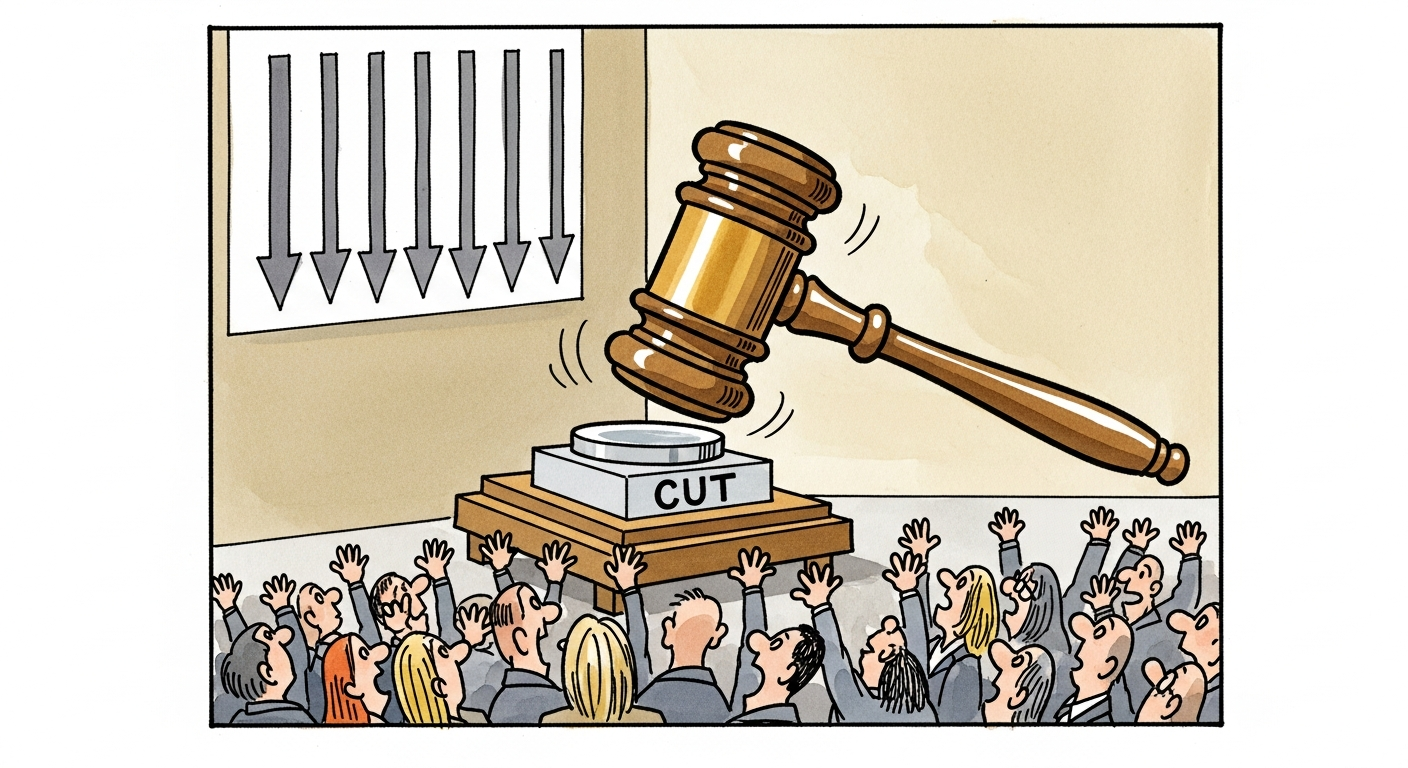
The Monetary Policy Committee did the thing the data had spent a fortnight demanding, and cut the policy rate by 25 basis points. After inflation printed at 3.9 percent, deposit costs crested, and the opening bank results showed credit growing in the mid-teens, a hold would have been the harder decision to defend.
The transmission worry that has stayed the committee's hand before had already weakened. A cut evaporates into bank margins only when funding costs are still climbing; with deposit competition past its peak, the reduction has a clear path to the borrower. The banks that report the economy before the statisticians do had, in effect, pre-approved the move.
The language mattered more than the number, and the committee left the door open. Rather than signalling a one-and-done, the statement framed the cut as a response to a durably benign inflation outlook — the August window logic extended — while flagging unsecured retail credit as the one place it wants supervisory caution rather than a policy brake.
Markets had moved the probability past eighty percent within an hour of the earnings, so the rate itself was close to priced. The repricing on the day was in the forward curve: the swaps market now reads a shallow easing cycle rather than a single gesture, and the policy-continuity premium that keeps global money comfortable in Indian assets did the rest.
The real-economy read is the part that compounds. A cut delivered into the September tax reset and a festival quarter is a cut aimed at consumption precisely when the machinery to spend it is being assembled. The committee has bought the economy room; whether the room is used shows up in the credit data through the autumn. Coverage continues on our economy desk.