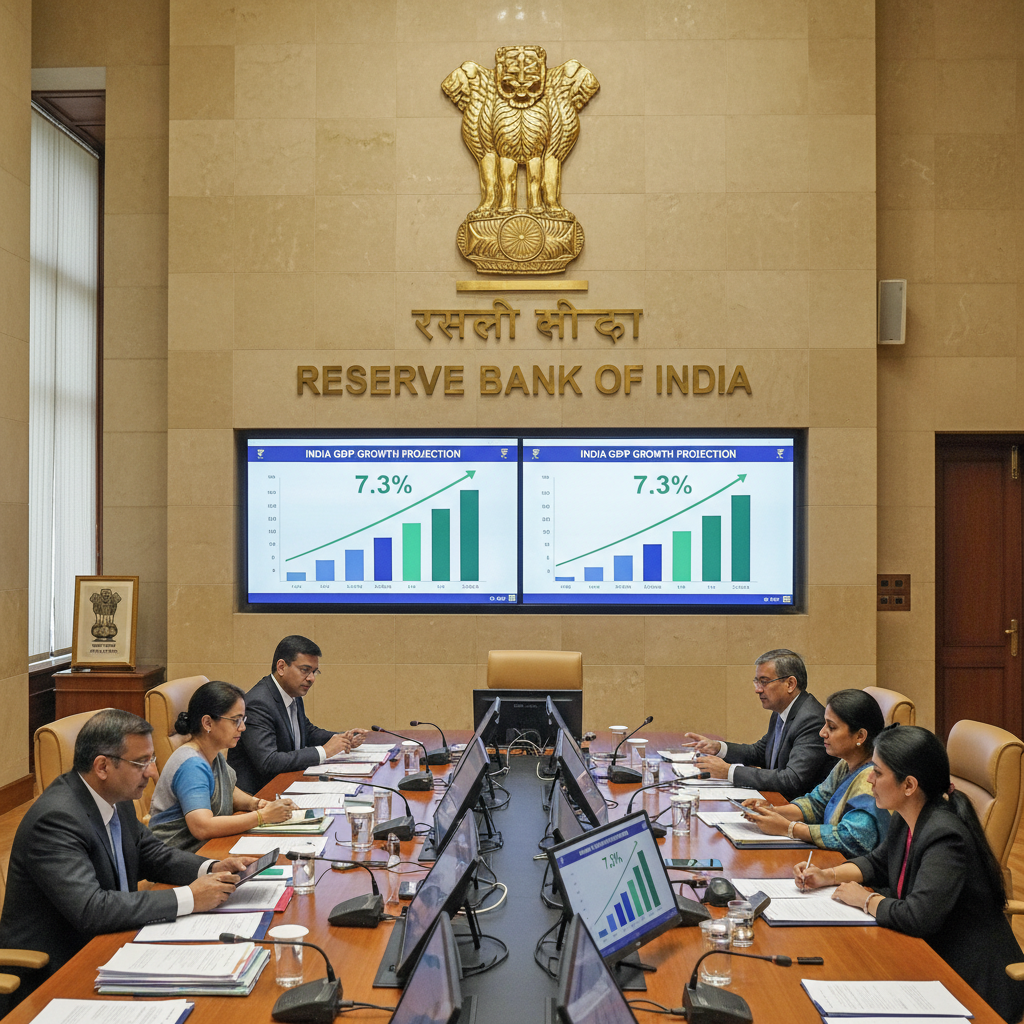
The Reserve Bank of India has substantially revised its growth forecast for the Indian economy, projecting GDP expansion of 7.3% for fiscal year 2025-26, marking a significant upgrade from its earlier estimate of 6.8%. The upward revision reflects the central bank's growing confidence in the country's economic resilience and the strength of domestic consumption patterns that continue to drive growth despite global uncertainties.
The revised projection comes on the back of impressive economic performance, with real GDP expanding by 8.2% in the second quarter of fiscal year 2025-26. This robust growth rate underscores the economy's ability to maintain momentum despite headwinds including geopolitical tensions, supply chain disruptions, and volatile commodity prices that have affected global markets.
KEY FACTS
- GDP growth forecast revised upward to 7.3% for FY 2025-26 from 6.8%
- Real GDP expanded by 8.2% in Q2 of FY 2025-26
- India projected to achieve USD 7.3 trillion GDP by 2030
- Target to reach high middle-income status by 2047
- Growth driven by strong domestic demand and moderating inflation
The RBI's optimism is anchored in several key economic indicators that point toward sustained growth. Strong domestic demand remains the primary engine driving the economy, with consumer spending patterns showing resilience across urban and rural markets. This internal consumption strength has proven crucial in maintaining economic stability when external demand from major trading partners has shown signs of weakening.
Moderating inflation has created a favorable environment for both monetary policy and consumer spending. The easing of price pressures allows the central bank greater flexibility in its policy stance while providing relief to households that had been grappling with elevated costs of essential goods and services. This inflation trajectory supports the sustainability of the current growth momentum without triggering concerns about overheating.
The resilient financial system represents another pillar supporting the upgraded growth forecast. Indian banks have demonstrated improved asset quality and stronger capital positions, enabling them to support credit expansion necessary for sustained economic growth. The banking sector's health provides confidence that financial intermediation can effectively channel savings into productive investments across the economy.
By The Numbers
India's growth trajectory places it among the fastest-growing major economies globally, with the country consistently outpacing most developed and emerging market peers. This performance is particularly noteworthy given the challenging global economic environment characterized by tightening monetary policies in advanced economies, ongoing geopolitical conflicts, and persistent supply chain vulnerabilities.
The upgrade in growth projections aligns with India's broader economic aspirations and development goals. The country is projected to achieve a GDP of USD 7.3 trillion by 2030, representing a substantial expansion from current levels. This growth path is essential for India's ambition to transition from its current lower-middle-income status to high middle-income status by 2047, coinciding with the centenary of India's independence.
Historical context reveals the significance of this growth revision. India's economy has demonstrated remarkable resilience over the past several years, weathering the COVID-19 pandemic, global supply chain disruptions, and volatile commodity markets. The country's GDP had contracted sharply during the initial pandemic phase but recovered swiftly, with growth rates consistently exceeding expectations as economic activity normalized.
The domestic demand story reflects several structural factors that support sustained growth. India's large and young population continues to drive consumption patterns, while rising income levels and improving living standards expand the consumer base. Urban consumption remains robust, while rural demand has shown signs of recovery supported by favorable monsoon conditions and government welfare programs.
Investment activity has also shown encouraging signs, with both private and public sector capital formation contributing to growth momentum. Infrastructure development remains a priority area, with government initiatives spanning transportation, digital connectivity, and urban development creating multiplier effects across the economy.
The services sector, traditionally a growth driver for India, continues to perform strongly. Information technology services maintain their competitive edge in global markets, while domestic services including financial services, telecommunications, and retail continue expanding. Manufacturing has gained momentum under various government initiatives aimed at boosting industrial production and exports.
Agricultural performance, while subject to seasonal variations, has generally remained supportive of overall growth. Good monsoon conditions and government support measures have helped maintain rural income levels, supporting consumption in rural markets that represent a significant portion of India's consumer base.
The global economic environment presents both opportunities and challenges for India's growth trajectory. While advanced economies face growth slowdowns and potential recessions, India's domestic demand-driven growth model provides some insulation from external shocks. However, trade relationships and export performance remain important for sustaining long-term growth momentum.
Monetary policy considerations will play a crucial role in supporting the projected growth path. The RBI's approach to interest rates and liquidity management will need to balance growth support with inflation control, ensuring that financial conditions remain conducive to investment and consumption while maintaining price stability.
The upgraded growth forecast reflects confidence in India's economic fundamentals and policy framework. Fiscal policies aimed at infrastructure development, social welfare, and business environment improvements have created a foundation for sustained growth. Structural reforms in areas including taxation, labor markets, and regulatory frameworks continue supporting long-term economic expansion.
Looking ahead, achieving and sustaining the projected growth rates will require continued focus on several key areas. Infrastructure development remains critical for supporting increased economic activity and productivity improvements. Human capital development through education and skill-building initiatives will be essential for maintaining competitiveness in global markets.
The path toward high middle-income status by 2047 requires sustained growth averaging around 7-8% annually over the coming decades. The current growth trajectory and underlying economic strengths suggest this ambitious target remains achievable, though it will require consistent policy execution and adaptation to evolving global economic conditions.



