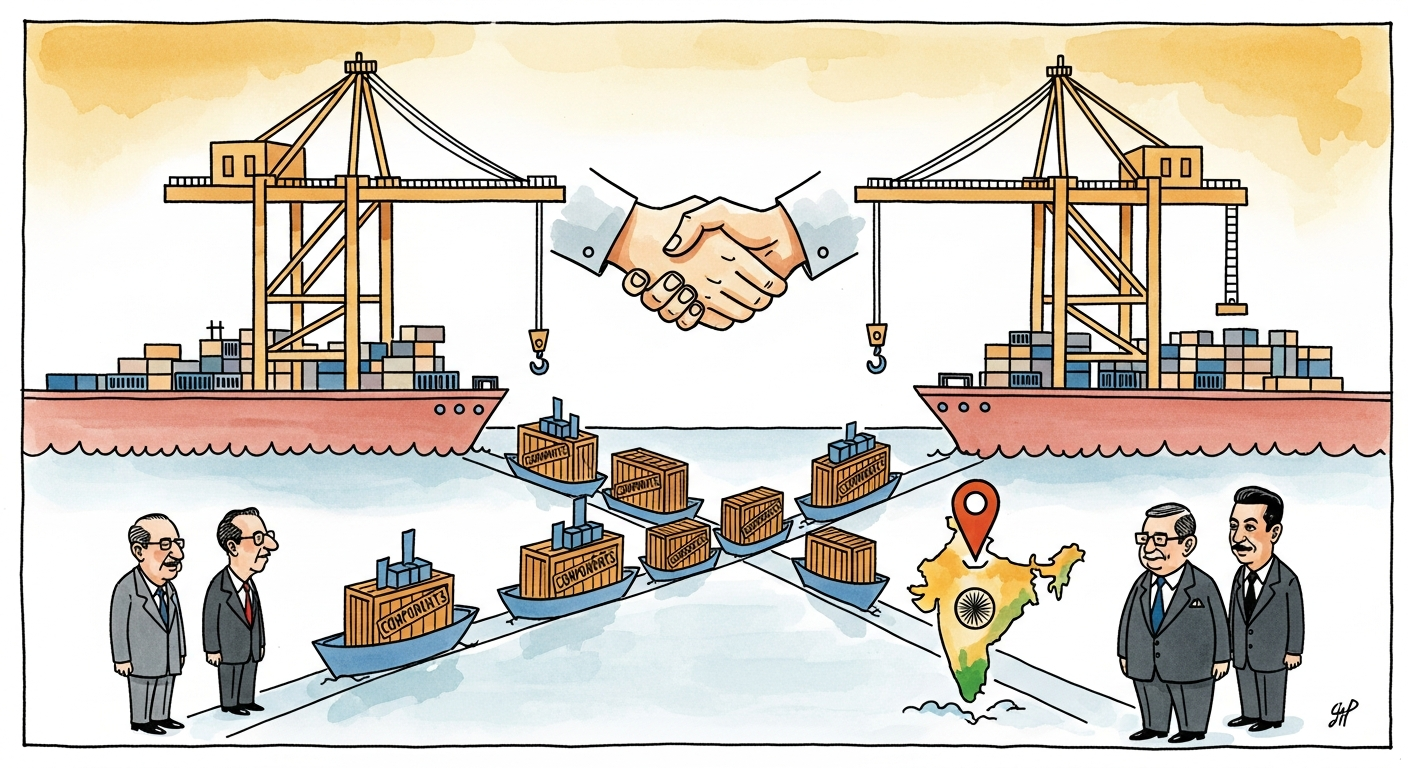
One announcement is a deal, three a trend, and the fresh manufacturing commitment that landed this week keeps the pattern going. The corridor that anchored the record investment quarter has moved past the point where each arrival reads as an isolated win; the clustering is now the news.
Corridor economics is the point. Capital clusters where other capital already is, because the second factory needs the suppliers, trained workers and settled land-and-power questions the first paid to establish. The incentive architecture lit the initial spark; the compounding is what turns a spark into a fire that no longer needs the subsidy to keep burning.
A semiconductor thread runs through it. The precision-manufacturing and components investments are exactly the second-order supply base a chip industry needs and India has lacked — the reason the packaging line and the fab matter is that they anchor demand for precisely these components. The chips justify the machinery; the machinery makes the chips possible.
The strategic reading is real without overstatement. Global capital has its own reasons to diversify, and India is one beneficiary of a larger de-risking. But being that beneficiary is a fine position, and the policy-continuity premium is what lets a firm commit on a ten-year horizon rather than a two-year hedge.
The risk is concentration: a single corridor carrying a disproportionate share of advanced manufacturing is a single point of failure for infrastructure that must scale in lockstep. Commitments are not commissioned plants, and the gap is measured in land, power and reliability. We count the plants, not just the signings, on our economy desk.