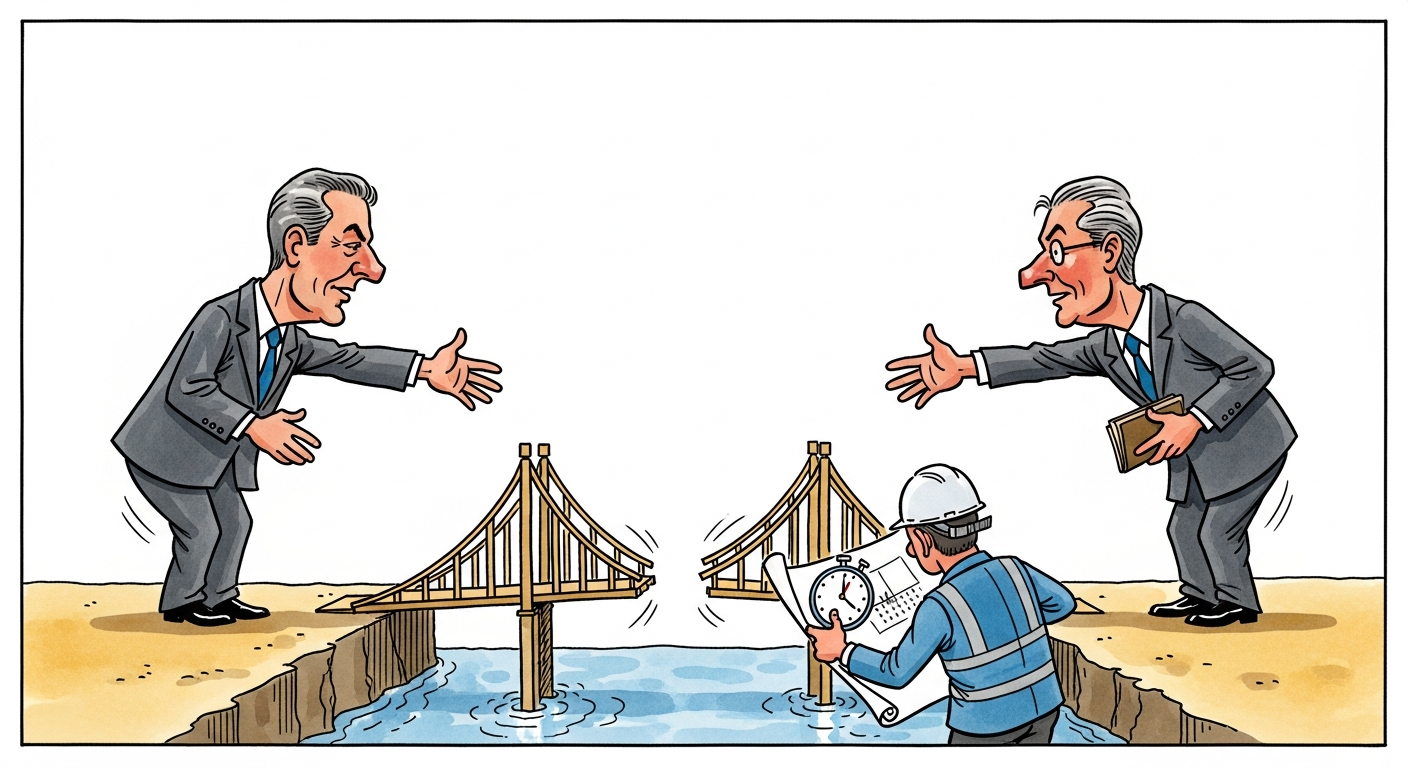
Diplomacy is built the way infrastructure is — one tested span at a time — and the Muscat process reconvened its working groups this week to lay the next one. The agenda's ordering is the message: the achievable confidence-builders first, the genuinely hard files second.
The verification cell that convened last month is the template being applied. Having proven the machinery on a tractable file — a drone incident cleared through its 72-hour clock as mechanical failure, not attack — the parties are loading it with the corridor's phase two, the move from incident-avoidance to something closer to routine.
Phase two prices real money. Scheduled transits, shared monitoring and an insurance regime that treats the corridor as ordinary commercial water rather than a war-risk exception is what lets shippers and insurers plan rather than hedge, and the energy markets that noticed the cell's first success are watching for exactly that framework.
India's stake is direct and material. The corridor carries the discounted barrels underwriting soft fuel inflation at home, and a ceasefire that acquires routine is worth more to an importing economy than one that merely holds. The crisis-to-management arc of the past two quarters is what made phase two negotiable at all.
The cautions are structural: agendas are not outcomes, and a single attributable strike could send the sequence back to competing press conferences. But the parties are building institutions rather than declaring intentions, and engineered peace, whatever its pace, is the durable kind. The file continues on our world desk.



