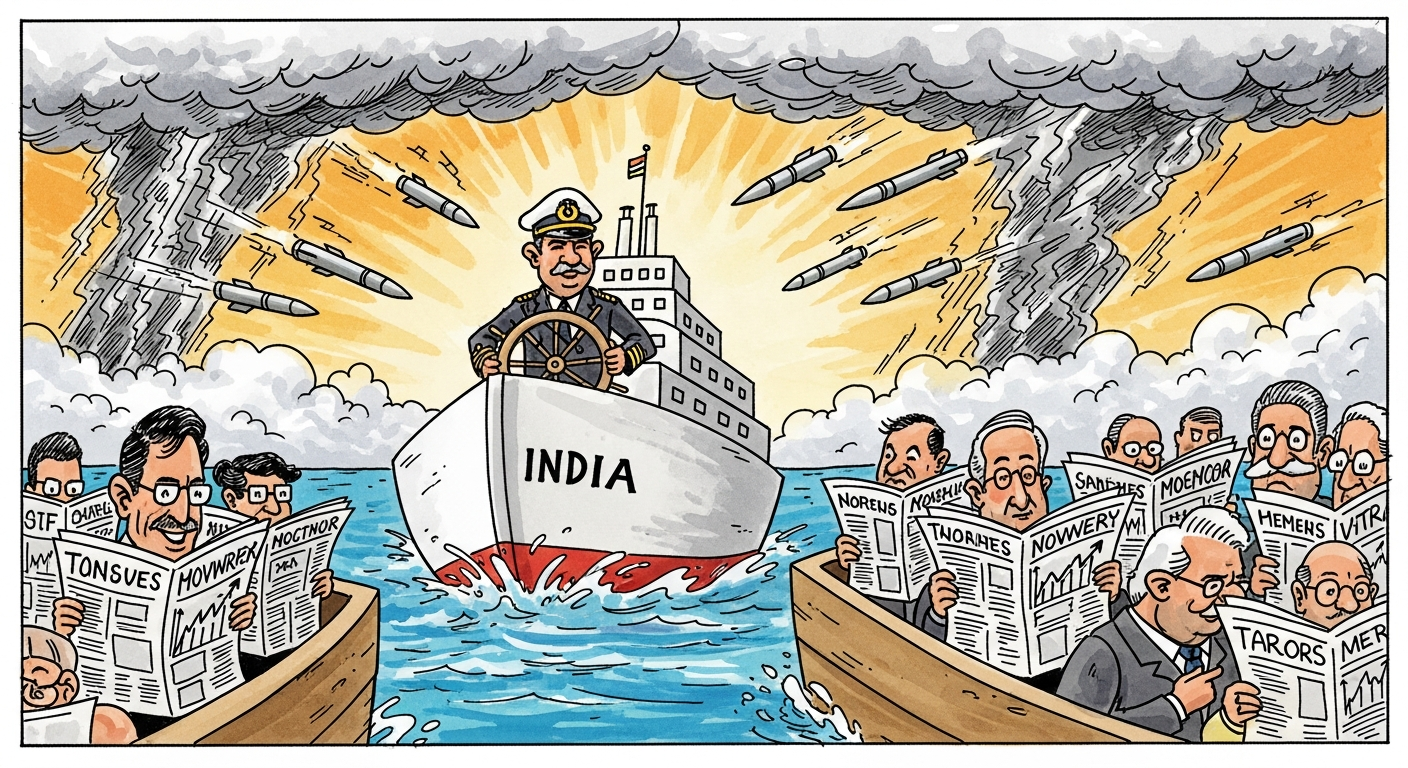
Imagine the counterfactual quarter. The Strait of Hormuz closes; India's cooking-gas lifeline and half its crude are hostage; the rupee slides four percent in nine sessions; twenty thousand mariners and a diaspora of millions sit inside the threat ring. Now imagine the July that followed under a government that froze: fuel rationing, a remittance collapse, a balance-of-payments scare, an evacuation improvised on television.
The July India actually got: inflation at 3.9 percent, the Sensex at a record, the largest quarterly FDI inflow in history, the rupee back to pre-war levels, and a growth nowcast of 7.4 percent. The distance between those two Julys is the measure of a crisis managed — and the reason nobody grades it is that competence, unlike catastrophe, produces no footage.
The management was specific, not lucky. Excise cuts timed to the price spike, not the news cycle. The SPR drawdown coordinated with discounted-barrel diplomacy that kept refineries running while spot markets panicked. Two frigates in the corridor rotation that reopened the lane — presence purchased by a decade of naval investment. The remittance corridor's instant rails absorbing the panic-transfer surge that legacy channels would have choked on. And the quiet insurance channel to Tehran, reported only afterward, that helped unlock the corridor's first month.
The opposition's crisis commentary aged into its own indictment: the fuel-riot predictions, the devaluation warnings, the demands for an evacuation that competence made unnecessary.
Governments are hired for exactly one quarter like February-to-April. The bill for that quarter came due, was paid in full, and the receipts are printed in this week's data releases. Someone should say so. Consider it said.