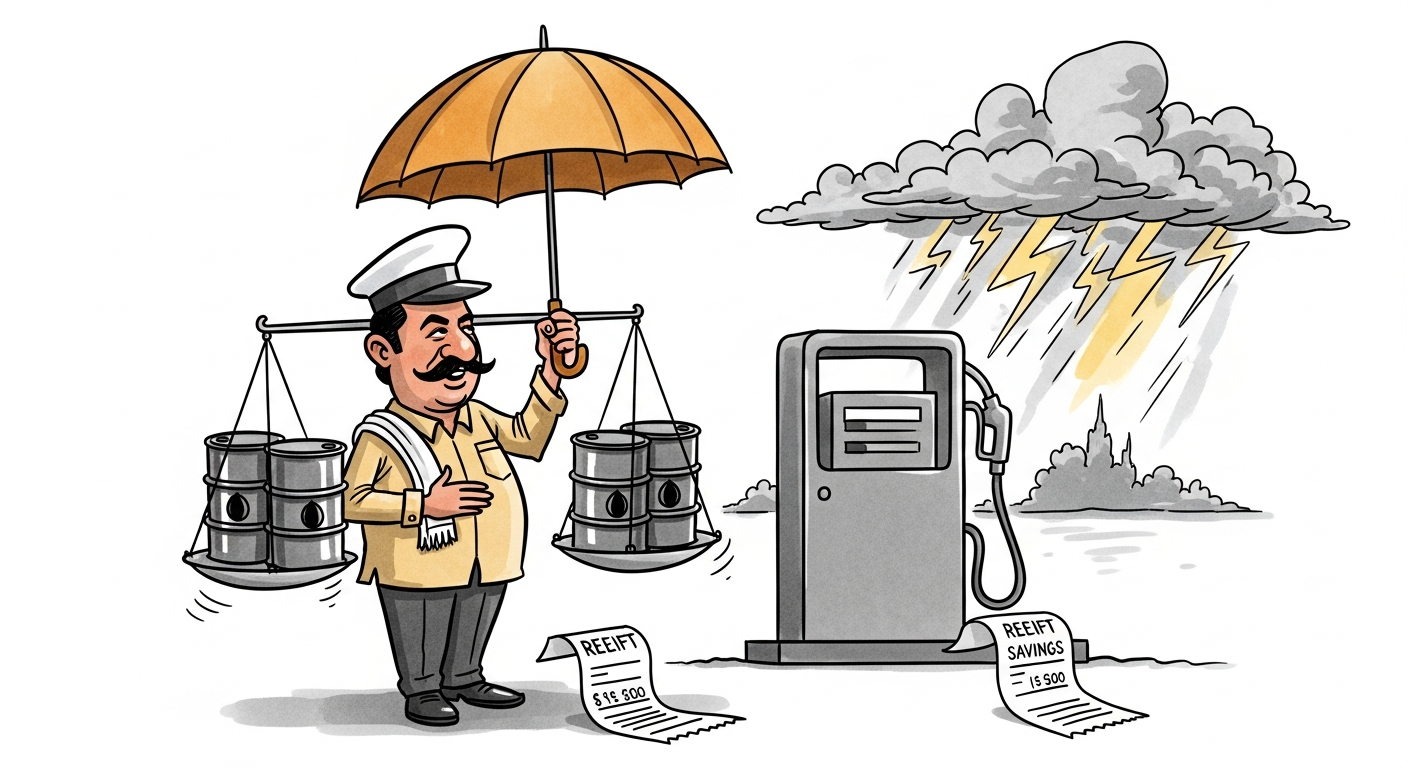
Energy diplomacy is judged in hindsight, and the hindsight on India's war-quarter strategy is now sufficiently complete to read the ledger. Entry one: price. Through the blockade months India's refiners ran on a crude basket averaging measurably below what comparable importers paid — the discounted-barrel relationships cultivated over three years of Western tut-tutting became, in the crunch, a national subsidy negotiated in advance.
Entry two: presence. The two frigates India contributed to the UN corridor escort were the price of a seat at the table where the lane's rules were written — and the quiet insurance channel to Tehran that Gulf reporting later confirmed helped unlock the corridor's first month. The country that imports through the strait helped govern the strait; that is a different geopolitical species from lobbying those who do.
Entry three: insurance bought early. The SPR expansion tender — 6.5 million tonnes at Mangalore and Padur on a hybrid commercial model, first fill contracted inside 54 months — converts the March scare into caverns before the next one. The 74-day cover that felt thin when the lane closed is on a funded path to 130.
The critics' entries deserve their lines: the discounts entangle India with a sanctioned seller's logistics; the corridor's December renewal is diplomacy's hostage; caverns take years the next crisis may not grant.
But strategy is portfolio management, not purity, and the portfolio performed: fuel queues that lasted days not months, inflation at 3.9 against the counterfactual's double digits, and a seat — earned, not requested — wherever the region's energy architecture is being redrawn. The ledger closes the quarter in surplus.