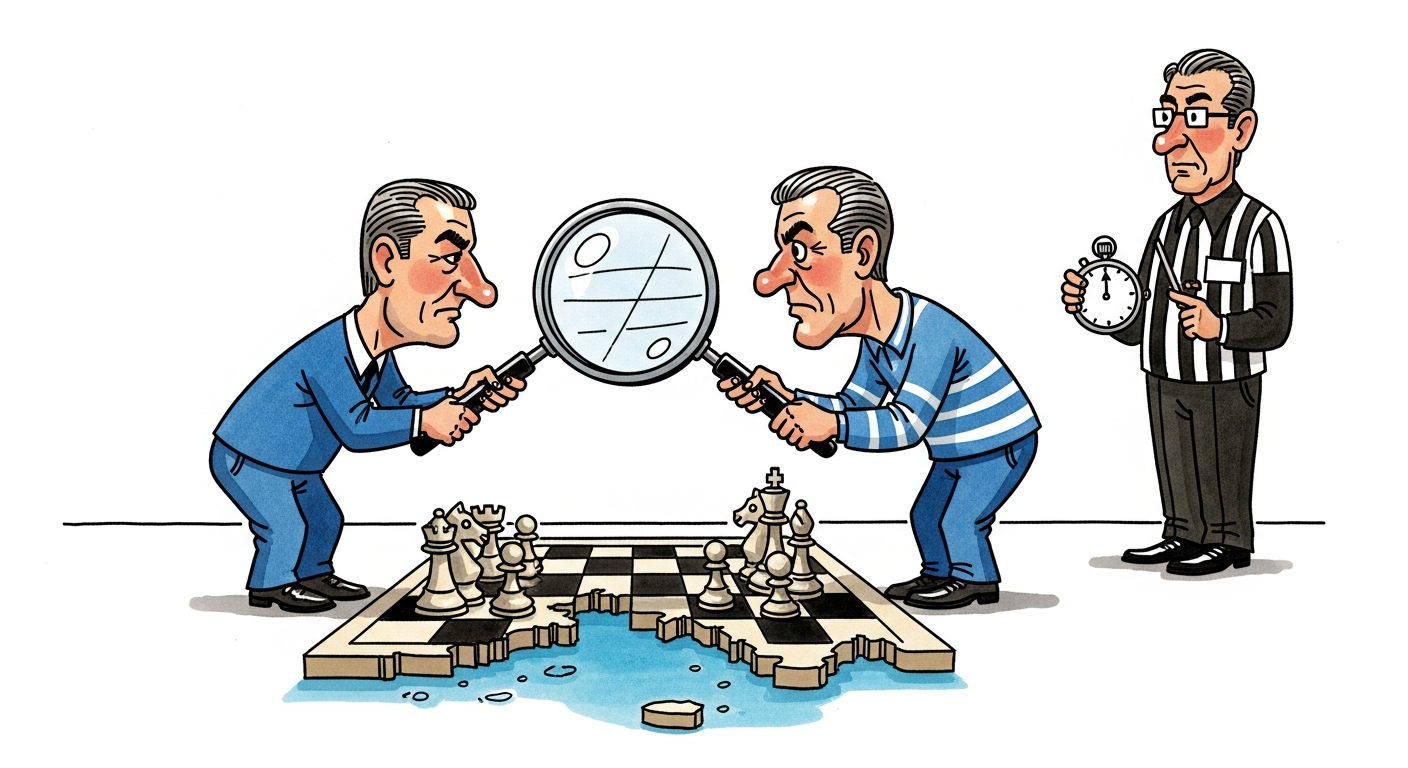
The Muscat process's hardest working group — strike-cessation verification — held its first sitting this week and produced the thing eleven ceasefire weeks lacked: a protocol.
The machinery: a joint incident-review cell seated in Muscat with third-party technical staff, a 72-hour attribution clock for claimed violations, and — the concession that took the full session — a shared radar-and-satellite picture for the border corridors, contributed asymmetrically but accessed jointly.
The design borrows deliberately from the strait: the corridor's incident cell, the ceasefire's one working institution, becomes the template for its most contested domain. Institutions replicate what works; diplomats call this "porting the corridor," and the metaphor is doing real work.
The first test arrived on schedule: a drone incident near the northern border went through the new clock and produced a joint technical finding — mechanical failure, not attack — inside 60 hours. Eleven weeks ago the same event would have been a week of competing press conferences; the insurance markets noticed the difference before the newspapers did.
Verification is trust with paperwork. The paperwork now exists. The September rounds inherit it. File continues on our world desk.



