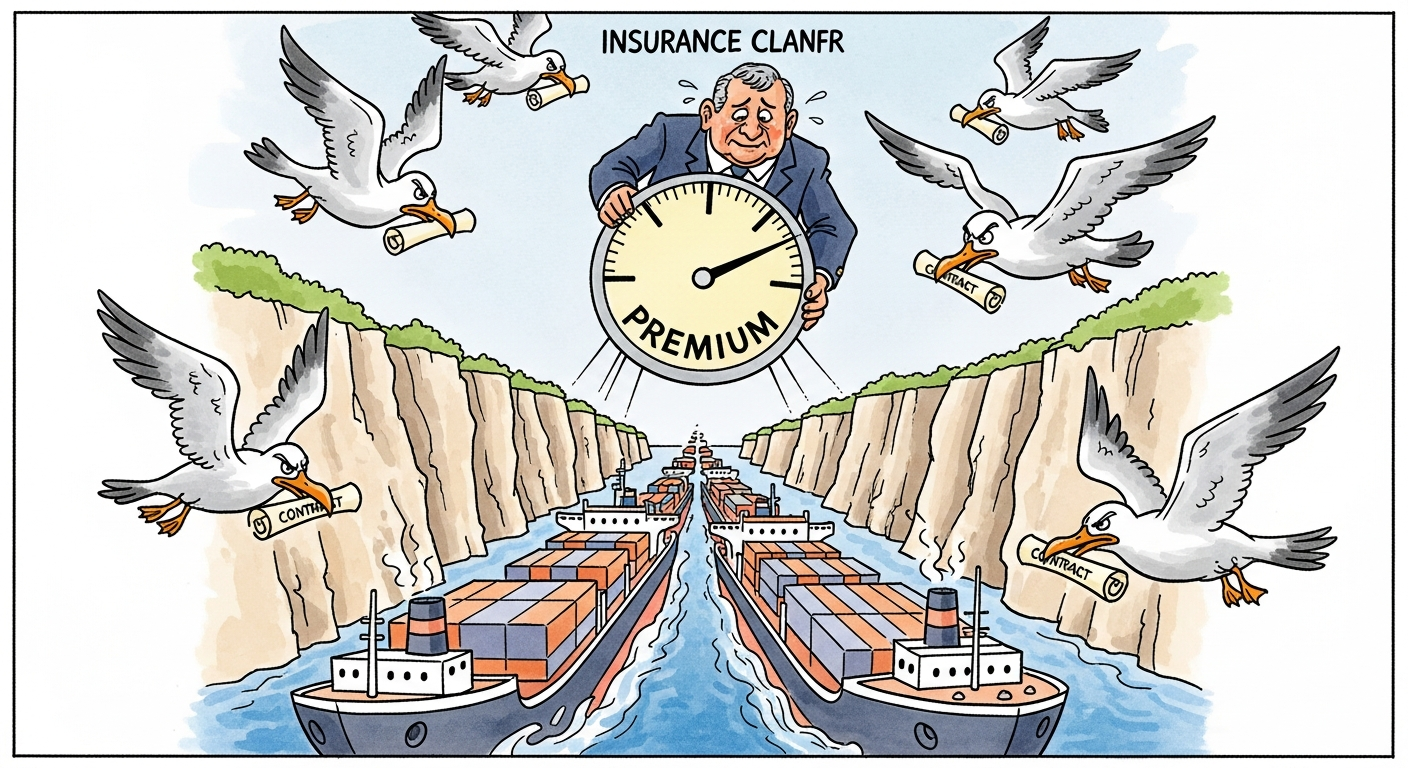
Institutions succeed when markets stop pricing their failure. Month-two data from the Hormuz corridor shows exactly that: traffic up from 84 to 91 percent of pre-war volumes, and war-risk insurance premia halved — from four times pre-February levels to roughly 1.8x.
The premia are the real referendum. Underwriters price behaviour, not communiqués; eleven-plus weeks of held ceasefire, three managed violations and a functioning incident-review cell have moved the lane from "war zone with paperwork" to "priced risk". The first corridor-compliant long-charter contracts — freight agreements that assume the lane's continuity into 2027 — signed this fortnight.
The December mandate renewal remains the calendar's hinge, but the Muscat decoupling changed its politics: renewal now threatens nobody's negotiating position, which is precisely why diplomats engineered it that way.
India's dividend compounds quietly: freight surcharges on Gulf crude runs have unwound into refiner margins, LPG import economics normalised ahead of festival demand, and the naval rotation's governance seat converts into standing influence over the lane's operating rules.
The strait that closed in March now clears charters into next year. Predictability, manufactured on schedule. The file continues on our world desk.