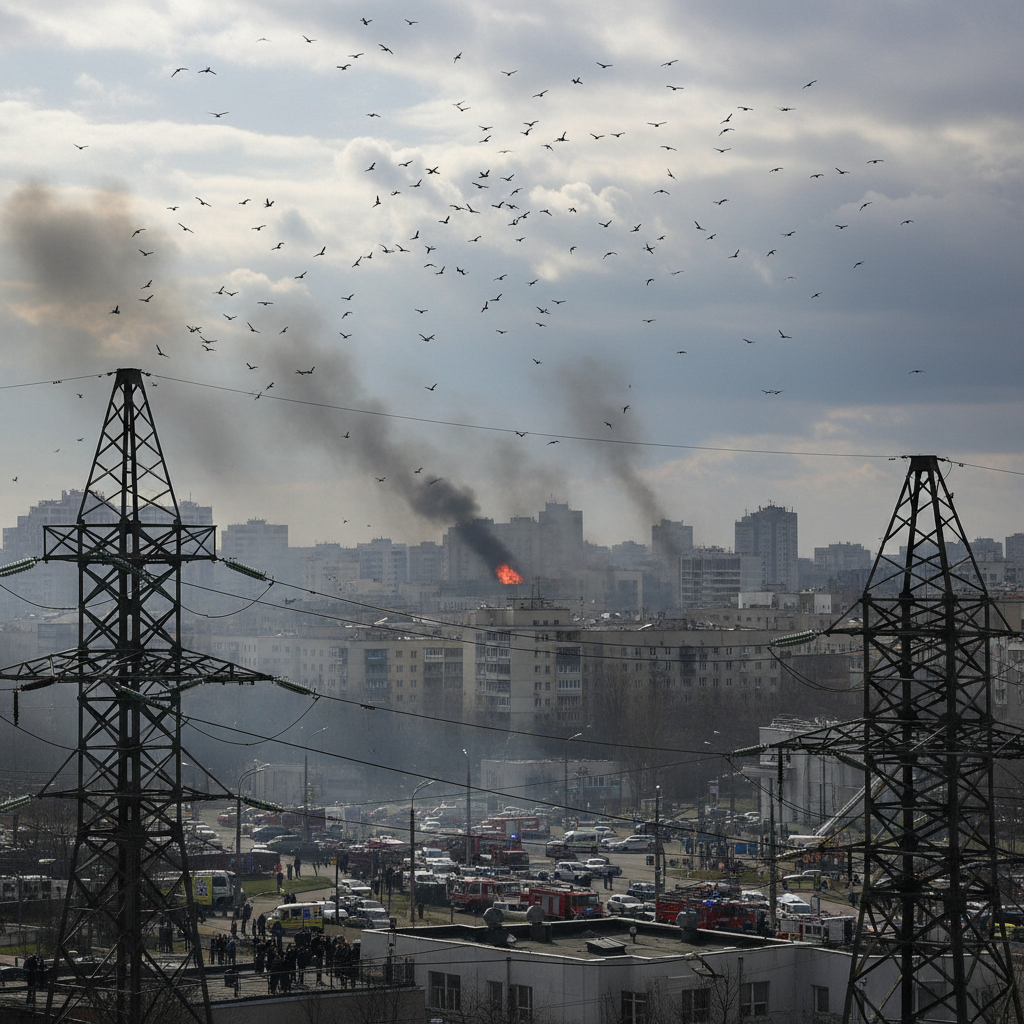
Russia launched an extraordinary daytime drone offensive against Ukraine, deploying more than 550 unmanned aerial vehicles in a coordinated assault that represents a dramatic departure from Moscow's established pattern of nighttime attacks. The unprecedented daylight bombardment injured dozens of civilians and marked what military analysts describe as a potential escalation in Russia's aerial campaign against Ukrainian infrastructure and population centers.
Ukraine's air force confirmed the scale of the assault, emphasizing the unusual timing of the attack that unfolded during daylight hours when civilian activity peaks across the country. The shift from Russia's typical nocturnal drone operations suggests a calculated strategic recalibration, potentially aimed at overwhelming Ukrainian air defenses through sheer volume while maximizing psychological impact on the civilian population.
KEY FACTS
- More than 550 drones launched in single daytime attack
- Dozens of civilians injured in the coordinated assault
- Attack represents departure from typical nighttime drone tactics
- Moldova declared state of emergency following power infrastructure damage
- Regional power disruptions extended beyond Ukraine's borders
The massive drone swarm represents one of the largest single-day unmanned aerial vehicle deployments since Russia's invasion began in February 2022. Historical precedent suggests that such large-scale operations typically serve multiple strategic objectives beyond immediate tactical gains. The daylight timing breaks from Russia's established pattern of launching drone attacks under cover of darkness, when detection and interception prove more challenging for defending forces.
The attack's ripple effects extended beyond Ukraine's borders, with Moldova declaring a state of emergency after Russian strikes severed a critical power transmission line. This cross-border impact underscores the regional implications of the conflict and demonstrates how infrastructure attacks can cascade across national boundaries in interconnected energy systems.
Moldova's emergency declaration highlights the vulnerability of neighboring countries to the spillover effects of the ongoing conflict. The small landlocked nation, already grappling with energy security challenges exacerbated by its dependence on Russian energy supplies, now faces additional strain on its power grid due to damaged transmission infrastructure.
By The Numbers
The tactical shift to daytime operations carries significant military implications. Daylight attacks sacrifice the element of surprise that darkness provides but offer improved coordination capabilities for large-scale operations. The ability to visually coordinate such a massive drone swarm suggests enhanced command and control systems, potentially indicating technological advances in Russia's unmanned aerial vehicle capabilities.
Ukraine's air defense systems, which have demonstrated considerable effectiveness against previous drone attacks, faced an unprecedented challenge in confronting such a large simultaneous deployment. The sheer volume of targets likely aimed to saturate defensive capabilities, allowing some drones to penetrate protective barriers and reach their intended targets.
The strategic timing of this escalation comes amid ongoing international discussions about military aid to Ukraine and reflects Russia's attempt to demonstrate continued offensive capabilities despite nearly two years of sustained conflict. The deployment of such a large number of drones also suggests substantial resource allocation by Moscow, indicating both the availability of these weapons systems and the priority placed on aerial bombardment campaigns.
"Ukraine's air force reported that more than 550 drones were launched in the middle of the day, a change from Russia's usual tactics" — Official military sources
The psychological dimension of the daytime attack cannot be understated. Previous drone campaigns typically occurred during nighttime hours when most civilians were indoors, limiting direct visual exposure to the attacks. Daylight operations ensure maximum civilian awareness of the assault, potentially amplifying the terror effect that such weapons are designed to achieve beyond their immediate physical damage.
Energy infrastructure has emerged as a primary target throughout the conflict, with both sides recognizing the strategic value of disrupting power generation and distribution networks. The attack that triggered Moldova's emergency declaration follows this established pattern, demonstrating how infrastructure warfare extends the conflict's impact far beyond immediate battle zones.
The regional implications extend beyond immediate neighbors. European energy markets, already sensitive to disruptions related to the ongoing conflict, face additional uncertainty as infrastructure attacks threaten the stability of interconnected power systems. The Moldova emergency declaration serves as a tangible reminder of how the conflict's effects ripple throughout Eastern Europe's integrated energy networks.
Military analysts note that the scale of the drone deployment suggests either a significant stockpile of these weapons or enhanced production capabilities. The ability to launch more than 550 drones in a single operation indicates substantial logistical preparation and coordination, pointing to advanced planning rather than opportunistic strikes.
The attack's impact on civilian populations reflects the continued targeting of non-military infrastructure and population centers, a pattern that has characterized much of the conflict. The dozens of injuries reported from this single day's assault add to the mounting civilian casualty toll that has defined this prolonged conflict.
International observers view this escalation as potentially signaling a broader intensification of hostilities. The departure from established tactical patterns, combined with the unprecedented scale of the drone deployment, suggests strategic decision-making at the highest levels of Russian military command aimed at achieving maximum impact through both physical destruction and psychological warfare.
The cross-border effects demonstrated by Moldova's power emergency illustrate the interconnected nature of modern infrastructure systems and highlight how contemporary conflicts can rapidly transcend national boundaries through attacks on shared utilities and transportation networks. This regional dimension adds complexity to diplomatic efforts aimed at containing the conflict's spread and managing its humanitarian consequences.



