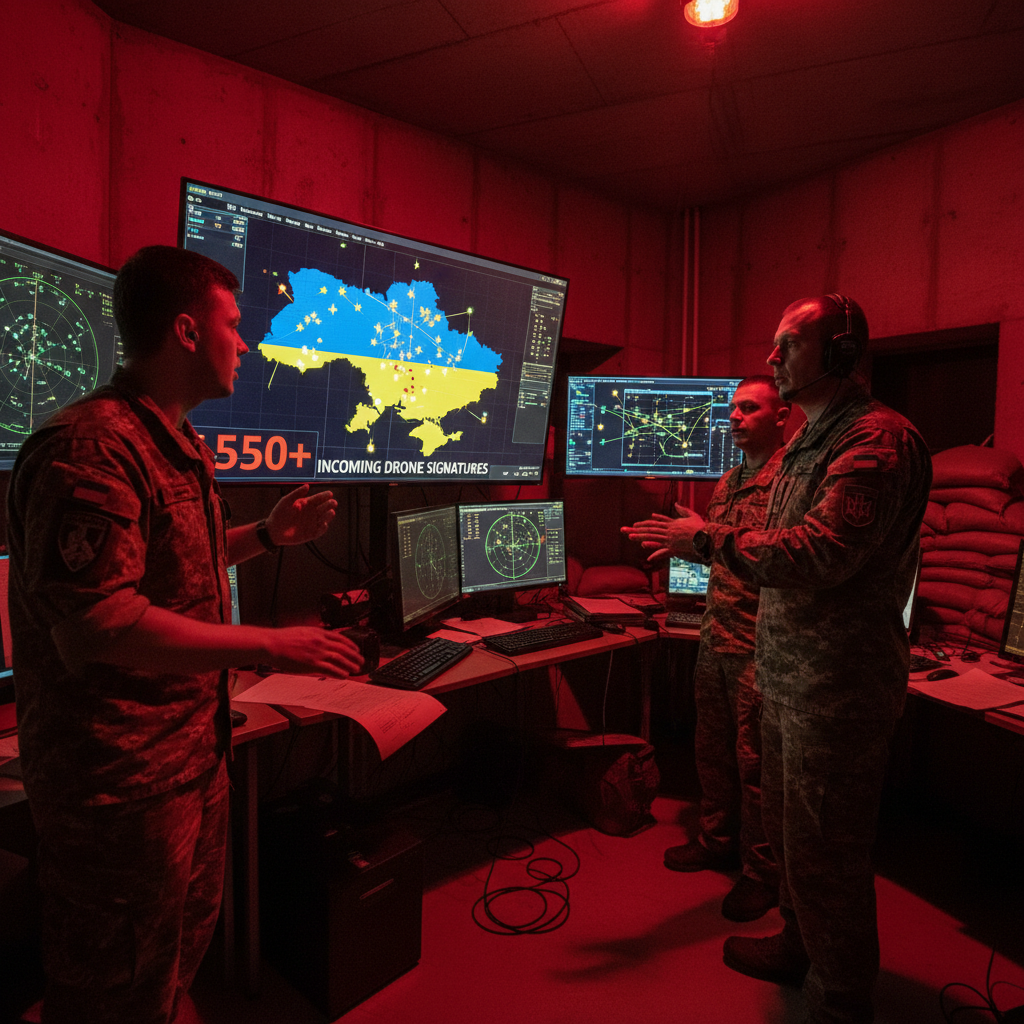
Russia launched an unprecedented daytime drone assault on Ukraine, deploying more than 550 unmanned aerial vehicles in what military analysts describe as a significant tactical shift from Moscow's established pattern of nocturnal attacks. The massive barrage, which injured dozens of civilians and military personnel, represents one of the largest single-day drone operations since Russia's invasion began in February 2022.
The timing of the attack marks a notable departure from Russia's conventional warfare strategy. Throughout most of the conflict, Russian forces have predominantly conducted drone strikes under cover of darkness, utilizing the tactical advantage of reduced visibility to evade Ukrainian air defenses. This daytime offensive suggests either a calculated change in military doctrine or a response to evolving battlefield conditions.
KEY FACTS
- Over 550 drones deployed in single daytime attack
- Dozens of people reported injured across multiple regions
- First major daytime drone offensive of this scale since February 2022
- Attack represents departure from Russia's typical nighttime drone strategy
- Assault is part of broader new offensive campaign
According to Ukraine's air force, the sheer volume of drones deployed in this assault exceeded previous single-day records, straining the country's air defense systems. The coordinated nature of the attack, spanning multiple regions simultaneously, indicates extensive planning and resource allocation by Russian military commanders. Reports indicate that the drones targeted both civilian infrastructure and military installations, following the pattern established in earlier phases of the conflict.
The strategic implications of conducting such operations during daylight hours are multifaceted. Daytime attacks offer improved visibility for drone operators, potentially increasing accuracy and target identification capabilities. However, they also expose the unmanned vehicles to enhanced detection and interception by Ukrainian air defense systems, which have proven increasingly effective throughout the war.
This tactical evolution comes as both sides have adapted their strategies in response to battlefield developments over the past two years. Russia's drone warfare has become increasingly sophisticated, with Moscow deploying a combination of Iranian-manufactured Shahed drones alongside domestically produced variants. The sustained use of unmanned aerial vehicles has allowed Russia to maintain pressure on Ukrainian positions while conserving piloted aircraft and reducing risk to trained personnel.
By The Numbers
The escalation represented by this daytime assault reflects broader trends in the conflict's trajectory. As the war has progressed, both Russian and Ukrainian forces have continuously adapted their tactics in response to technological developments, supply chain considerations, and battlefield effectiveness. Russia's increasing reliance on drone warfare has coincided with growing constraints on its conventional military capabilities, including aircraft and precision-guided munitions.
Ukraine's air defense network has evolved significantly since the conflict's early stages, incorporating Western-supplied systems alongside Soviet-era equipment. The effectiveness of these defenses has forced Russian military planners to reconsider traditional approaches, potentially explaining the shift toward daytime operations that might overwhelm defensive systems through sheer volume rather than stealth.
"Ukraine's air force reported the high number of drones used in the assault" — according to Reuters
The international implications of this escalation extend beyond the immediate battlefield. The deployment of such a large number of drones in a single operation demonstrates Russia's continued capacity to sustain intensive military operations despite international sanctions and export controls. The attack also raises questions about the supply chain supporting Russia's drone program, particularly regarding components and manufacturing capabilities.
Historical precedent suggests that major tactical shifts often precede broader strategic changes in prolonged conflicts. Russia's decision to conduct this large-scale daytime operation may signal preparation for a more intensive phase of operations, potentially coinciding with seasonal factors or political considerations. The timing and scale of the attack suggest coordination with other military objectives that may become apparent in coming days.
The civilian casualties resulting from this assault continue the pattern of targeting that has characterized much of Russia's approach throughout the conflict. Infrastructure attacks have been a consistent element of Russian strategy, aimed at degrading Ukraine's capacity to sustain both military operations and civilian morale. The use of drones for such purposes has proven particularly effective due to their relatively low cost and ability to penetrate air defenses through saturation tactics.
Ukraine's response to this escalation will likely influence the trajectory of future operations. The country's air defense capabilities have been continuously enhanced through international cooperation, but the challenge of intercepting large numbers of simultaneously deployed drones remains significant. The effectiveness of Ukrainian countermeasures against this latest assault will provide important intelligence for both sides in planning subsequent operations.
The broader context of this attack includes Russia's ongoing military objectives and resource allocation decisions. Despite nearly two years of intensive conflict, Moscow continues to demonstrate the ability to launch large-scale operations, suggesting either significant reserve capabilities or successful adaptation of production and supply systems to wartime demands.
Regional security implications extend beyond Ukraine's borders, as the demonstrated capability to launch such intensive drone operations raises concerns among neighboring countries about potential future threats. NATO members in particular have been closely monitoring Russian military adaptations and tactical innovations throughout the conflict.
The evolution of drone warfare exemplified by this attack represents a significant development in modern military tactics. The scale and coordination required for deploying over 550 drones simultaneously demonstrates advanced command and control capabilities, while the shift to daytime operations suggests confidence in overwhelming defensive systems through quantity rather than stealth. This tactical adaptation may influence military planning and defensive preparations across the region as the conflict continues to evolve.