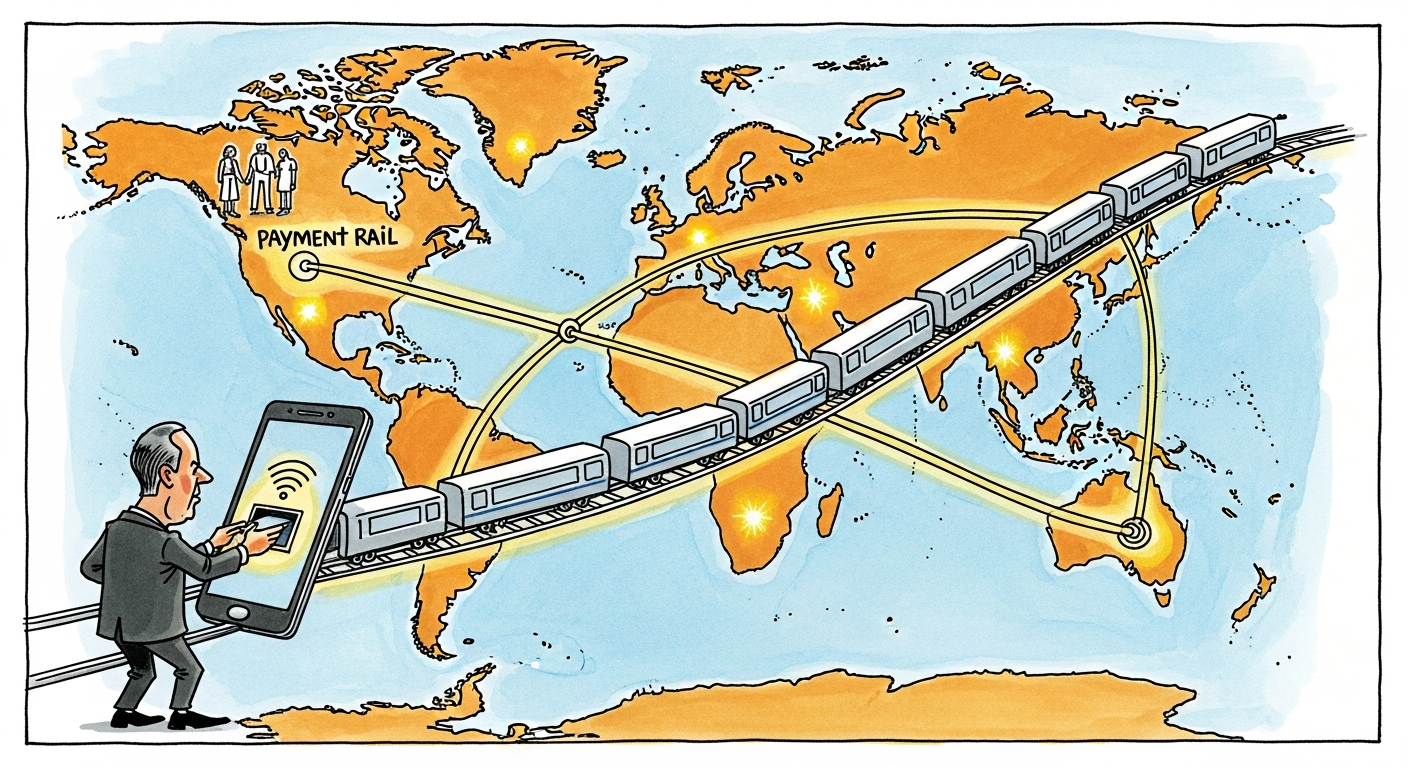
A ninth country has gone live on India's cross-border payment network. The number is the story — not because nine is large, but because it is the point where a rail stops being something a country is trying and becomes something other countries plan around.
That distinction changes behaviour. Merchants integrate with a rail they expect to persist. Banks build products on a network they believe will exist next year. And each new partner lowers the cost of the next, because networks are joined by those who see others already on them.
The value proposition is brutally simple where it matters most. The collapse in remittance costs on the flagship corridors — fees pushed to a fraction of the historic toll — means a worker sending money home keeps hundreds of crores that used to vanish into intermediary margins. That is not a technology demo; it is a transfer of wealth to the households that earned it.
The bigger play is standards. Payment rails are quietly becoming instruments of competition between models, and every country adopting an interoperable, publicly-owned system is a country whose financial plumbing tilts away from private toll-taking networks. India is not the only actor building these — but infrastructure, once chosen, is sticky by design, which rewards whoever arrives first.
Credibility abroad rests on credibility at home, which is why the first data-protection order matters more than it looked. A foreign regulator connecting its citizens' transactions to an Indian rail wants to know the privacy regime has teeth.
Nine flags is infrastructure. The next number to watch is not flags — it is volume. On our tech desk.



