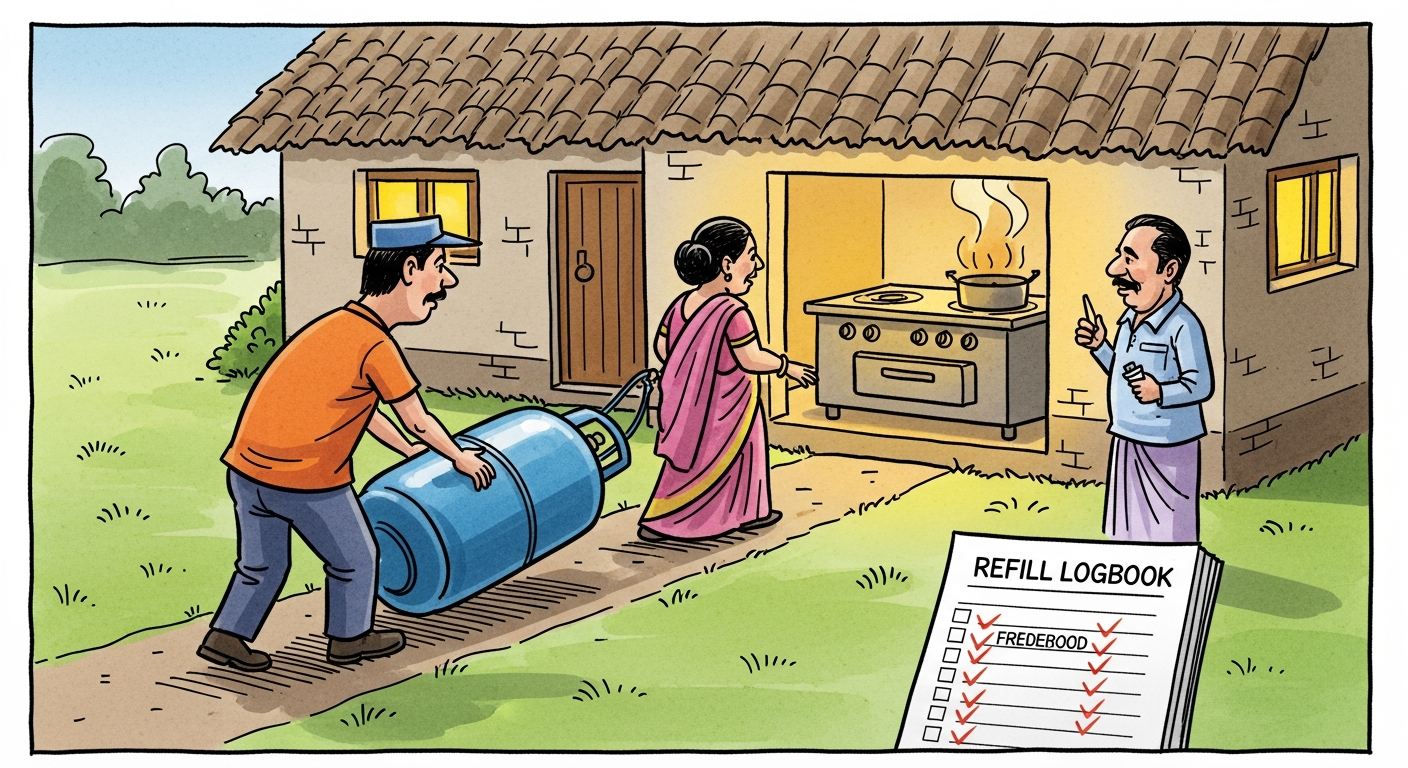
A connection is not a kitchen, and the honest measure of a clean-cooking scheme is the third refill, not the first enrolment. The first data from Ujjwala 3.0 — the version that inverted the rollout to serve the hardest districts first — is now arriving from exactly the blocks where refill rates have historically been lowest.
The inversion was an admission and a correction. Earlier phases were rightly celebrated for scale but drifted on refills; a family that receives a cylinder it cannot reliably or affordably refill returns to firewood, and the health dividend evaporates with the woodsmoke. Version three attacks that structurally — distributor density, a refill-linked subsidy tranche — rather than rhetorically.
The macro timing helps the habit set. With inflation soft and fuel cheap after the oil-war quarter, the real cost of a refill sits at its most affordable in three years — the window in which a subsidy does the most to convert a connection into a routine.
The operational risk is honest: distributor economics in thin markets are genuinely hard — the reason those blocks were underserved is that serving them loses money per delivery — and a subsidy that does not survive that arithmetic leaves the new bottling points idle within a year. The refill-linked tranche is the mechanism meant to close that gap; whether it is sized right is the number to watch.
What the scheme gets right is the recognition that the easy connections were always the least valuable. The test was always the hamlet up the flood-cut path, and the decision to go there first — before the photogenic wins — is the most serious thing the programme has done. We are reading the refill logs, on our India desk.