India recorded a nearly 80 per cent decline in malaria cases and deaths between 2015 and 2025. High-burden districts fell from 155 to 33, while 160 districts reported no indigenous malaria cases during 2022–2025. These are major public-health gains. They also change the nature of the work: as transmission becomes concentrated, the final locations require more precise surveillance, faster response and sustained community trust.
A Health Ministry review focused on 33 districts across nine states and Union Territories. Together they accounted for 64 per cent of cases and 54 per cent of deaths reported in 2025. The review covered Mizoram, Odisha, Tripura, Assam, Andhra Pradesh, Andaman and Nicobar Islands, Chhattisgarh, Jharkhand and Maharashtra. National averages can conceal this concentrated burden.
Elimination is different from control
Control reduces illness to a manageable level; elimination seeks to interrupt local transmission. When cases are numerous, broad measures can produce rapid gains. When numbers fall, every missed infection can sustain a local chain. Health systems must find fever cases quickly, test accurately, complete treatment and investigate where transmission occurred.
Asymptomatic infections complicate the picture because a person may carry parasites without seeking care. The review stressed that cases detected through mass screening should be reported separately from routine programme indicators. Accurate classification is essential: inflated or mixed measures can misdirect resources, while undercounting can create false confidence.
The geography must shape the intervention
Malaria risk varies by forest cover, rainfall, housing, work patterns, migration and access to care. A district strategy should identify transmission pockets at village and settlement level. Mobile teams may be needed for forest workers or remote communities. Border districts require coordination so treatment and surveillance do not stop at an administrative line.
Local data should guide the timing of testing, spraying and net distribution. A uniform national calendar cannot match every rainfall pattern. District collectors, malaria officers and primary-health teams need the authority and supplies to act on local evidence while maintaining common national standards.
Health departments cannot drain a street
The ministry correctly emphasised cooperation with rural development, urban development and Panchayati Raj institutions. Waterlogging, unmanaged waste and poor drainage create breeding conditions that tablets and diagnostic kits cannot remove. Local bodies must map recurrent sites, maintain drains and respond before seasonal risk peaks.
Self-help groups, community volunteers and panchayat representatives can identify fever clusters and breeding sites early. Their participation should be structured, trained and supported rather than treated as unpaid ceremonial mobilisation. Community feedback also helps health workers understand why some households do not use nets or complete treatment.
Protect the gains in zero-case districts
A district reporting zero indigenous cases still faces imported infections. Travel and migration are normal, and surveillance must distinguish imported cases without blaming travellers. Health facilities should maintain diagnostic competence even when malaria becomes rare. A clinician who no longer considers malaria can miss the first case in a returning transmission chain.
Stock management is equally important. Testing kits and effective medicines must remain available in low-incidence areas, although demand is infrequent. Digital alerts can help track a confirmed case, but they must connect to field investigation and protect patient privacy.
The final mile requires better measurement
Progress should be judged through timely diagnosis, treatment completion, investigation speed and local transmission status, not only the national case total. Independent data-quality reviews can identify unusual gaps. Death audits should examine whether delayed care, referral failure or medicine access contributed to each loss.
Climate variability adds urgency. Unusual rainfall and temperature can alter mosquito breeding and transmission seasons. District plans should combine health surveillance with meteorological information and update field deployment when conditions change. This is not a substitute for case data, but an early-warning layer that can help teams prepare supplies and outreach before a local rise.
Research institutions should continue monitoring parasite and insecticide resistance. Tools that worked during the first 80 per cent decline may lose effectiveness if biological conditions change. Periodic testing, diversified vector control and rational treatment protocols protect earlier gains. Elimination requires a learning system, not a fixed campaign package.
That vigilance must continue after the national target year, because elimination is maintained through readiness rather than declared once.
India’s decline demonstrates that sustained public-health programmes can achieve results at continental scale. The 2030 goal is now plausible, but success becomes harder as cases become rarer and more geographically specific. The remaining 33 districts are not evidence of failure; they are the places where the next generation of policy must become most attentive.
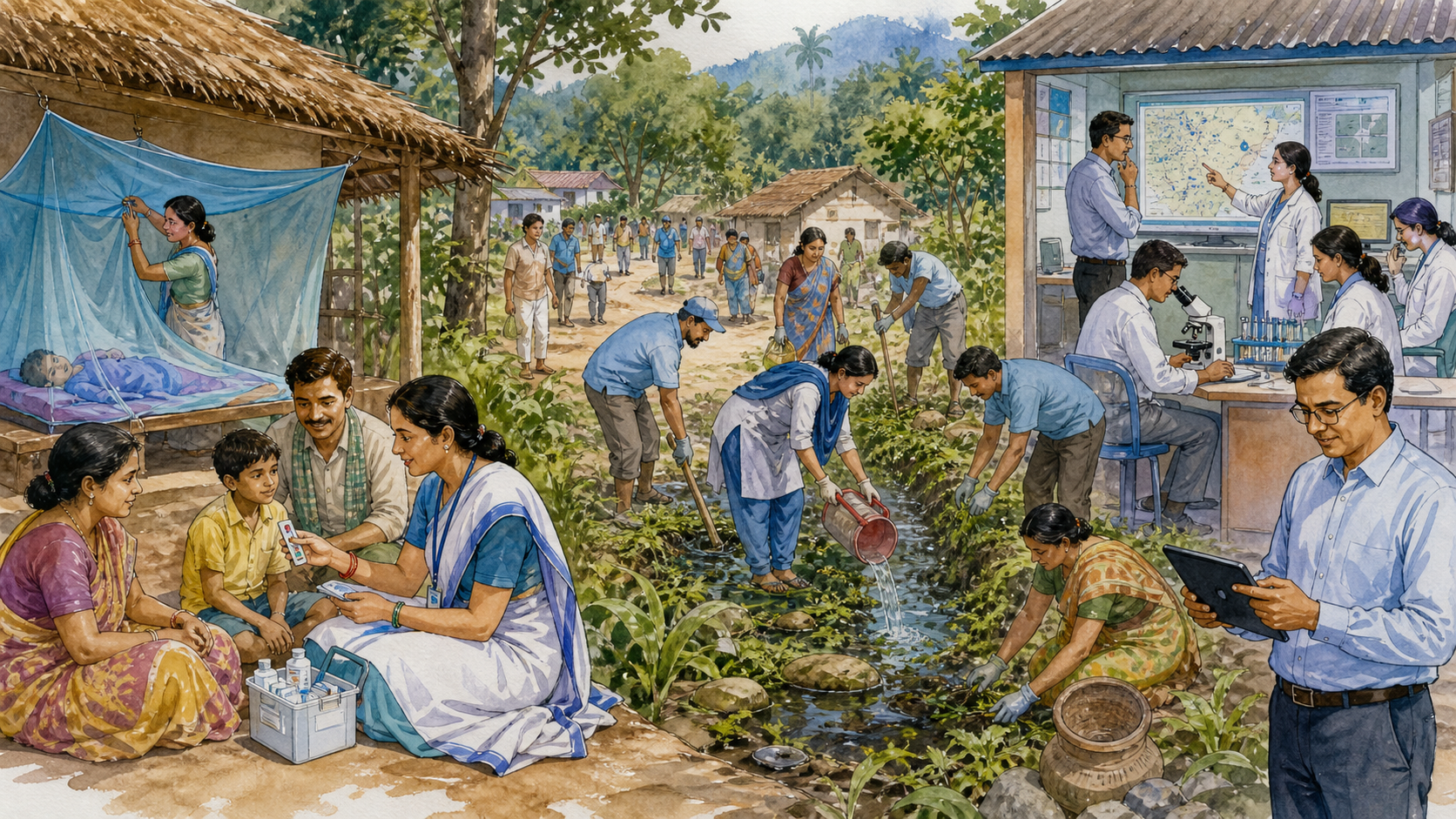
Malaria elimination will not arrive through one campaign. It will come from an ASHA worker recognising a fever, a laboratory reporting correctly, a drain being cleared, a patient completing treatment and a district team investigating quickly. India has removed most of the burden. Finishing the task will require treating every remaining transmission chain as important enough to understand and stop.
