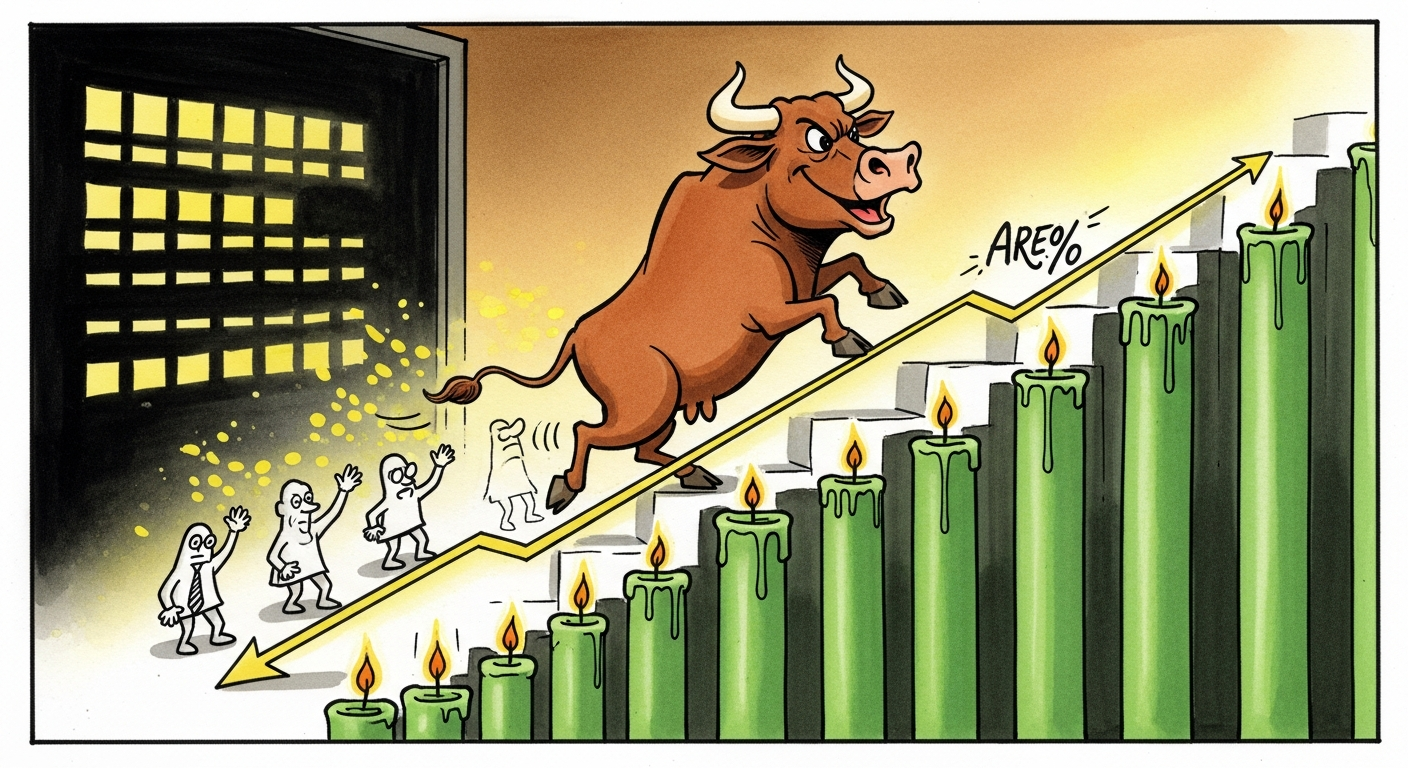
The rate cut had been priced for a fortnight, so the interesting action after the RBI's 25 basis points was not the level of the market but the shape of its expectations. Equities firmed and the ten-year yield eased, but the real move was in the forward curve, where traders read the decision as the opening of a shallow easing cycle rather than a one-off gesture.
The rate-sensitive sectors led, as they do when the cost of money falls: lenders on the prospect of stronger credit demand, autos and real estate on cheaper financing, and the banks whose results had effectively pre-approved the cut on the reasoning that peaked deposit costs give the reduction a clear path to the borrower.
The bond market's read was the more considered one. A yield that eases on a widely-expected cut is a market pricing what comes next, not what just happened — and the curve said investors now expect the committee to follow through if the inflation data stays benign through the autumn.
The foreign bid underneath is the part that compounds. The policy-continuity premium and the record investment quarter mean global money is treating Indian assets as a decade allocation rather than a tactical trade, and a currency cushioned by strong inflows is what let the central bank cut into strength rather than defend a weak rupee.
The caveats are the usual discipline: valuations are not cheap, and a global risk-off would test the bid regardless of domestic strength. But a market that reads a rate cut as the start of a cycle, in a currency backed by real inflows, is voting on the same coherence the rest of the week displayed. Coverage continues on our economy desk.