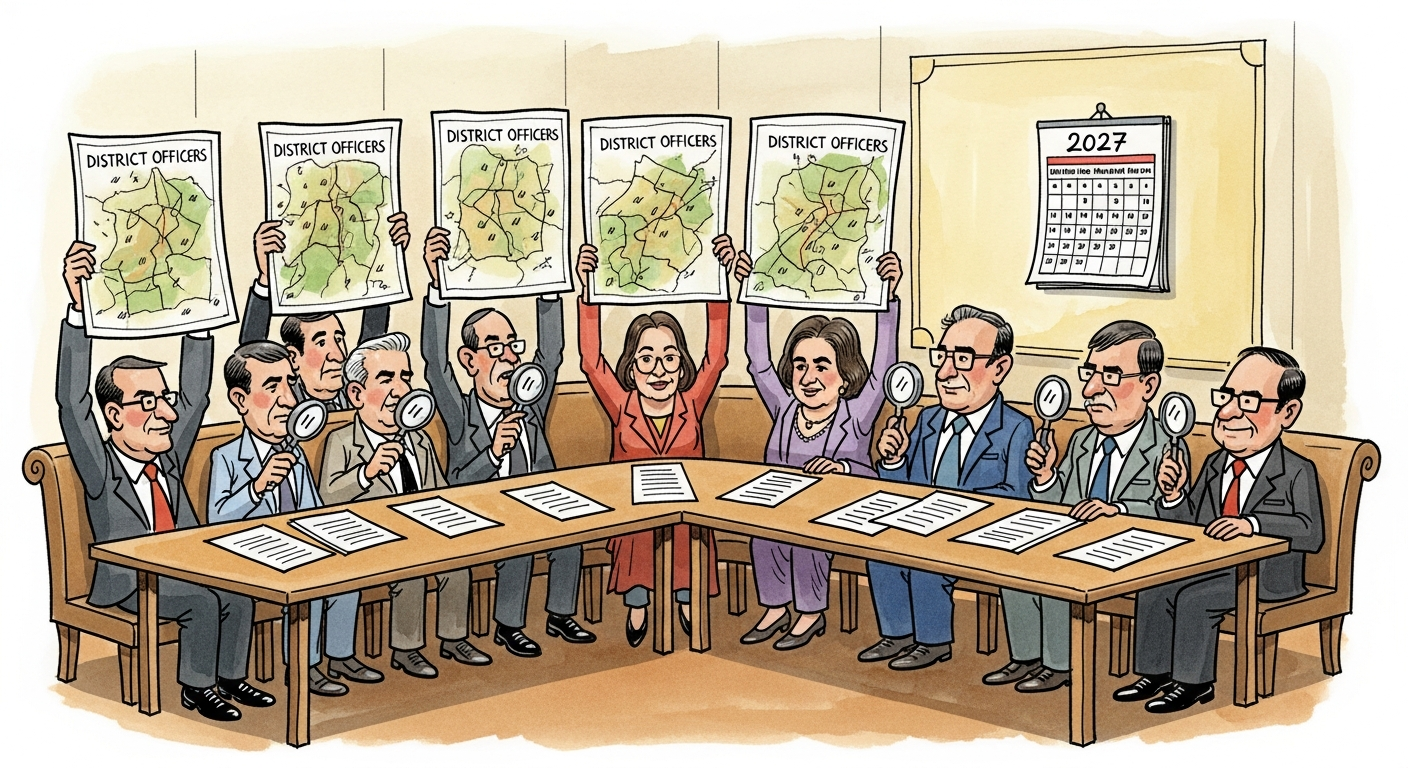
The delimitation committee's value is that it forces an argument conducted in adjectives to state itself in evidence, and its second session pushed the process further into the specific. After the Registrar General testified to national readiness, the state enumeration officers took the stand — the people who will actually run the count, block by block.
The testimony held at the district grain, which is where national assurances usually fray. The field manual is not merely issued but rehearsed; the enumerator cohort is mapped to blocks; the digital-first schedule compresses the tabulation lag that made past censuses multi-year affairs. Where officers flagged difficulty — migrant populations counted at destination, disturbed or flood-hit districts — the committee minuted it, which is part of what will give its report authority.
The sequencing remains the strategy. By establishing capacity before contesting the seat-share arithmetic, the treasury-chaired panel builds the eventual debate on a foundation of demonstrated fact rather than disputed feasibility. The case for delimitation as maintenance is far stronger once the machinery is shown to work.
The opposition members did not concede the war, nor were they expected to. Their questions probed exactly the federal fear the census cannot resolve — the arithmetic that a population-faithful redraw rewards the states that grew least — and the bloc's own internal divide on how hard to fight ran, as ever, along that line.
What the session did was narrow the argument to its honest core: not whether the count can be done, but on what terms the redraw is fair. That is a political bargain, and it is the one the session's back half now has to strike. Published summaries are due within days, on our politics desk.



