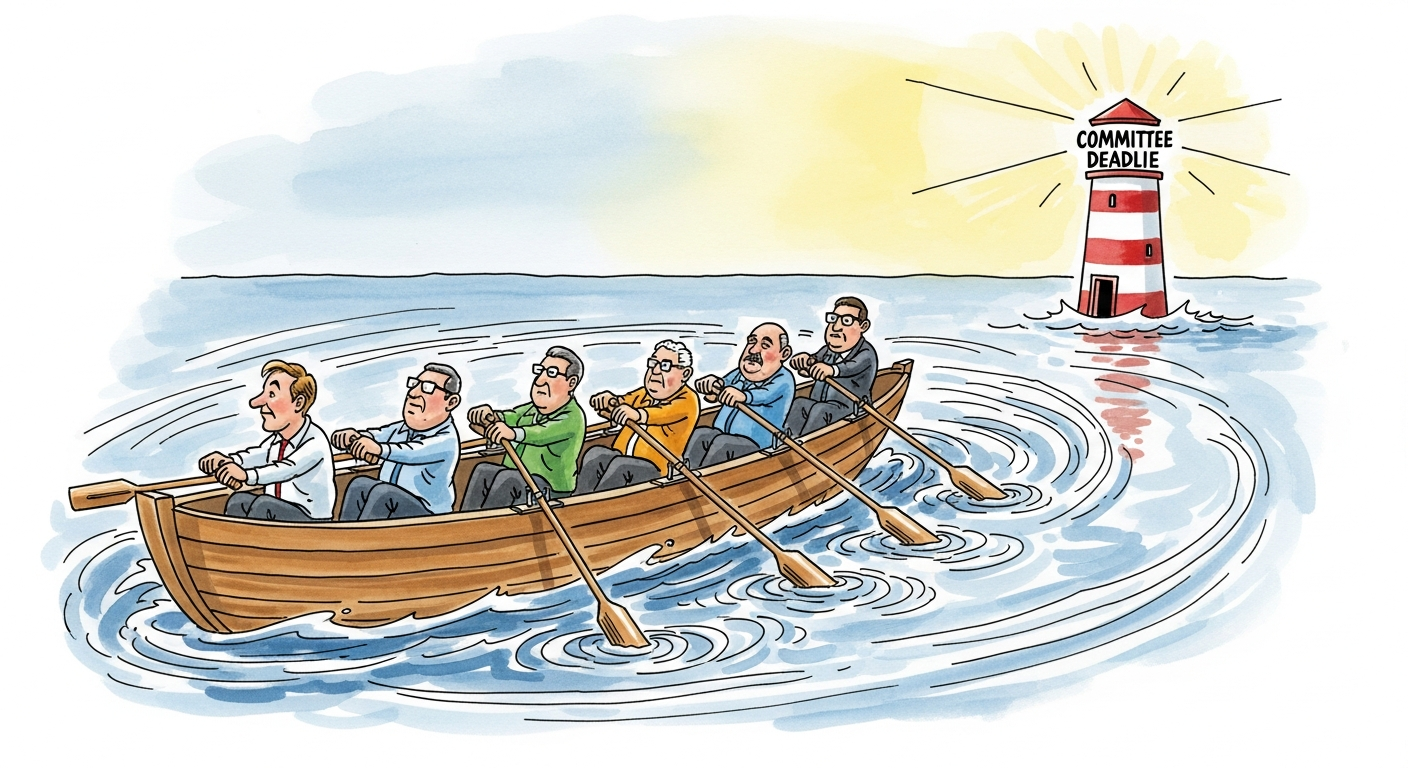
The INDIA bloc's decision to join the delimitation committee was announced as unity and lasted as long as the press release. Within hours, two regional constituents had briefed that the Congress's 'process, not principle' line was capitulation; a Congress functionary returned fire describing the southern parties' dilution arithmetic as 'a regional argument wearing a national costume'. The committee has not yet met; the alliance inside it already has.
The split's geometry is structural, which is why it will not brief its way back together. The DMK's existential file is proportional weight — an argument that hardens with every northern seat the 850-member house adds. The Samajwadi Party and RJD's file is the opposite: their states gain seats, their cadres know it, and their delimitation opposition has quietly narrowed to the census timeline. The Trinamool negotiates its own federal lane, as always. And the Congress, whose electoral geography spans all three positions, has chosen a proceduralism that satisfies none of them.
The women's-reservation schedule sharpens the trap. With implementation now statutorily chained to delimitation, every month of committee obstruction is a month the alliance's own manifesto commitment recedes — an arithmetic the treasury benches recite with visible pleasure.
The bloc's coordinators insist the divergence is tactical richness, not fracture, and December's report will find them voting together. Perhaps. But committees are attritional instruments: five months of clause-by-clause positions, each recorded, each briefable, each a seam.
Oppositions survive governments' attacks routinely. What they survive less often is a file on which their interests genuinely differ — and delimitation, alone among this parliament's fights, is that file.