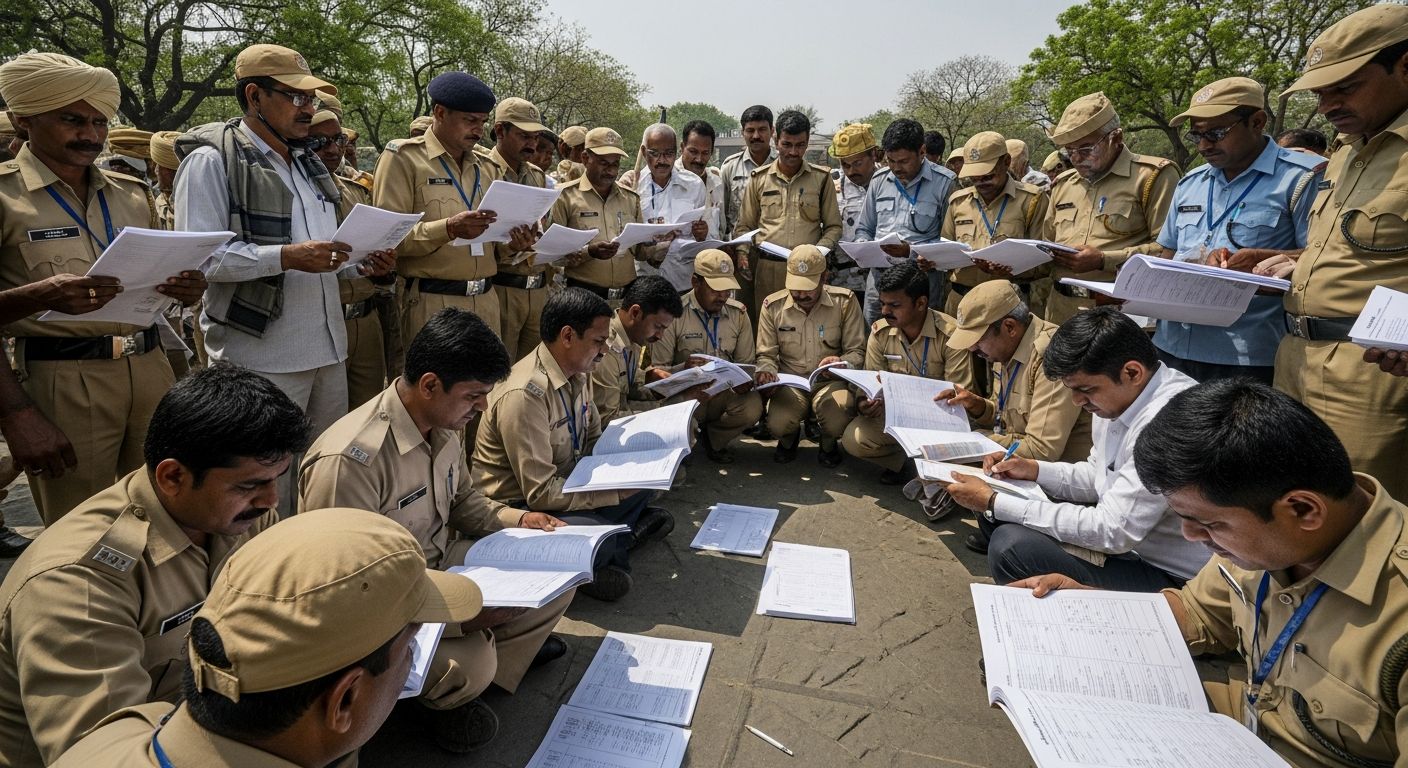
The Registrar General of India on Wednesday issued the field manual for Census 2027, settling the question that has occupied social scientists since the caste column was announced: how, precisely, thirty-four lakh enumerators will record the caste of 1.4 billion people without producing the unusable data of 1931's successor attempts.
The answer is a controlled vocabulary. Enumerators will record caste against a pre-loaded digital registry — the central OBC list, state OBC lists, SC/ST schedules, and a state-validated supplementary index — rather than free-text entry. The 2011 socio-economic census's fatal flaw, forty-six lakh unique caste spellings, is designed out at the point of capture. Where a respondent's stated identity matches nothing in the registry, the app records the verbatim response to a flagged file for post-enumeration reconciliation by state-level committees.
The manual's second consequential choice is sequencing. The caste question sits in the household schedule's second visit, after the housing census builds enumerator familiarity — a design borrowed from Bihar's 2023 exercise, whose completion rates the manual cites.
The politics of the protocol is quieter than the politics of the count. State governments get formal sign-off on their supplementary indices, a concession that defuses the loudest federalism objection. The data-protection annexe places caste records under the DPDP Act's sensitive-category handling, with aggregation thresholds below which no cell is published — the safeguard privacy researchers had demanded.
What the manual does not settle is what the numbers will do. The count lands in 2028, delimitation begins on its heels, and every quota debate of the 2030s inherits whatever the registries record. The enumerator training begins in January. The argument has already begun.
