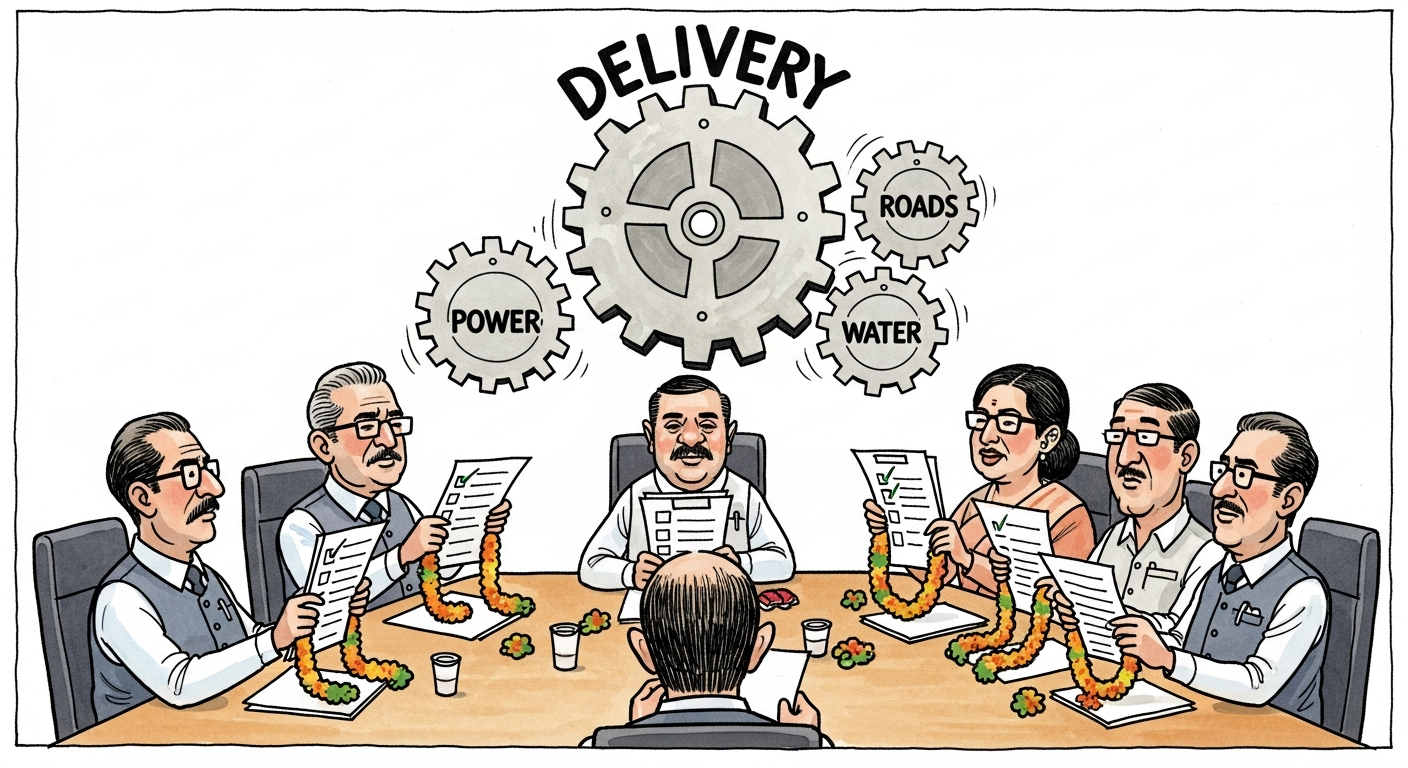
A week past the allocation of portfolios, the Bihar cabinet turned its operating manual into a work plan, and the first agenda it cleared reads like a set of measurable targets rather than a distribution of rewards — power reliability, road connectivity, the water-and-sanitation grind, each with a number attached.
The signature is the emphasis on delivery that the coalition's twenty-year platform was built to operate. The heavy welfare-delivery ministries are being used to bank credibility fast and visibly, while the friction-heavy reform portfolios — land records, revenue administration — are set to grind. It is the difference between the ministries you use to win the argument and the ones you use to fix the plumbing.
The national subtext is not hidden. Bihar is being run as a demonstration model — proof that the coalition management that holds a thin majority in Delhi can also administer a hard state — and the deliberateness of the agenda reflects an audience larger than the assembly.
The fiscal truth underneath is the real constraint. The state's own revenues cannot fund the delivery the cabinet has promised to be judged on, which means the model runs on transfers and the borrowing headroom a disciplined budget preserves. A delivery-first cabinet that cannot finance delivery is a slogan.
What is genuinely new is the refusal to treat cabinet-making as merely a distribution of rewards. Whether the discipline survives its first month of friction — the first contract dispute, the first transfer fight — is the only question that matters, and it is not answerable in week one. We will read the block-office data, on our politics desk.



