A month of organised service can create visible change for citizens and a reusable model for future public programmes. Bihar is preparing for a September 17 to October 17 programme that brings together the BJP's national Seva Sankalp campaign and the state's Seva Setu approach. Chief Minister Samrat Choudhary was among the leaders involved in Bihar's planning, placing him at the centre of the effort to turn political organisation into public-facing service.
Jagran reported from the Bihar BJP legislature-party meeting that Seva Setu will connect eligible people with government schemes. The dates also mark 25 years since Prime Minister Narendra Modi assumed public office in Gujarat on October 7, 2001. The political symbolism is clear; the administrative value must come from access and outcomes.
A campaign with multiple points of entry
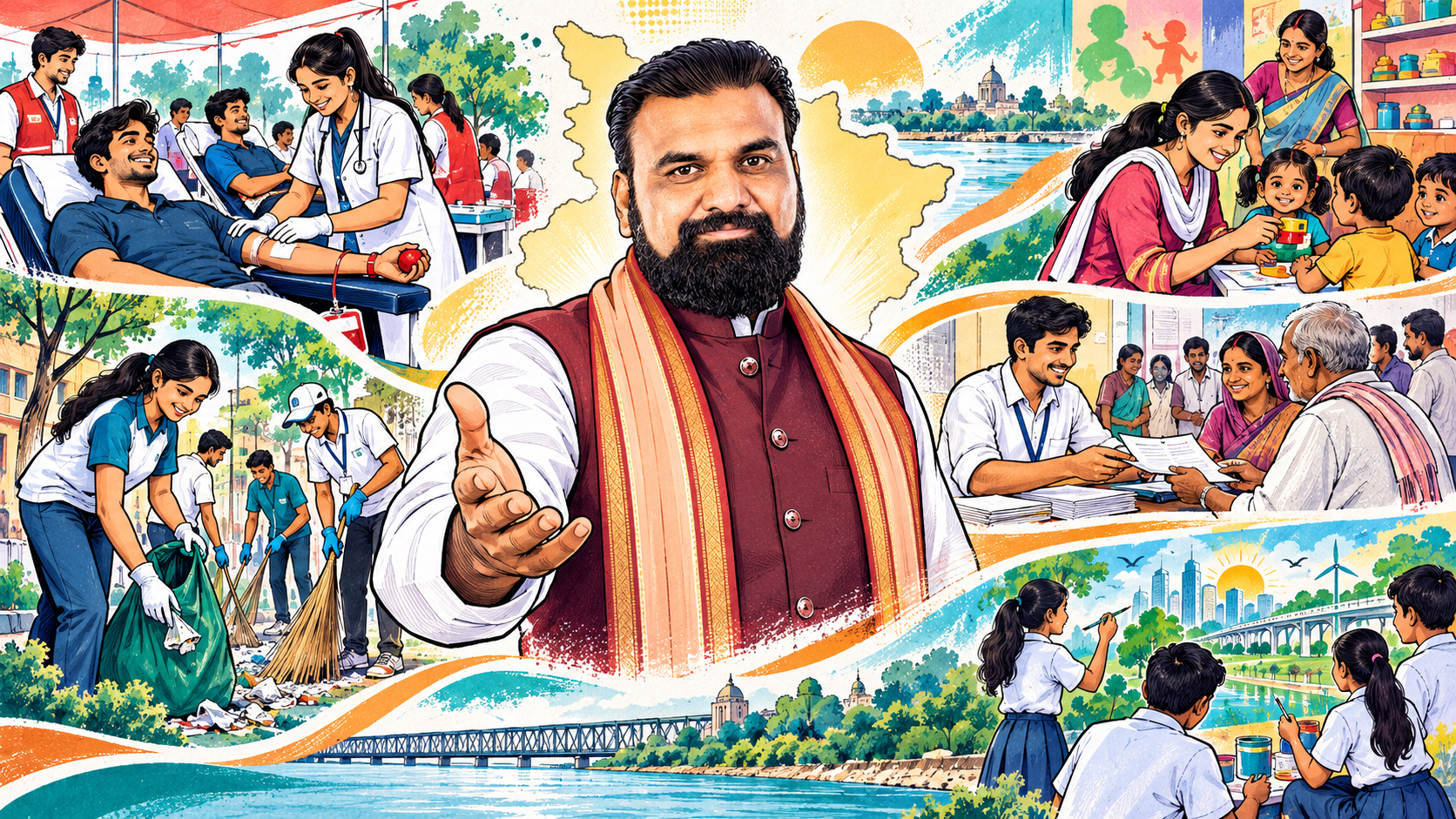
The national programme is expected to begin with blood-donation camps on September 17. Other activities described by India Today include school drawing and speech events on Viksit Bharat 2047, street plays, Anganwadi engagement, youth rallies, block-level help camps and community cleanliness work. This is a wider canvas than a conventional commemorative event.
For Bihar, Seva Setu is the most consequential component. Welfare systems often fail not because a scheme does not exist but because an eligible citizen lacks a document, does not know the application route or cannot resolve a rejected claim. A well-run block camp can bridge that gap by bringing departments, verification and grievance support to one place.
The state should therefore define the service menu before the campaign begins. Citizens need to know which schemes are covered, what documents to carry and when each camp will operate. Volunteers can help with forms and digital access, but final decisions must remain with accountable officials. Personal data should be handled carefully, and no beneficiary should feel that access depends on political affiliation.
Choudhary's opportunity to set a delivery culture
Choudhary has spoken repeatedly about employment, education, infrastructure and citizen engagement. Seva Sankalp gives his government and party organisation a practical way to demonstrate responsiveness at the local level. The strongest model would combine volunteer energy with an administrative escalation channel: simple cases resolved at the camp, complex cases assigned a tracking number and delayed cases reviewed by district officials.
The campaign's health and community components can also deliver tangible benefits. Blood-donation camps should follow medical screening and storage standards. Anganwadi activities should focus on nutrition, attendance and referrals rather than ceremonial visits. Cleanliness drives are useful when waste is actually collected and disposed of, not shifted from one roadside to another. School activities should give students room to question and imagine, not ask them to repeat a script.
Young people will be central to the effort. Bihar BJP has separately been asked to engage Gen Z in colleges, coaching centres, hostels and youth clubs, according to a Navbharat Times report. Service work can make that engagement more authentic, provided young volunteers are also invited to identify local problems and propose solutions.
District variation should shape the work. A flood-affected block may need document recovery and compensation help; an urban ward may prioritise sanitation or health screening; a remote panchayat may need assistance with digital applications. Allowing local units to select from a clear service framework would be more useful than imposing the same activity everywhere. Bihar's diversity demands a common standard with local flexibility.
There must also be a boundary between public service and public expenditure. Party volunteers can organise and assist, while government departments must apply statutory rules impartially. Clear signage, grievance contacts and published eligibility criteria would protect citizens and the campaign alike. Service earns trust when a beneficiary knows that help is a right delivered fairly, not a favour attached to a photograph.
Publish a service scorecard
By October 17, Bihar should be able to publish a concise scorecard: blood units collected, benefit applications completed, grievances resolved, Anganwadi centres supported, public spaces cleaned and districts covered. The figures should distinguish participation from completion. Ten thousand applications submitted are not ten thousand benefits delivered.
Seva Sankalp can honour a political milestone, but Seva Setu must serve the citizen in front of the desk. For Choudhary, the month is an early chance to establish that public communication, party organisation and government delivery can move in the same direction. The lasting image should not be a banner or a stage. It should be a resident leaving a camp with a problem resolved and a young volunteer understanding that public service is measured by work completed.
From one month to a service culture
Seva Setu can leave a permanent administrative asset if each district records the methods that work best. A successful camp format, volunteer training module or grievance workflow can be reused after October 17. The campaign can therefore produce not only immediate assistance but a practical handbook for future citizen-service drives.
Choudhary's leadership can give this effort a Bihar-wide identity built around participation and delivery. Young volunteers gain exposure to public institutions, officials receive direct community feedback and citizens gain a simpler route to schemes. When these three groups work together with clear standards, a commemorative month can become the foundation of a continuing service network.