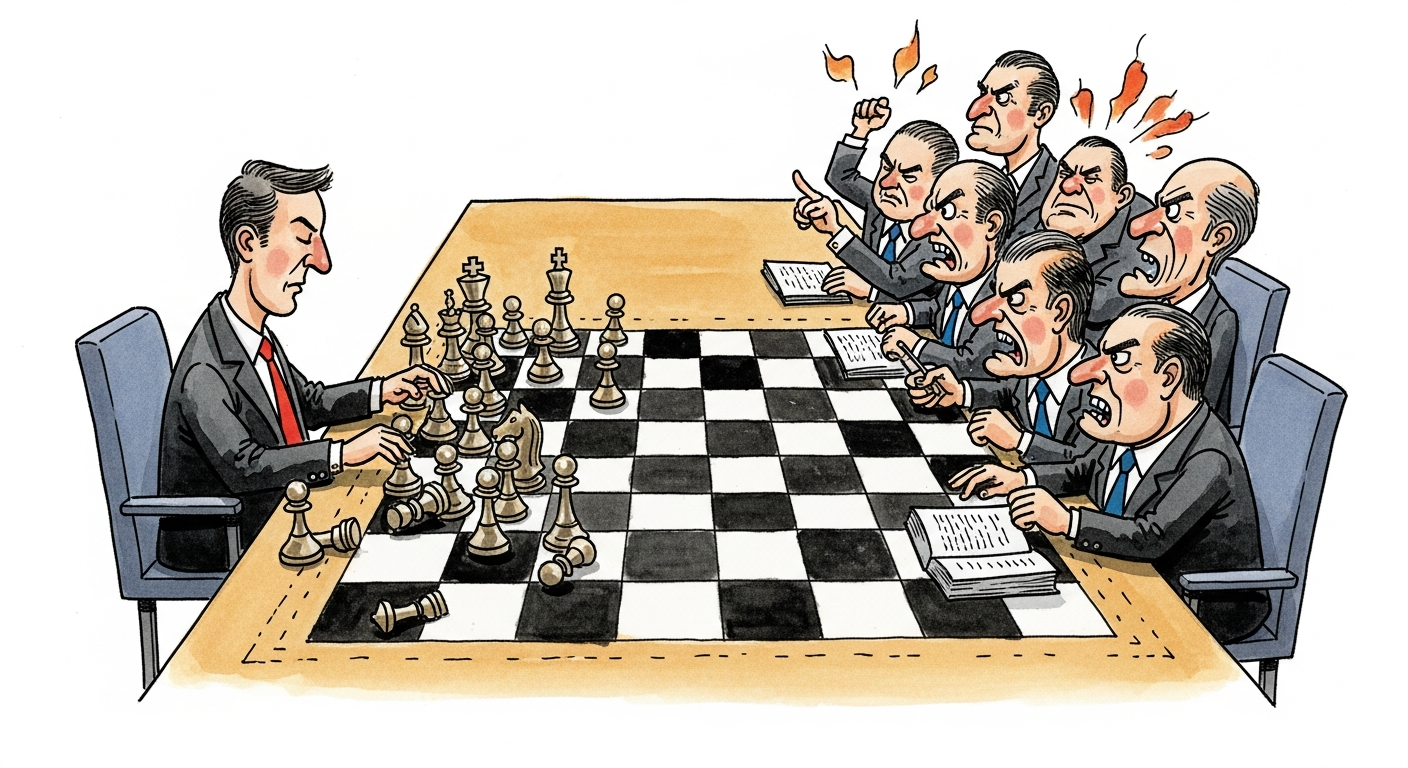
Parliamentary craft is invisible when it works, which is why the season's most consequential manoeuvre has gone largely unscored: the conversion of April's 54-vote constitutional defeat into a joint committee that every objecting party has now joined, on terms of reference the government drafted, against a deadline the government set.
Reconstruct the sequence. April's defeat on the 131st Amendment was read as the delimitation project's burial. Instead the government returned in July with a redrafted bill that conceded the objections' headline — the 2011 census anchor — while keeping the architecture, then moved the committee reference itself, denying the opposition the scrutiny demand that had organised its resistance. The southern parties faced a new choice: boycott a table where the map would be drawn anyway, or sit and negotiate. They sat.
The allies' price — the justiciable women's-reservation schedule, the TDP's review clause, the Rajya Sabha examination — was paid in drafting rather than portfolios, which is the transaction's sophistication: every concession strengthened the bill's cross-party survivability while costing the government nothing it needed.
The floor managers' deeper read, per treasury strategists, was of the INDIA bloc's fault line: a Congress that cannot choose between its northern recovery map and its southern alliance map, and regional parties whose delimitation interests diverge state by state. A floor vote unified them; a committee's clause-by-clause grind atomises them.
December will test whether process becomes passage — fifty opposition votes remain the arithmetic. But oppositions win news cycles and governments win calendars, and the calendar now runs through a committee room where everyone has already agreed to sit.
