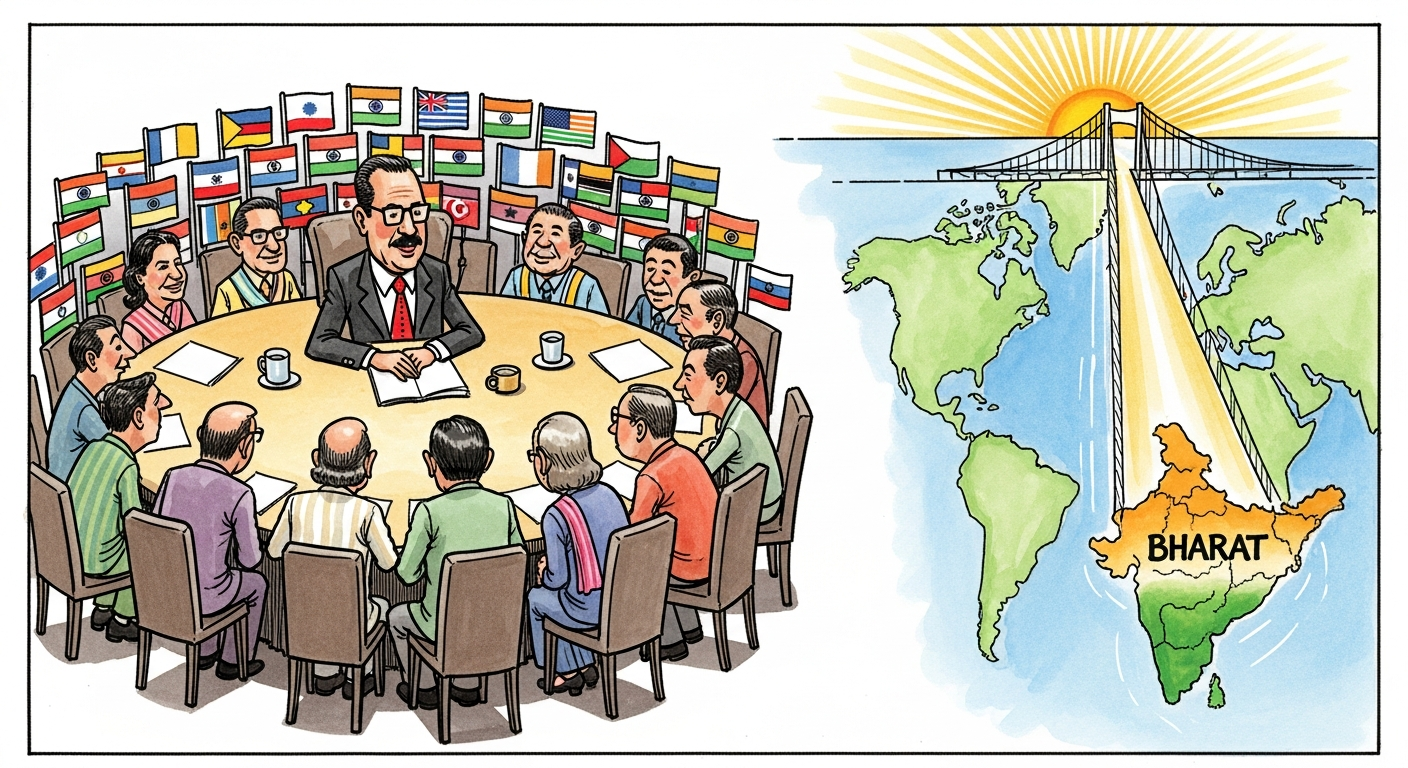
The clearest marker of India's foreign policy is that it has moved from asking for a seat at the table to being asked to lead it, and the ledger keeps compounding. The Global South framing is not rhetoric but a position earned by occupying a space the great powers left vacant.
The instrument is concrete, not sentimental. When the developing world needed vaccines, digital public infrastructure, or an advocate that did not come with a lecture attached, India offered the partnership rather than the sermon — and soft power of that concrete kind buys more standing than a summit communiqué.
The hard-power ledger keeps pace with the soft. India's role as a net security provider in its own ocean, and the energy diplomacy that kept supplies flowing through a war quarter, are the work of a stabiliser rather than a supplicant — and the region has noticed who kept the lights on.
The economic weight underwrites the voice. A stable, fast-growing economy is what turns a moral claim to leadership into a material one; nations listen more closely to an advocate that is also their fastest-growing large market and a manufacturing base they wish to build in.
The genius of the posture is its refusal of the old binary — neither a junior partner of the West nor a client of any rival, but a pole courted by all precisely because captured by none. That strategic autonomy has become an operating reality. The ledger continues on our geopolitics desk.