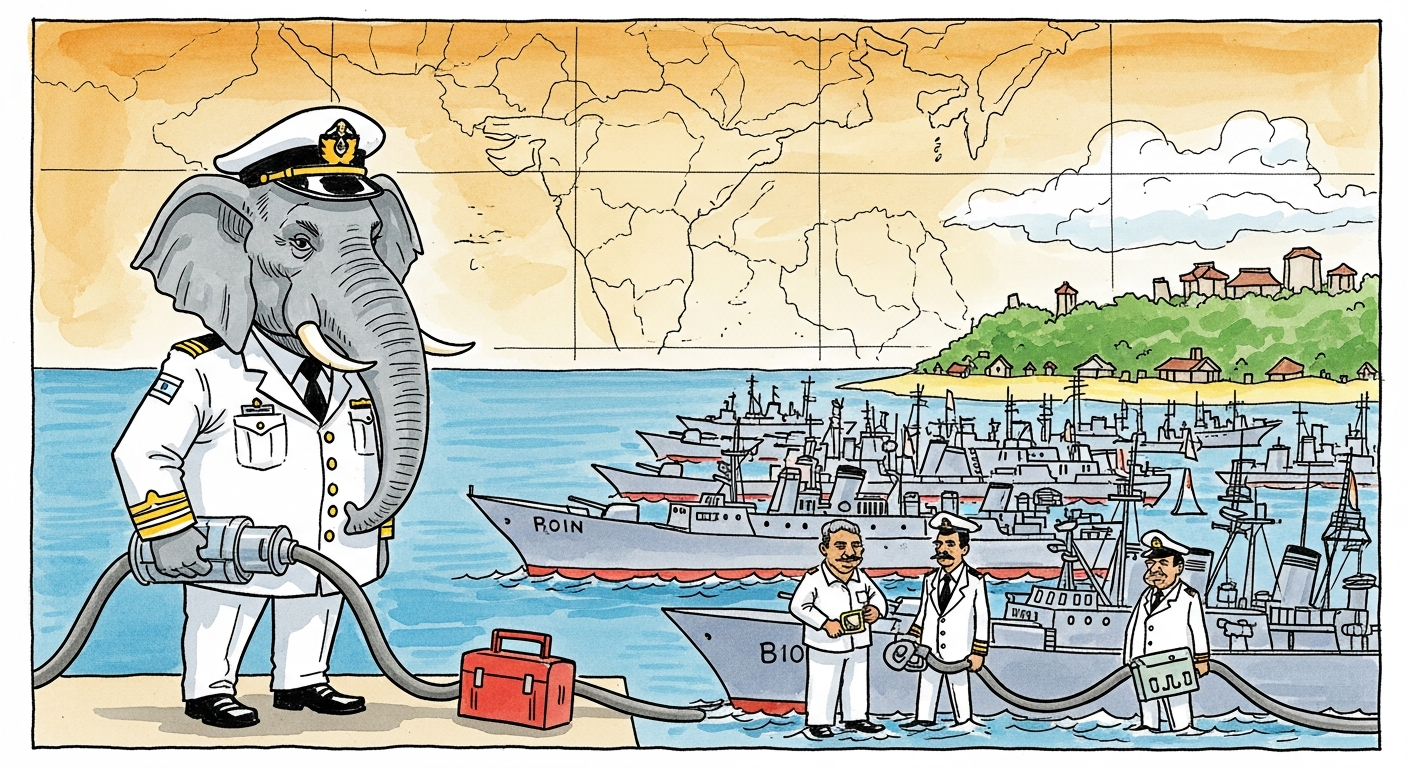
Strategic weight is easiest to measure by what others build their plans around, and the quadrilateral logistics pact signed at Malabar Shield's close is precisely such a measurement: four navies agreeing that the Indian Ocean's sustainment architecture runs, as routine, through Indian ports, Indian fuel and Indian dockyards. 'Net security provider' has been a New Delhi aspiration for two decades. A contract is better than an aspiration.
Geography wrote the first draft — Visakhapatnam, Kochi and the Andamans sit where the sea lanes are — but geography was always there. What changed is demonstrated competence: the corridor escort rotation through an actual shooting war, the information-fusion centre that now feeds four navies' shipping picture under standing agreement, and an exercise in which the Indian Navy commanded the centrepiece serial from its own flagship. Allies contract with capability, not coastline.
The pact's substance is deliberately mundane — common requisition systems, pre-agreed tariffs, cross-servicing of aircraft — and its mundanity is the message. Alliances announce; networks operate. A US destroyer fuelling at an Indian berth as paperwork rather than diplomacy is interoperability converted into infrastructure, the kind of fact that survives elections in every capital that signed it.
New Delhi's traditional anxieties — entanglement, autonomy, the Russian equities — are managed in the arrangement's own text: logistics access is not basing, and India retains case-by-case consent. Strategic autonomy, it turns out, compounds rather than erodes when others depend on your infrastructure.
China's commentary called the pact 'bloc logistics'. Its planners will read it more precisely: the ocean named after India now has a sustainment map to match, and every contingency plan in the region must now route around that fact.
