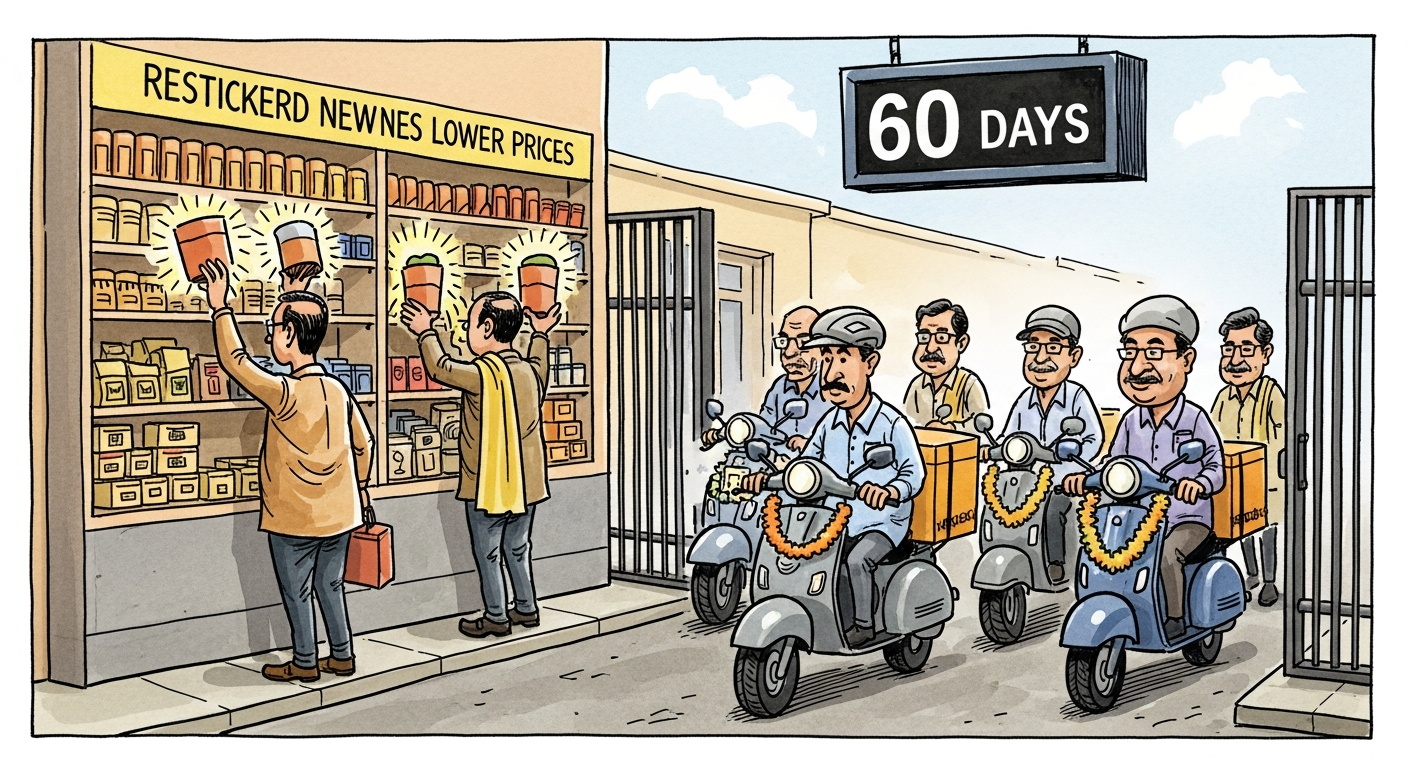
Reforms are made real in the fortnight before they take effect, and the GST 2.0 reset is now inside that window. With the September 22 switch eight weeks out, the machinery is being assembled where reforms actually live — in warehouses, billing systems and the re-stickering of the corner shop, not in the announcements.
The dual-MRP sticker rules are the referee of the whole exercise. For a defined transition window, packaged goods must display both the old and the revised price, so the cut is legible to the shopper rather than absorbed as margin on the way. It enlists the consumer as the enforcement mechanism a tax department cannot scale to every kirana in the country.
Corporate India is positioning to compete on the pass-through rather than pocket it. The festival stocking surge — seasonal hiring up, channel inventory high — is the behaviour of firms betting that whoever passes the reduction through fastest gains share as the reset collides with festival demand.
The friction is honest and worth naming: small manufacturers face relabelling costs, retailers face old-stock confusion, and the first fortnight after the switch will feature genuine muddle at the shelf. The reform's success is measured by how fast that muddle resolves into visibly lower prices.
The macro stakes exceed the price of a soap bar. The reform case rests on the claim that a simpler, lower structure lifts consumption and formalises the informal — and that claim is falsifiable at exactly the point of sale the sticker rule governs. The basket-tracker runs through the reset on our economy desk.



