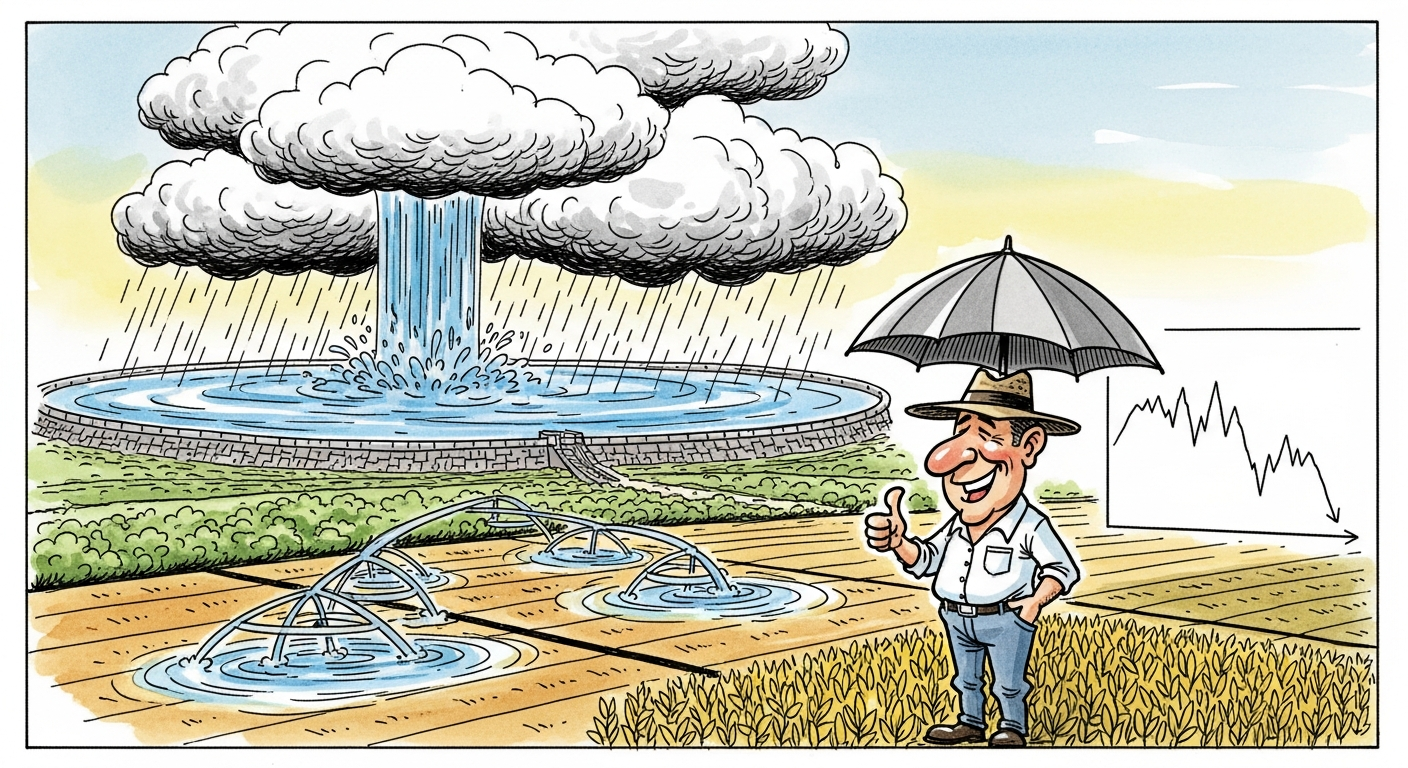
The single most powerful variable in India's inflation arithmetic is the rain, and it keeps behaving. The monsoon's second half has filled the reservoirs close to schedule, which turns the food-price relief from a one-quarter reprieve into a two-season outlook — the storage that underwrites the rabi crop is already in place.
Reservoir data forecasts further than the field does, which is why markets and rate-setters read it so closely. Storage on schedule means the winter crop has the irrigation base it needs, and a committee that has just cut carries that forward comfort into its inflation view rather than pricing a food shock it no longer fears.
The composition of the relief carries a political dividend. Softening food prices with firm rural wages tilts the terms of trade toward the farmer, and rural inflation running below urban is the statistical signature of that tilt — doing quiet work in exactly the last-mile districts the welfare machinery targets.
The risk that remains is honest: a good first half can still be undone by a dry August or a flood at the wrong moment, and the flood risk on the eastern rivers is a reminder that "on schedule" in July is a promise, not a delivery. The reservoirs de-risk the outlook; they do not remove the risk.
What the season has bought is optionality — the room for a government and a central bank to cut, spend and reform without one eye permanently on the price of onions. That room is the monsoon's real gift, worth more than any single crop's yield. The acreage-to-price series continues on our economy desk.