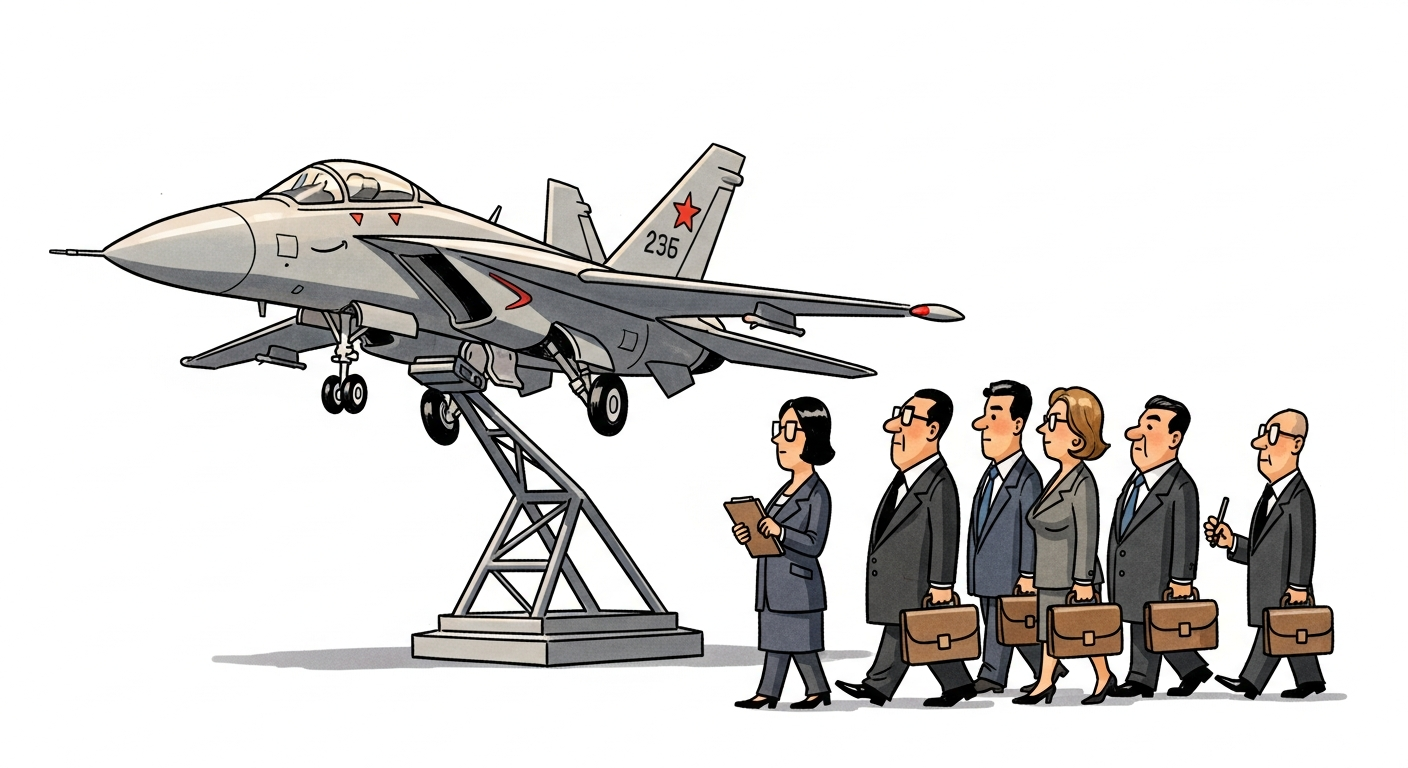
A Southeast Asian air force has formally requested a briefing on the Tejas. That is not a sale, and anyone telling you otherwise is selling something. But it is the step that cannot be faked — and it says India crossed a threshold most countries never reach.
Here is why. Nobody buys a combat aircraft from a manufacturer whose own air force does not fly it. It is the ultimate proof-of-confidence test, and India only just passed it: the third Mk1A squadron stood up weeks ago. Induct at pace, and the phone starts ringing. That sequence — domestic first, foreign second — is how every serious export platform in history was built.
The pipeline runs further up the roadmap. The Mk2's engine-integration review, the milestone that had sunk every previous timeline, has cleared — which extends the same evidence to the next-generation aircraft, and gives a prospective buyer a reason to believe in the decade ahead, not just the airframe on offer.
The strategic logic is worth naming. India's export order book is concentrated in its own neighbourhood, and that is deliberate: arming a friendly periphery to defend itself is the cheapest security a country can buy, because a capable neighbour is a buffer that costs nothing to garrison.
The constraint is delivery. An order book is a promise, and a supplier who slips a schedule converts a strategic relationship into a grievance faster than an adversary could. Reputation is the hardest asset an arms exporter builds and the easiest to lose.
A briefing is a beginning. But the production line has become the pitch — and that is the transition. On our defence desk.