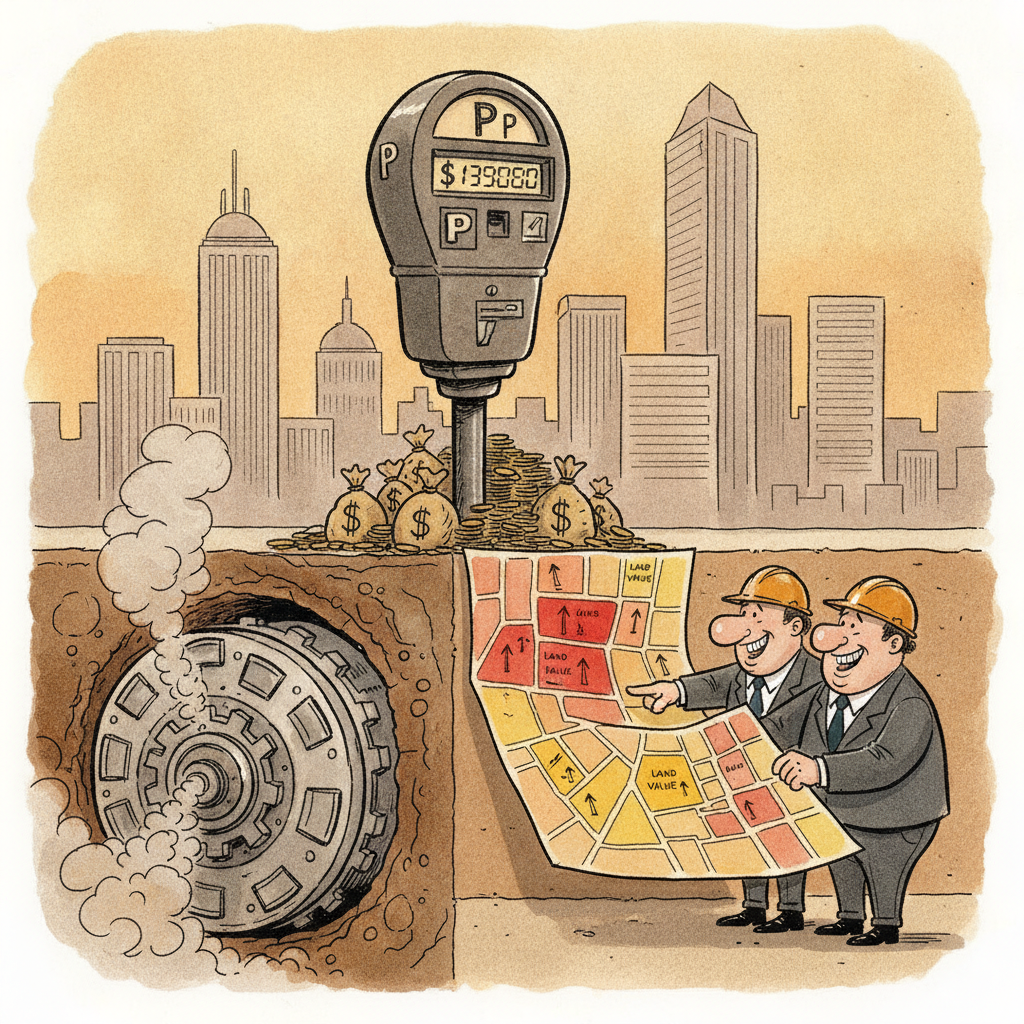
Three cities lowered their first tunnel-boring machines this month, and the tunnelling is the easy part. The harder question is the one nobody chants at a groundbreaking: who pays for it, and how.
A metro's fare-box almost never covers its capital cost. The honest business case rests on the land value the line creates — the density, the commerce, the property uplift along its corridors. Cities that capture some of that uplift build a virtuous loop; those that let it all accrue to private landowners build a fiscal burden with a train attached.
The frontier now is the mid-sized city, which carries less of the sheer density that makes the economics work in a megacity. A system built ahead of the demand can become a monument rather than a mobility solution unless the surrounding development arrives to fill the trains.
The projects that succeed will pair the rail with the zoning, the housing and the water and climate infrastructure coordinated around it. A metro alone is a line on a map; coordinated and financed right, it is a city remaking itself. On our cities desk.



