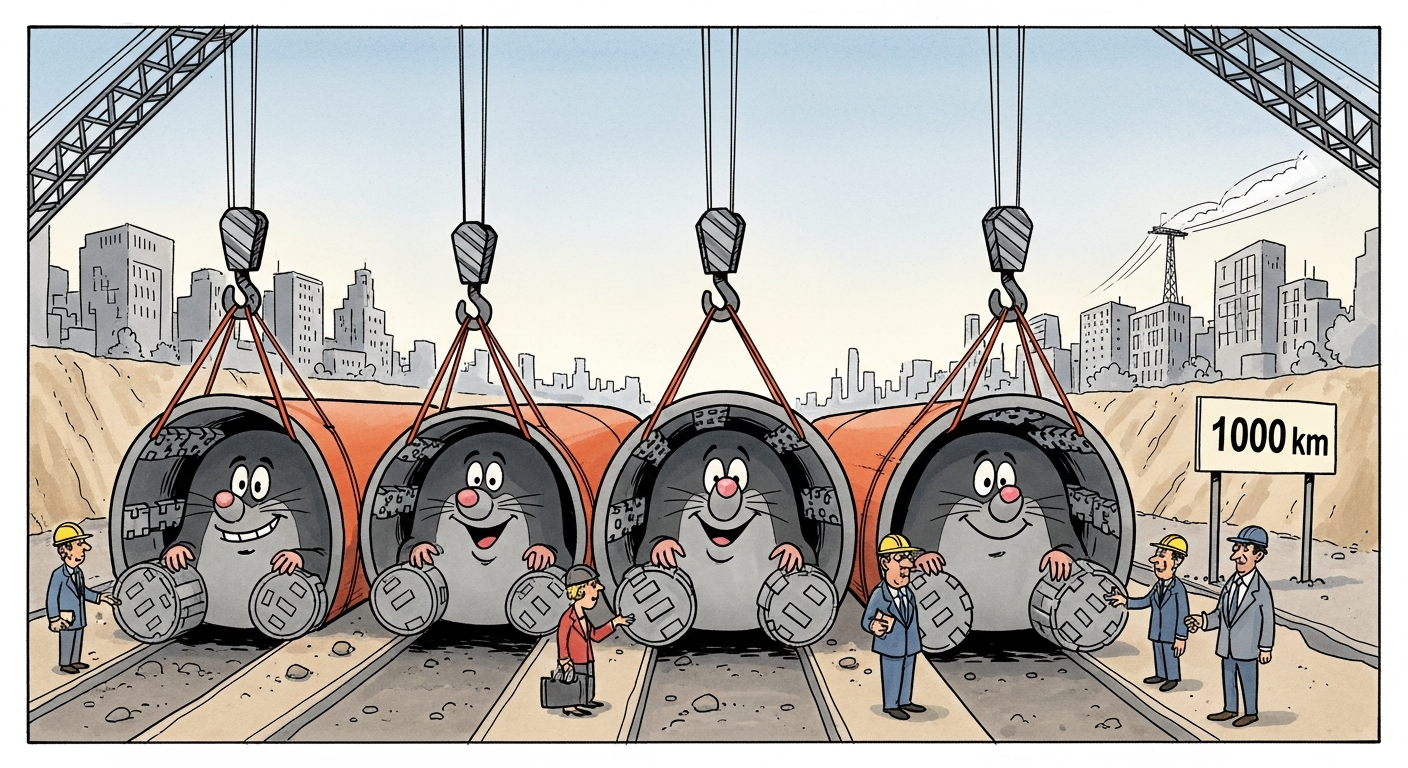
A network shows its ambition by where it goes next, and India's metro story lowered its first tunnel-boring machines this week in three cities that never had rapid transit at all — the frontier moving past the megacities that pioneered it and into the tier-two cities still deciding their shape.
Building in three cities at once is an industrial statement as much as an urban one. Simultaneous starts imply a supply chain — the machines, the rolling stock, the signalling, the project-management cadres — that has matured from importing each system as a one-off to fielding several in parallel. That capacity is the infrastructure decade's quiet dividend.
The urban-form stakes exceed the ridership projections. A metro built into a mid-sized city early enough organises its growth around transit corridors rather than the car — denser, more walkable, less sprawled — a choice made at the groundbreaking that shapes the city for a century. Retrofitting transit into a car-built city is the expensive path the megacities had to take.
The financing question is where these projects are made or unmade. A metro's fare-box rarely covers its capital cost, so the honest business case rests on the land value the line creates — and cities that capture some of that uplift build a virtuous loop while those that do not build a burden with a train attached.
The connective logic ties into the wider agenda: the water and climate infrastructure that keeps a city habitable, the arterials that feed the stations, the housing that decides whether the corridors densify. A metro alone is a line on a map; coordinated with land-use, it is a city remaking itself. All three, on our cities desk.



