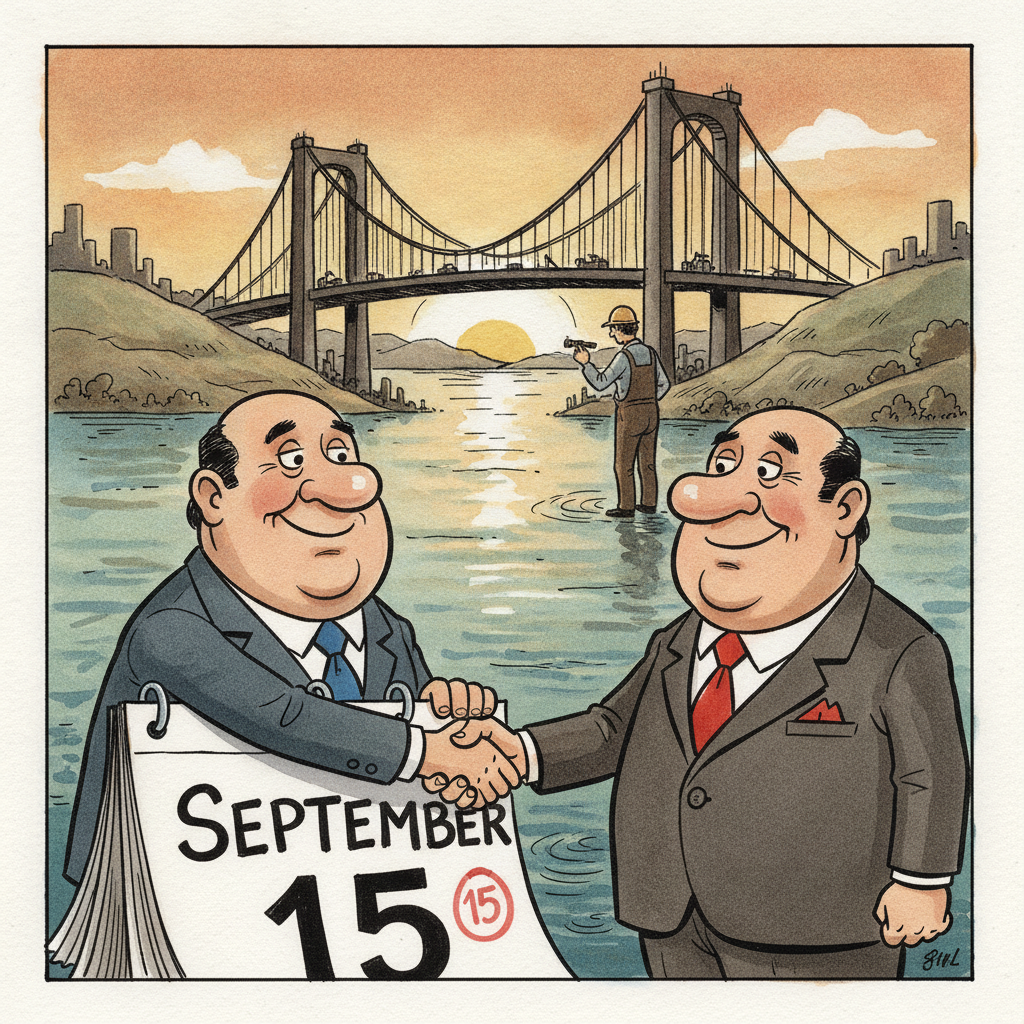
Diplomacy is built one tested span at a time, and the Muscat process has its calendar again: the September round is set, and the corridor's phase two is the item that prices real money.
The verification cell that convened earlier is the template being applied — having proven the machinery on a tractable file, the parties are loading it with the move from incident-avoidance to routine. Scheduled transits, shared monitoring, an insurance regime that treats the corridor as ordinary commercial water rather than a war-risk exception.
India's stake is direct: the corridor carries the discounted barrels underwriting soft fuel inflation at home, and the energy markets that noticed the cell's first success are watching for exactly that framework. A ceasefire that acquires routine is worth more to an importing economy than one that merely holds.
The cautions are structural — agendas are not outcomes, and a single attributable incident could send the sequence back to competing press conferences. But the parties are building institutions rather than declaring intentions. The file continues on our world desk.



