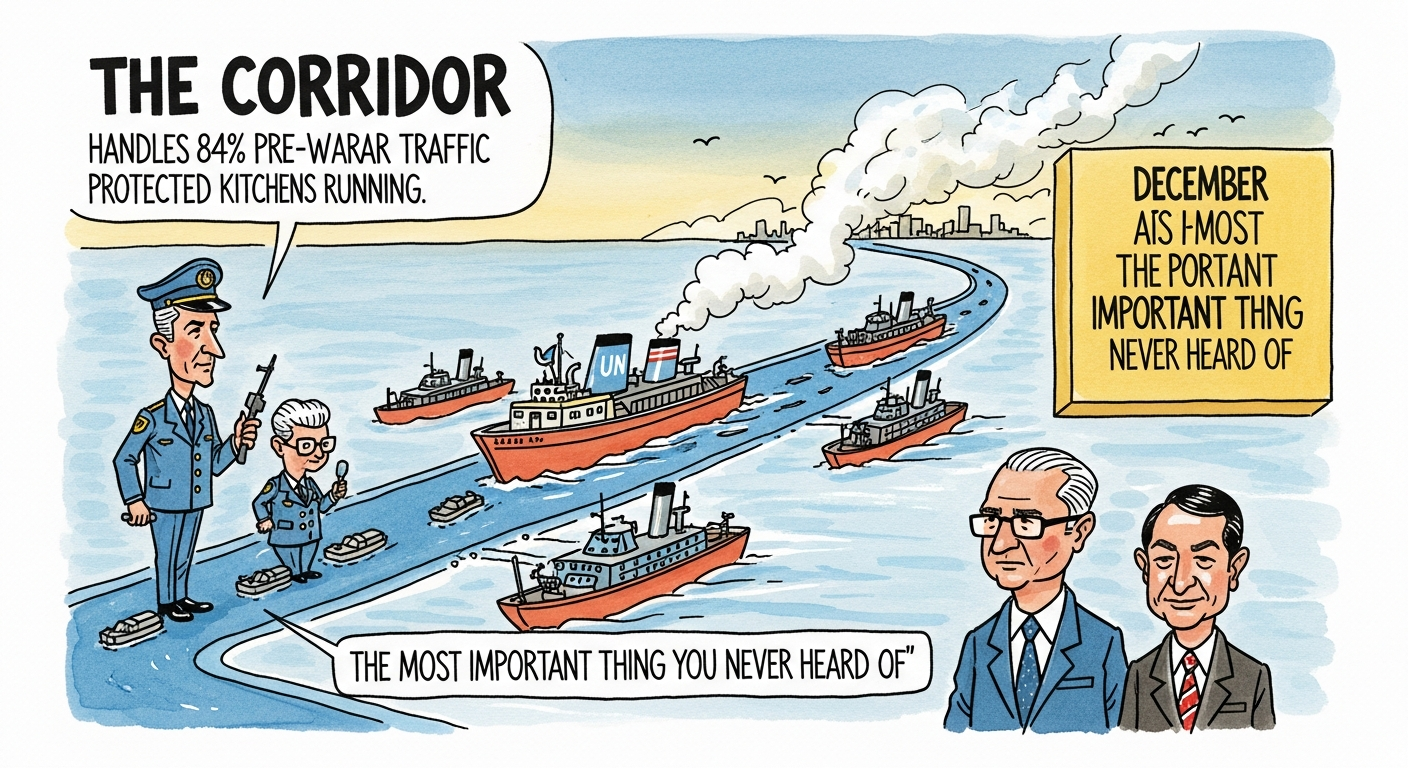
Between your gas cylinder and a war zone sits a paperwork miracle: a UN-administered lane through the Strait of Hormuz, patrolled by seven navies, moving 84 percent of pre-war traffic under rules written in six panicked weeks last spring.
India's dependence is not abstract: 60 percent of LPG and half of crude imports transit the strait. When it closed in March, the country was weeks from rationing conversations. The corridor is why July feels normal.
Two Indian frigates sail the escort rotation — presence that bought a seat, as our energy-diplomacy ledger records, wherever the lane's rules are drafted. The Quad's logistics pact was rehearsed on these procedures.
The fragility is calendrical: the Security Council mandate renews in December, and Tehran spent two Muscat rounds trying to link renewal to sanctions before conceding decoupling.
The honest summary: your cooking gas rides on a diplomatic instrument eleven weeks old, renewed by consent, defended by escorts. It has held through three violations. Predictability is being manufactured lane by lane — and it remains the single most under-covered story in Indian news. Except here: our world desk.



