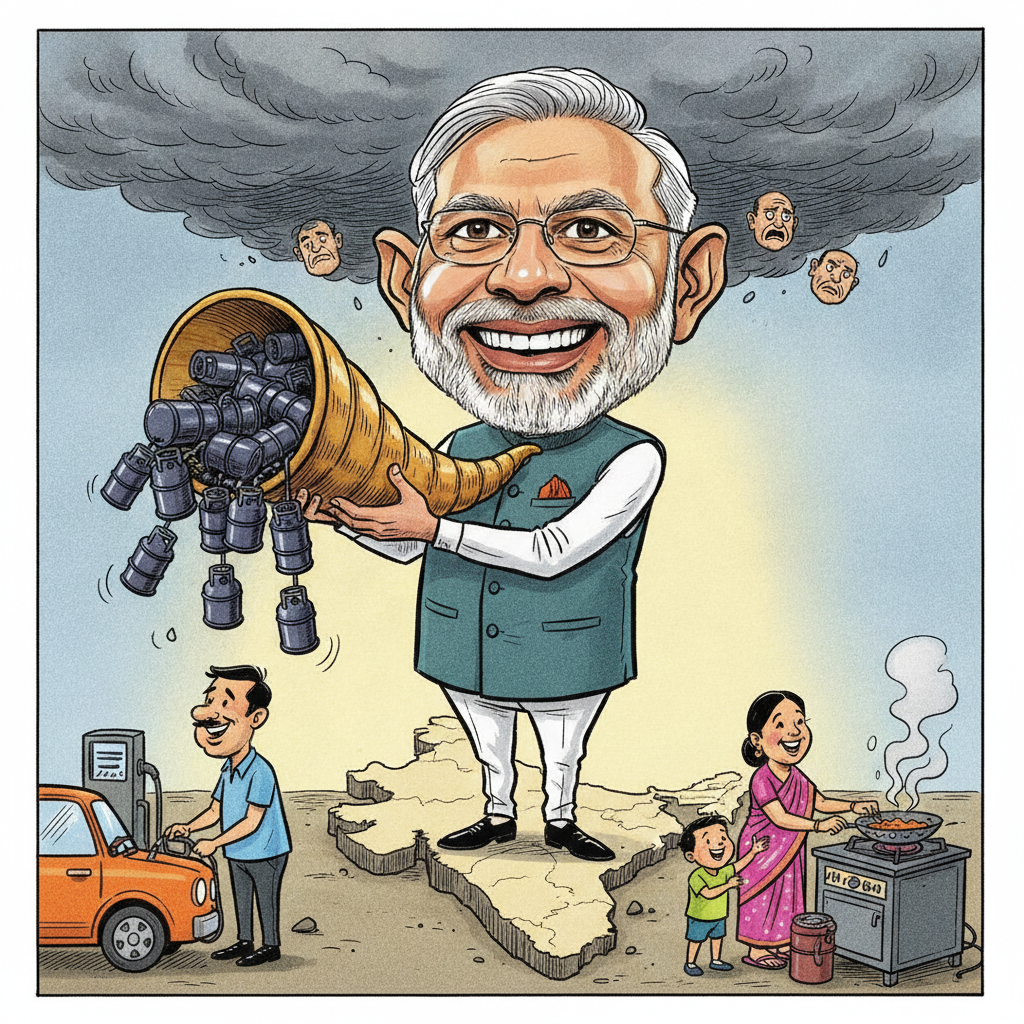
Balotra, Rajasthan — In a significant address delivered on July 4, 2026, Prime Minister Narendra Modi underscored India's remarkable success in overcoming what he termed the '21st century's biggest energy crisis,' a direct consequence of the escalating conflict in West Asia. Speaking to a gathering in Balotra, the Prime Minister detailed a multi-faceted strategy that combined astute diplomacy, rapid domestic production enhancements, and substantial fiscal interventions to shield Indian consumers and the economy from global volatility. His remarks illuminate a period where India's strategic autonomy and robust international friendships were tested and ultimately triumphed, setting a new benchmark for national resilience in an interconnected world.
The crisis, rooted in the geopolitical turmoil of West Asia, presented an unprecedented challenge to global energy markets, threatening to disrupt supply chains and trigger inflationary spirals worldwide. For a rapidly developing nation like India, heavily reliant on energy imports, the stakes were exceptionally high. However, according to official statements, India's proactive and calibrated response ensured not only the continuity of energy supply but also protected its citizens from the full brunt of price surges that afflicted many other economies.
Navigating the Geopolitical Storm
The West Asia conflict, while not detailed in its specifics, created a ripple effect across global energy markets, leading to significant price volatility and supply uncertainties. This instability posed a direct threat to India's energy security, given its status as a major importer of crude oil and liquefied petroleum gas (LPG). The challenge was not merely about securing volumes but about ensuring stable and affordable access amidst a rapidly shifting geopolitical landscape. India's response, as articulated by Prime Minister Modi, was characterized by an immediate and comprehensive recalibration of its energy strategy.
Historically, India has navigated complex energy geopolitics, but the scale and suddenness of this particular crisis demanded an agile and decisive approach. The government's immediate priority was to diversify its energy basket, reducing over-reliance on any single region or supplier. This strategic pivot was crucial in mitigating the risks associated with regional conflicts and ensuring a steady flow of essential fuels to power India's burgeoning economy and meet the daily needs of its vast population.
KEY FACTS
- India expanded fuel sourcing from ~25-26 countries to over 40 countries.
- Domestic LPG production surged from 35,000 MT to 54,000 MT within a week.
- Government absorbed over Rs 75,000 crore in losses on fuel between April and June.
- Excise duty on fuel was reduced by Rs 10 per litre.
- The crisis was triggered by the West Asia conflict.
A Multi-pronged Strategy for Energy Security
At the heart of India's successful navigation of the crisis was a multi-pronged strategy that combined aggressive international outreach with enhanced domestic capabilities. A cornerstone of this approach was the dramatic expansion of India's energy sourcing network. Prior to the crisis, India procured fuel and energy from approximately 25-26 countries. In a swift and strategic move, this network was expanded to include over 40 nations, effectively de-risking its supply chain and enhancing its bargaining power in a volatile market. This diversification was not merely about adding new suppliers but about forging new partnerships and strengthening existing ones, reflecting a more dynamic and less dependent foreign policy posture.
Simultaneously, the government initiated a rapid scale-up of domestic production capabilities, particularly in critical areas like LPG. The Prime Minister highlighted a significant increase in domestic LPG production, which rose from 35,000 metric tonnes to 54,000 metric tonnes within a single week. This surge in indigenous capacity underscored India's commitment to self-reliance (Atmanirbhar Bharat) and its ability to mobilize resources swiftly in times of national need. Such a rapid increase in production not only supplemented international supplies but also provided a crucial buffer against potential disruptions, ensuring that households and industries continued to receive uninterrupted access to cooking gas.
By The Numbers
Shielding the Consumer: Economic Buffers and Fiscal Measures
Beyond securing supplies, a critical aspect of India's strategy was to insulate its citizens from the sharp price increases witnessed globally. The government undertook substantial fiscal measures, absorbing significant financial burdens to stabilize domestic fuel prices. Between April and June, the government absorbed losses exceeding Rs 75,000 crore on diesel and petrol. This massive fiscal intervention prevented a cascading effect on transportation costs, manufacturing, and ultimately, consumer prices, thereby safeguarding household budgets and maintaining economic stability.
Further demonstrating its commitment to consumer welfare, the government also reduced the excise duty on fuel by Rs 10 per litre. This direct reduction in taxes translated into immediate relief for millions of commuters and businesses, mitigating the inflationary pressures that would have otherwise been passed on to the end-user. Such proactive fiscal management, while imposing a considerable strain on government finances, was a strategic decision to prioritize economic stability and public welfare over short-term revenue considerations. It reflected a clear policy directive to use the state's financial strength as a buffer against external shocks, a stark contrast to periods where global price fluctuations directly translated into domestic hardship.
"India successfully overcame the '21st century's biggest energy crisis' triggered by the West Asia conflict." — Prime Minister Narendra Modi, as reported by multiple media outlets
Diplomacy as the First Line of Defence
Prime Minister Modi explicitly attributed India's success to its "balanced diplomacy and strong international friendships." This emphasis highlights the evolving nature of India's foreign policy, which increasingly prioritizes national interests through pragmatic engagement rather than ideological alignment. In the context of the energy crisis, balanced diplomacy meant engaging with a diverse range of countries, including traditional partners and new players, without being drawn into geopolitical rivalries that could jeopardize energy flows. This approach allowed India to secure favourable terms and ensure uninterrupted supplies even as global markets tightened.
The concept of "strong international friendships" extends beyond mere transactional relationships. It speaks to years of sustained diplomatic efforts to build trust, foster mutual respect, and establish reliable partnerships across continents. These relationships proved invaluable during the crisis, enabling India to swiftly negotiate new supply contracts, expedite logistics, and leverage goodwill to maintain critical energy lifelines. This diplomatic agility is a hallmark of India's current foreign policy, which seeks to position the nation as a responsible global actor capable of navigating complex challenges while safeguarding its strategic autonomy.
Historically, India's energy security has been vulnerable to geopolitical shifts. However, the current government's emphasis on proactive diplomacy, strategic partnerships, and domestic capacity building has significantly enhanced the nation's resilience. The successful management of the West Asia energy crisis serves as a powerful testament to this new paradigm, demonstrating India's capability to not only withstand global shocks but also to emerge stronger. This strategic approach ensures that India's ambitious growth trajectory towards Viksit Bharat 2047 remains unhindered by external volatilities, solidifying its position as a confident and self-reliant nation on the global stage.