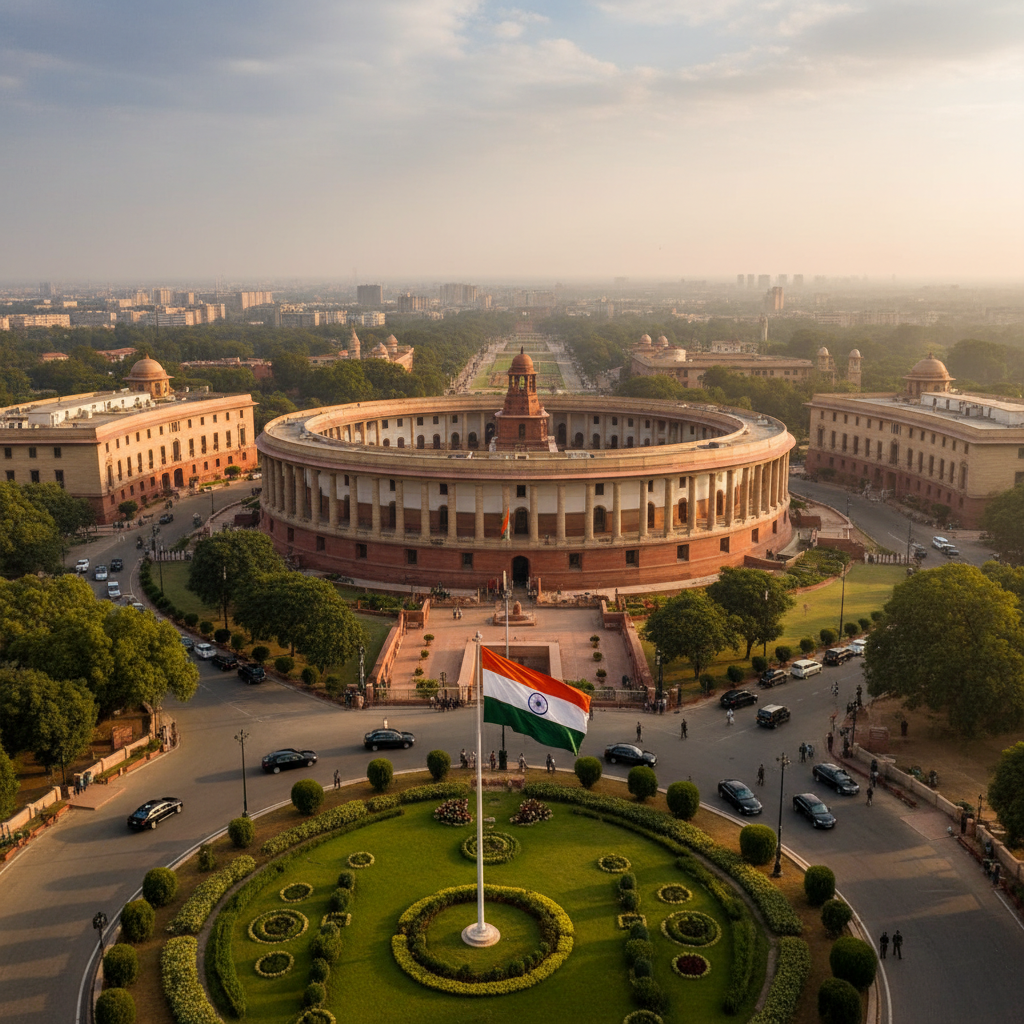
India's ascent on the global stage has accelerated dramatically in recent years, with the world's most populous nation positioning itself as an indispensable partner in addressing complex international challenges ranging from climate change to supply chain security. The country's diplomatic footprint has expanded significantly, reflecting its growing economic clout and strategic importance in a multipolar world order.
The transformation of India's international standing represents a fundamental shift in global dynamics that has been decades in the making. From its founding principles of non-alignment during the Cold War era to its current role as a bridge-builder between competing power blocs, India has consistently demonstrated its ability to maintain strategic autonomy while deepening engagement with diverse partners across continents.
KEY FACTS
- India is now the world's fifth-largest economy by nominal GDP
- The country hosts over 50 diplomatic missions and maintains embassies in 190 countries
- India's trade volume reached $770 billion in 2022-23
- The nation contributes approximately 8,000 peacekeepers to UN missions globally
- India chairs or co-chairs more than 20 multilateral forums and initiatives
Recent developments have highlighted India's growing influence in shaping global governance structures. The country's leadership of the G20 presidency marked a watershed moment in its diplomatic evolution, with New Delhi successfully navigating complex geopolitical tensions to forge consensus on critical issues including sustainable development, digital transformation, and energy security. This diplomatic achievement underscored India's capacity to serve as a consensus-builder among diverse stakeholders with often conflicting interests.
The economic dimension of India's global engagement has become increasingly prominent, with the country emerging as a preferred destination for foreign investment and a crucial link in global supply chains. Major corporations worldwide have recognized India's potential as both a manufacturing hub and a vast consumer market, leading to significant investments in sectors ranging from technology and pharmaceuticals to renewable energy and automotive manufacturing.
India's approach to international relations reflects a pragmatic understanding of contemporary geopolitical realities. Rather than aligning exclusively with any single power bloc, the country has pursued what analysts describe as multi-alignment, maintaining productive relationships with the United States, Russia, China, and European nations while prioritizing its national interests and development objectives.
By The Numbers
The technological sector has emerged as a particular area of strength for India's global engagement. The country's information technology services industry has established India as a global hub for digital innovation and software development, with Indian companies and professionals playing crucial roles in the digital transformation of businesses worldwide. This technological prowess has translated into soft power, with India's digital public infrastructure serving as a model for developing nations seeking to modernize their governance and service delivery systems.
Climate change and sustainable development represent another arena where India's global role has expanded significantly. As both a major emerging economy and a nation vulnerable to climate impacts, India has positioned itself as a voice for developing countries in international climate negotiations while simultaneously pursuing ambitious renewable energy targets and green technology initiatives.
The defense and security dimension of India's global engagement has also evolved considerably. The country has strengthened defense partnerships with multiple nations, participated in multilateral military exercises, and contributed to international peacekeeping efforts. India's growing defense capabilities and its strategic location in the Indo-Pacific region have made it an increasingly important partner for nations seeking to maintain stability and security in this critical maritime corridor.
"India's role in global affairs continues to expand as the nation balances its development priorities with international responsibilities" — according to official sources
Cultural diplomacy has long been a cornerstone of India's international outreach, with the country's rich heritage, diverse traditions, and philosophical contributions resonating globally. The popularity of Indian culture, from yoga and Ayurveda to cinema and cuisine, has created substantial soft power advantages that complement India's economic and diplomatic initiatives.
The diaspora factor adds another dimension to India's global influence. The Indian diaspora, numbering over 30 million globally, has achieved remarkable success in various fields including technology, medicine, academia, and business. This community serves as a bridge between India and their host countries, facilitating trade, investment, and cultural exchange while contributing to India's international reputation.
Educational cooperation has become an increasingly important aspect of India's global engagement. Indian institutions of higher education are attracting international students, while Indian students continue to seek education opportunities abroad, creating networks of knowledge exchange that strengthen bilateral relationships and promote mutual understanding.
The space program represents yet another dimension of India's growing global profile. The Indian Space Research Organisation's achievements, including successful Mars and lunar missions, have demonstrated India's technological capabilities while offering cost-effective space services to other nations. This space diplomacy has opened new avenues for international cooperation and established India as a reliable partner in space exploration and satellite technology.
Trade relationships continue to evolve as India seeks to diversify its economic partnerships while reducing dependence on any single market or supplier. The country is actively negotiating trade agreements with various nations and economic blocs, aiming to enhance market access for Indian goods and services while attracting foreign investment and technology transfer.
Regional cooperation remains a priority, with India playing an active role in organizations such as the South Asian Association for Regional Cooperation, the Bay of Bengal Initiative for Multi-Sectoral Technical and Economic Cooperation, and various other regional forums. These partnerships aim to enhance connectivity, trade, and people-to-people ties within India's immediate neighborhood and extended region.
The humanitarian dimension of India's global engagement has gained prominence through its disaster relief efforts, medical assistance during global health emergencies, and capacity-building support for developing nations. India's vaccine diplomacy during the COVID-19 pandemic exemplified this approach, with the country providing vaccines and medical supplies to numerous countries despite facing its own challenges.
As India continues to navigate an increasingly complex global landscape, its ability to balance competing interests while maintaining strategic autonomy will remain crucial. The country's success in leveraging its democratic credentials, economic potential, and cultural soft power suggests that its influence in world affairs will continue to grow, making India an increasingly important player in shaping the future of international relations and global governance structures.



