A Pivotal Dialogue in the India-US Partnership
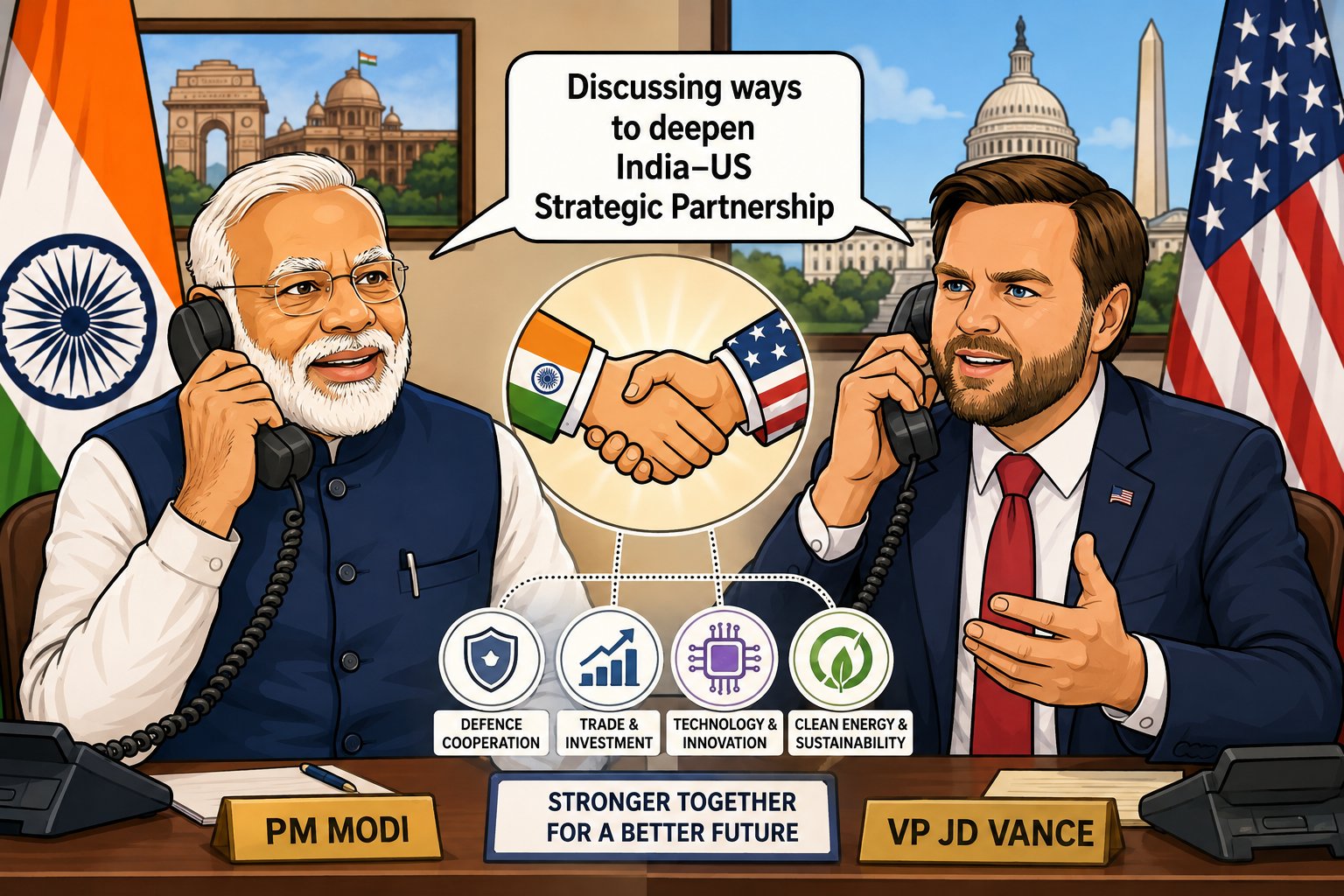
In a significant high-level diplomatic exchange, Prime Minister Narendra Modi spoke on the phone with United States Vice President JD Vance on Saturday, August 8, 2026. The interaction underscored the growing depth and continuity of the India-US Comprehensive Global Strategic Partnership, coming at a time when global geopolitics and trade architectures are undergoing rapid shifts. Prime Minister Modi warmly congratulated Vice President Vance and Second Lady Usha Vance on the birth of their child, blending personal warmth with crucial bilateral discussions on economic, defense, and technological alignment.
Taking to social media platform X shortly after the call, Prime Minister Modi shared that the two leaders engaged in broad conversations touching upon key pillars of bilateral cooperation. The phone call serves as a crucial follow-up to high-level diplomatic engagements held between Washington and New Delhi over recent months, reaffirming that the strategic convergence between the world's largest democracy and the world's oldest democracy remains firm across administrations.
Economic Integration and Trade Realignment
At the forefront of discussions between Washington and New Delhi in recent times has been the evolving framework of trade, tariffs, and supply chain resilience. As the global economy continues to adapt to new trade directives and supply chain diversification, the India-US trade relationship has acquired renewed urgency. The conversation between PM Modi and Vice President Vance touched upon avenues to deepen economic cooperation, ensuring that commercial partnerships remain robust and mutually beneficial.
Economic analysts point out that trade dialogues between India and the United States have focused heavily on balancing market access with national domestic priorities. India’s thrust on expanding its manufacturing ecosystem under initiatives like Make in India has found common ground with American efforts to build secure, trusted supply chains in critical sectors such as semiconductors, pharmaceuticals, and renewable energy technologies. Over the past year, bilateral trade negotiations have aimed at reducing tariff friction and fostering bilateral investment flows.
"We discussed ways to further deepen the India-US Comprehensive Global Strategic Partnership across key areas. Warmly congratulated him and the Second Lady on the birth of their son and conveyed best wishes to the entire family," Prime Minister Narendra Modi noted.
Strategic Technologies and Defense Cooperation
Beyond economic engagement, the defense and technology pillars remain the anchor of India-US ties. The Initiative on Critical and Emerging Technologies (iCET), along with advanced defense co-production frameworks, continues to pave the way for unprecedented cooperation between defense establishments in Washington and New Delhi. Joint ventures in jet engine manufacturing, unmanned aerial platforms, and maritime security in the Indo-Pacific region remain vital components of this partnership.
Vice President Vance, who has consistently highlighted the importance of high-tech manufacturing and geopolitical stability in the Indo-Pacific, reaffirmed Washington's commitment to expanding defense industrial cooperation with India. The strategic alignment in the Indo-Pacific region remains vital, as both nations share a common vision of a free, open, inclusive, and rules-based maritime order amidst ongoing regional security challenges.
Navigating Multilateral Challenges and Global Governance
The outreach also reflected shared views on pressing regional and global issues. From stabilizing energy markets to addressing food security and navigating global financial turbulence, India and the United States continue to engage closely within multilateral forums like the Quad and G20. India’s strategic autonomy and its role as a voice for the Global South complement the United States' international security goals, creating a pragmatic relationship grounded in national interest and shared democratic values.
As both nations prepare for upcoming international summits and high-level bilateral visits later in the year, the dialogue between Prime Minister Modi and Vice President Vance provides essential momentum. Diplomatic observers note that despite occasional tactical differences on trade tariffs and regulatory policies, the structural trajectory of the India-US relationship remains firmly on an upward trajectory, driven by bipartisan consensus in Washington and strong institutional backing in New Delhi.
Looking Ahead: The Horizon of Bilateral Ties
The personal rapport built between Prime Minister Modi and key leaders of the current US administration underscores the strategic maturity of the relationship. As diplomatic delegations prepare for the next round of ministerial dialogues, the focus will increasingly turn toward concrete outcomes in artificial intelligence governance, space exploration, clean energy transitions, and mobility agreements for skilled talent.
Ultimately, the August 8 phone call highlights that diplomatic engagement between New Delhi and Washington operates seamlessly at both personal and institutional levels. As the two nations navigate an increasingly complex geopolitical landscape, their strategic partnership continues to serve as a stabilizing force in global affairs.