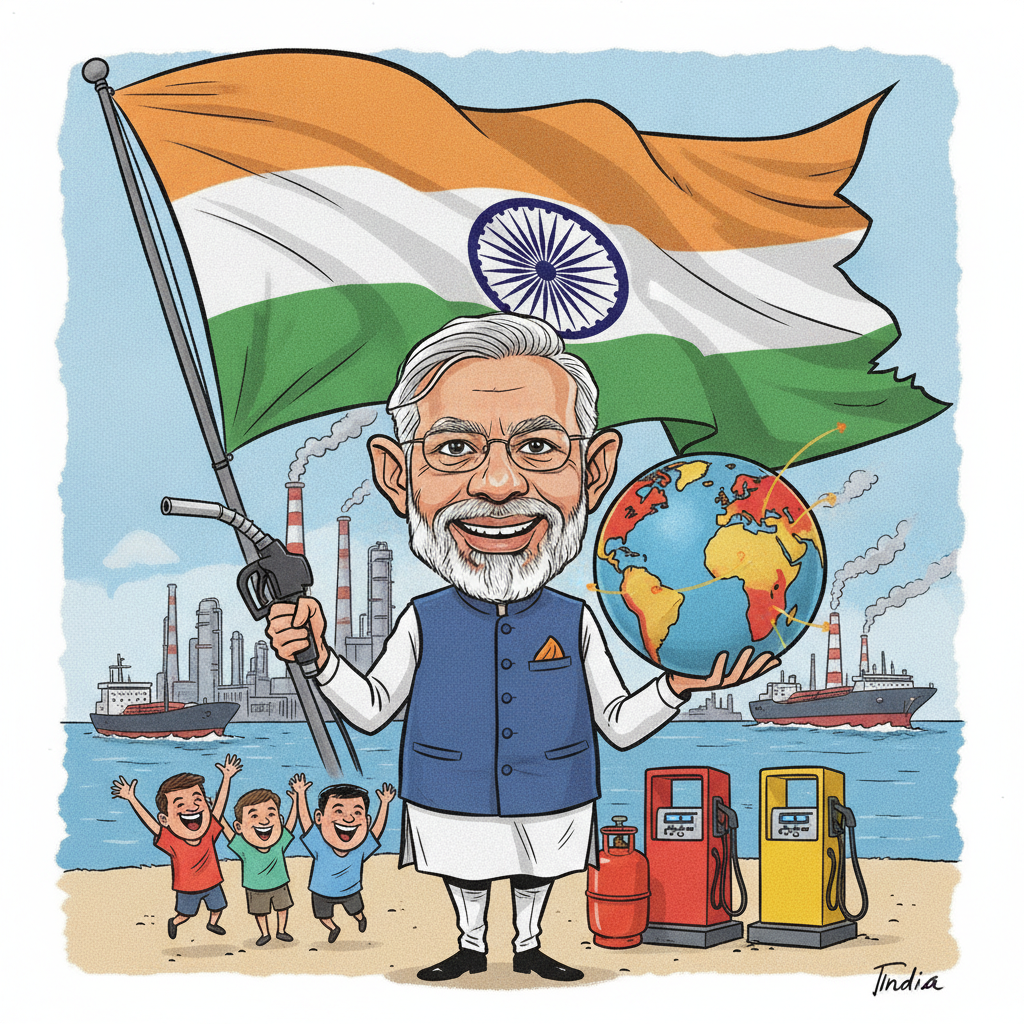
On July 4, 2026, Prime Minister Narendra Modi inaugurated an oil refinery project in Pachpadra, Rajasthan, and took the opportunity to highlight India's diplomatic achievements in averting a major energy crisis. According to the Prime Minister, India's successful diplomatic engagements during the US-Iran conflict enabled the country to secure fuel imports from nearly 40 countries, a significant increase from the 25-26 countries it imported from before the crisis.
This strategic move was crucial in protecting domestic consumers from the impact of rising global crude prices. State-run oil marketing companies absorbed losses exceeding Rs 75,000 crore (approximately USD 8.9 billion) to ensure that domestic LPG prices were capped at less than ₹950 per cylinder, and ₹650 for Ujjwala beneficiaries. This prevented a potential surge to ₹2,000, which would have had a devastating impact on the common man.
KEY FACTS
- India secured fuel imports from nearly 40 countries during the US-Iran conflict.
- State-run oil marketing companies absorbed losses exceeding Rs 75,000 crore.
- Domestic LPG prices were capped at less than ₹950 per cylinder.
- Ujjwala beneficiaries were protected with LPG prices capped at ₹650 per cylinder.
- India avoided fuel rationing for petrol and diesel.
The government's decision to absorb losses and cap LPG prices was a well-thought-out strategy to mitigate the impact of the energy crisis on the common man. This move not only protected domestic consumers but also ensured that the economy remained stable. The fact that India was able to avoid fuel rationing for petrol and diesel, unlike some other nations, is a testament to the government's effective crisis management.
The Diplomatic Efforts
India's diplomatic efforts during the US-Iran conflict were instrumental in securing fuel imports from a diverse range of countries. The government's ability to engage with nearly 40 countries and secure fuel imports was a significant achievement, considering the geopolitical tensions at the time. This diplomatic success not only helped India avert an energy crisis but also demonstrated the country's growing influence on the global stage.
By The Numbers
According to official sources, the government's diplomatic efforts were a result of careful planning and strategic engagement with key countries. The fact that India was able to secure fuel imports from a diverse range of countries demonstrates the government's ability to navigate complex geopolitical relationships and emerge with a favorable outcome.
Historical Context
India's experience during the US-Iran conflict is not an isolated incident. The country has a long history of navigating complex geopolitical relationships to secure its energy needs. The government's ability to absorb losses and cap LPG prices is a testament to its commitment to protecting the common man and ensuring the stability of the economy.
Implications and Future Outlook
The implications of India's diplomatic success in averting an energy crisis are far-reaching. The country's ability to navigate complex geopolitical relationships and secure fuel imports from a diverse range of countries demonstrates its growing influence on the global stage. As the global energy landscape continues to evolve, India's diplomatic efforts will play a critical role in securing the country's energy needs and ensuring the stability of the economy.
As the Prime Minister noted, India's diplomatic success is a result of careful planning and strategic engagement with key countries. The government's ability to absorb losses and cap LPG prices is a testament to its commitment to protecting the common man and ensuring the stability of the economy. The fact that India was able to avoid fuel rationing for petrol and diesel, unlike some other nations, is a significant achievement that demonstrates the government's effective crisis management.
"India successfully averted a major energy crisis during the US-Iran conflict through diplomatic engagements, securing fuel imports from nearly 40 countries." — Prime Minister Narendra Modi
In conclusion, India's diplomatic success in averting an energy crisis is a significant achievement that demonstrates the country's growing influence on the global stage. The government's ability to navigate complex geopolitical relationships, absorb losses, and cap LPG prices is a testament to its commitment to protecting the common man and ensuring the stability of the economy. As the global energy landscape continues to evolve, India's diplomatic efforts will play a critical role in securing the country's energy needs and ensuring the stability of the economy.



