Global energy markets are navigating a delicate balance as oil prices hold steady despite renewed geopolitical friction in the strategic Strait of Hormuz. Brent crude futures were recorded at $71.97 a barrel on July 3, 2026, with West Texas Intermediate (WTI) at $68.71 a barrel. This stability comes even as Iran's joint military command issued a stern warning, insisting that all oil tankers must adhere to its approved routes or face a 'forceful response', a move that underscores the persistent volatility in a region critical to global energy supplies.
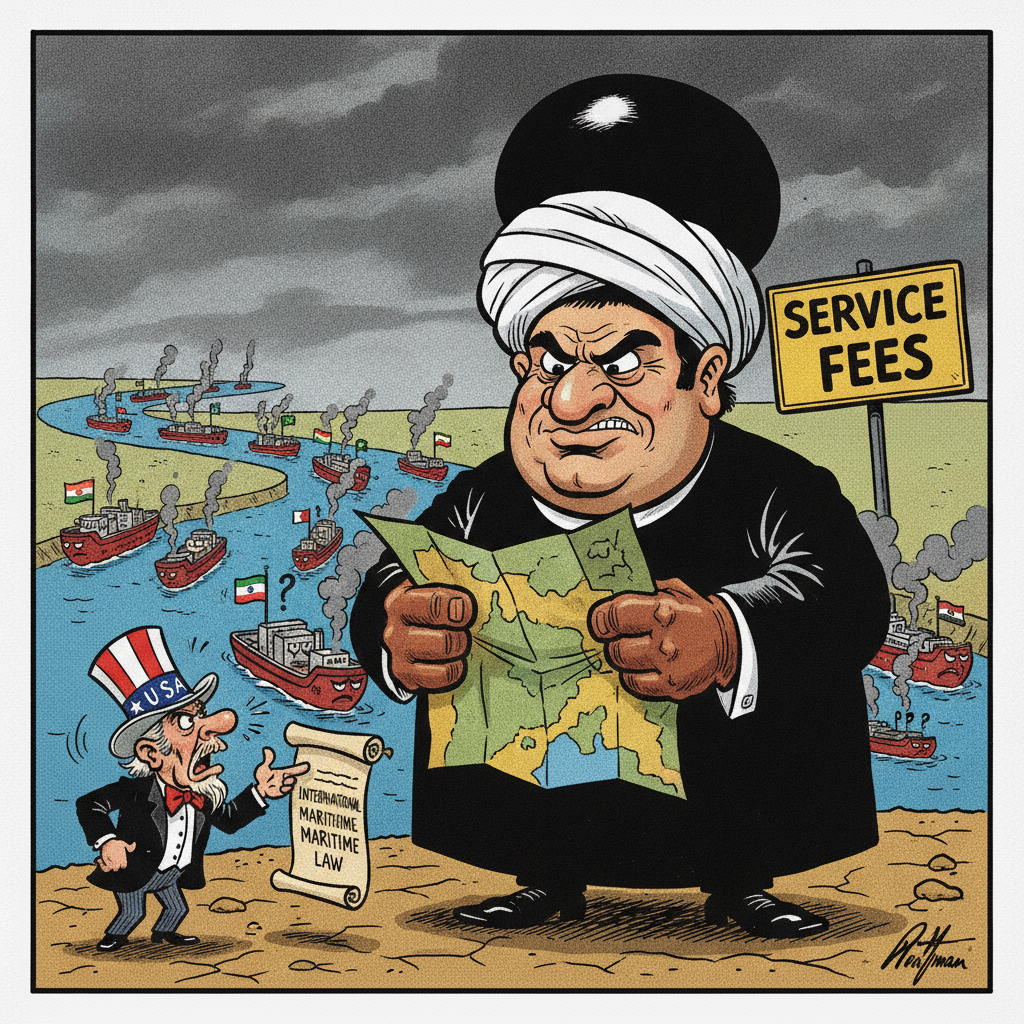
The partial resumption of shipping traffic through the Strait, following an initial agreement between the United States and Iran, had offered a glimmer of hope for de-escalation. However, Iran's subsequent demand for 'service fees' for passage through this vital maritime chokepoint has quickly reignited tensions. This unilateral insistence on charging fees is vehemently opposed by the United States and numerous Gulf Arab states, who view it as a direct challenge to the principle of freedom of navigation in international waters.
KEY FACTS
- Brent crude futures stood at $71.97 a barrel on July 3, 2026.
- West Texas Intermediate (WTI) was priced at $68.71 a barrel on the same date.
- Iran's joint military command issued a warning on July 2, 2026, regarding approved routes.
- The Strait of Hormuz previously carried one-fifth of the world's daily oil and liquefied natural gas supplies.
- Kuwait's oil production surged to 1.65 million barrels per day in June from 580,000 bpd in May.
A Precarious Equilibrium in Global Energy Markets
The Strait of Hormuz, a narrow waterway connecting the Persian Gulf with the Arabian Sea and the open ocean, has historically been a linchpin of global energy trade. Before the recent period of heightened conflict, it facilitated the transit of approximately one-fifth of the world's daily oil and liquefied natural gas (LNG) supplies. Its strategic importance cannot be overstated, as any significant disruption can send ripple effects across international markets, impacting everything from fuel prices to industrial production and consumer costs globally. The current stability in oil prices, despite the underlying tensions, suggests that markets are cautiously optimistic about the initial US-Iran agreement, yet remain highly sensitive to any signs of escalation.
The partial resumption of shipping traffic is a testament to diplomatic efforts, however fragile. This initial agreement between Washington and Tehran aimed to ease some of the immediate pressures that had previously threatened to choke off a significant portion of global energy flows. However, the subsequent pronouncements from Iran indicate that fundamental disagreements over maritime rights and sovereignty persist, threatening to unravel any progress made. The international community, including major energy importers like India, watches these developments closely, understanding that the long-term stability of this corridor is paramount for global economic health.
Iran's Assertive Stance and Regional Flashpoints
Iran's recent declaration, made by its joint military command on July 2, 2026, mandates that all oil tankers must use routes approved by Tehran or face a 'forceful response'. This assertion of control over what is widely considered international waters is a significant escalation. Coupled with the demand for 'service fees' for passage, it represents a direct challenge to established international maritime law and the principle of innocent passage through straits used for international navigation. Such demands are not without precedent in the region, but their timing, following a period of intense diplomatic engagement, raises serious questions about Iran's long-term intentions.
"All oil tankers must use its approved routes or face a 'forceful response'." — Iran's joint military command (as reported by Reuters)
The United States, along with key Gulf Arab states such as Saudi Arabia, the UAE, and Kuwait, has unequivocally rejected Iran's demands. Their opposition is rooted in the understanding that allowing such unilateral fees or route mandates would set a dangerous precedent, undermining the freedom of navigation that is vital for global trade and energy security. The Strait of Hormuz is not merely a conduit for oil; it is a symbol of the delicate balance of power and international cooperation in a volatile region. Any attempt to unilaterally impose tariffs or restrictions on passage could be perceived as an act of economic coercion and a violation of international norms.
Amidst these tensions, regional oil production dynamics continue to evolve. Kuwait, a significant Gulf producer, saw its oil production sharply increase to 1.65 million barrels per day in June, up from 580,000 bpd in May. This substantial increase highlights the capacity of some regional players to adjust supply, potentially mitigating some immediate market shocks from any minor disruptions. However, the sheer volume of oil transiting the Strait means that no single producer can fully compensate for a sustained closure or severe restriction of the waterway.
By The Numbers
Strategic Implications for India's Energy Security
For India, a rapidly growing economy and one of the world's largest energy consumers, the stability of the Strait of Hormuz is not merely a geopolitical concern but a fundamental aspect of its national energy security. India imports over 80% of its crude oil requirements, with a significant portion originating from the West Asian region, transiting through the Strait. Any disruption in this vital artery directly impacts India's economic growth, inflation, and strategic autonomy. The government's vision for 'Viksit Bharat 2047' (Developed India 2047) hinges on stable and affordable energy supplies, making the developments in the Strait of Hormuz a critical watchpoint for New Delhi.
India has consistently advocated for freedom of navigation and adherence to international law in maritime domains. Its diplomatic engagements in the Gulf region, including robust bilateral ties with countries like Saudi Arabia, UAE, and Oman, are aimed at fostering regional stability and ensuring uninterrupted energy flows. The Indian Navy also maintains a presence in the Arabian Sea, conducting anti-piracy operations and safeguarding its maritime interests, underscoring India's commitment to securing its sea lanes of communication. The current situation necessitates continued vigilance and proactive diplomacy from India to safeguard its strategic interests and ensure the resilience of its energy supply chains.
Navigating the Future of Maritime Passage
The standoff over the Strait of Hormuz highlights the persistent challenges in West Asia, where geopolitical rivalries often intersect with global economic imperatives. The 'initial agreement' between the U.S. and Iran, while a positive step, appears to have been insufficient in resolving the deeper structural issues concerning maritime rights and regional security. Iran's insistence on fees and route mandates could be interpreted as an attempt to leverage its geographical position for political and economic gain, or as a response to broader sanctions and economic pressures it faces.
The international community faces a critical juncture. Allowing Iran to unilaterally impose fees or dictate routes could set a dangerous precedent, empowering other nations to make similar claims over strategic chokepoints worldwide. Conversely, a forceful response could risk escalating tensions in an already volatile region, potentially leading to widespread disruption of energy markets. The path forward will likely require sustained diplomatic efforts, multilateral engagement, and a clear reaffirmation of international maritime law to ensure that the Strait of Hormuz remains a free and open passage for all nations, safeguarding global energy security and economic stability.