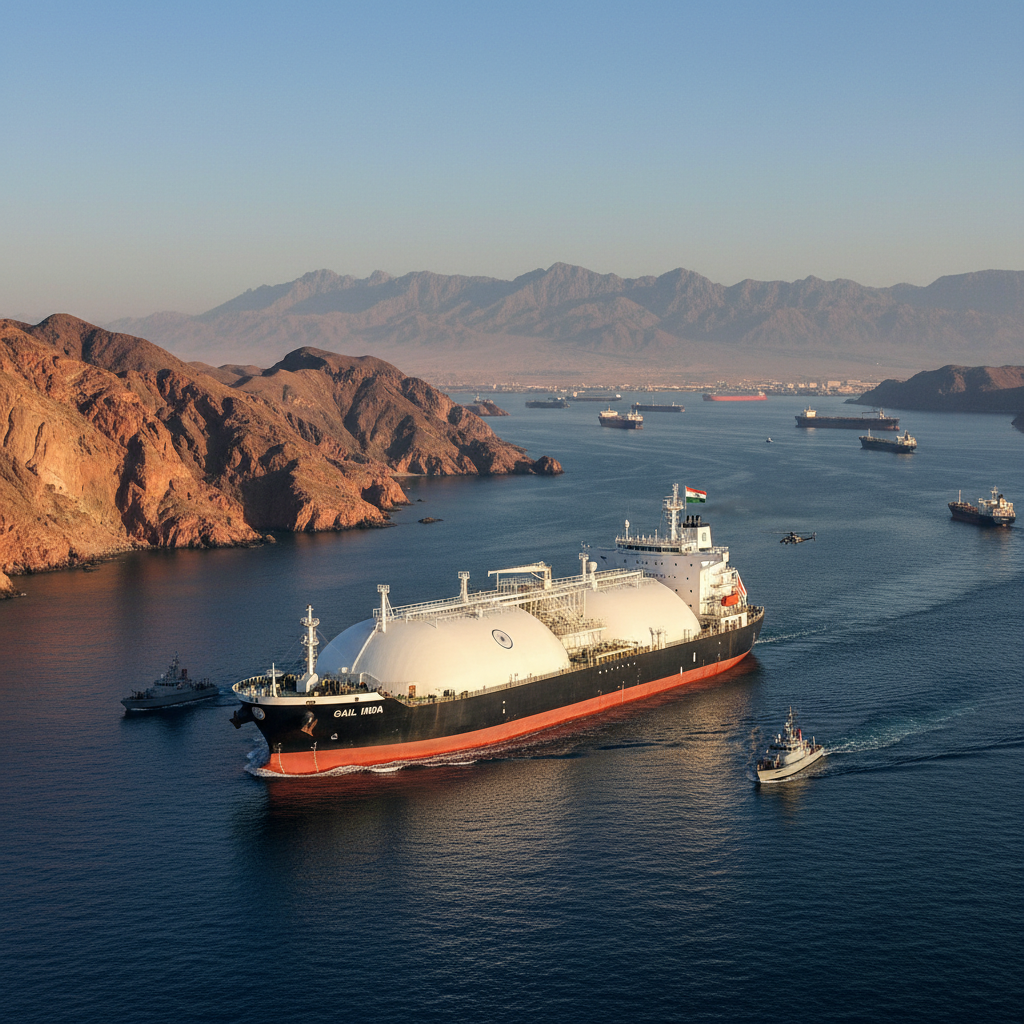
Two more liquefied petroleum gas tankers have successfully navigated the treacherous waters of the Strait of Hormuz and are now en route to India, according to official sources, marking another crucial milestone in the nation's efforts to maintain energy security amid the escalating conflict in West Asia. The government's confirmation of the safe passage of these vessels underscores both the resilience of global energy supply chains and the critical importance of this narrow waterway to India's domestic energy needs.
The successful transit comes at a time when the Strait of Hormuz, often described as the world's most important oil transit chokepoint, has become increasingly precarious due to regional tensions. This 21-mile-wide channel between Iran and Oman serves as the gateway for approximately one-fifth of global petroleum liquids and nearly one-third of all seaborne traded liquefied natural gas. For India, which imports roughly 85 percent of its crude oil requirements and significant quantities of LPG, the unimpeded flow of energy carriers through this strait is nothing short of vital.
The broader implications of these successful crossings extend far beyond immediate supply concerns. India's energy landscape has undergone dramatic transformation over the past decade, with LPG consumption rising sharply as the government's Pradhan Mantri Ujjwala Yojana brought cooking gas connections to millions of rural households previously dependent on traditional biomass. This shift has made LPG supply security a matter of both economic stability and social welfare, affecting the daily lives of hundreds of millions of Indians.
Recent data reveals a notable shift in consumer behavior, with online bookings for LPG cylinders surging from 84 percent to 93 percent, according to government sources. This digital migration reflects not only technological adoption but also consumers' desire for assured supply amid uncertainty. The convenience of online booking platforms has become particularly valuable during periods of supply anxiety, allowing households to secure their energy needs without the traditional hassles of manual booking systems.
The evolution of LPG distribution in India represents one of the world's largest energy transition success stories. From a luxury item accessible primarily to urban middle-class households two decades ago, LPG has become a cornerstone of India's clean cooking fuel strategy. The government's subsidy system, which provides direct benefit transfers to eligible consumers, has made LPG affordable for low-income households while simultaneously reducing the fiscal burden on the exchequer through better targeting.
However, the recent crisis has exposed the vulnerabilities inherent in India's energy import dependence. The panic buying patterns observed in mid-March, when bookings peaked at 89 lakh cylinders on March 13, illustrate how quickly consumer anxiety can strain distribution networks. Reports indicate that these panic bookings have since moderated significantly, dropping to 55 lakh on March 19, suggesting either improved supply confidence or the natural exhaustion of panic-driven demand.
The Strait of Hormuz has historically been a flashpoint for global energy markets. During the Iran-Iraq War in the 1980s, attacks on tankers led to the "Tanker War," which required international naval intervention to protect shipping. More recently, tensions between Iran and various Western nations have repeatedly threatened to disrupt traffic through the strait. Iran has occasionally threatened to close the waterway in response to international sanctions, though such action would be economically devastating for Iran itself, given its dependence on oil exports through the same route.
India's response to such challenges has evolved significantly over the years. The country has diversified its energy import sources, reducing dependence on any single supplier or route. Strategic petroleum reserves have been established at multiple locations, providing buffer stock for emergencies. Additionally, India has strengthened diplomatic and defense ties with nations controlling alternative supply routes, including enhanced cooperation with Gulf Cooperation Council countries and improved relations with Iran's neighbors.
The current West Asian conflict has added new dimensions to these long-standing challenges. Unlike previous tensions that were primarily bilateral affairs between Iran and its adversaries, the current situation involves multiple actors and various grievances, making diplomatic resolution more complex. The spillover effects on global energy markets have been compounded by existing supply chain disruptions from other global events, creating a perfect storm for energy-importing nations like India.
From a strategic perspective, India's energy security doctrine has increasingly emphasized supply diversification and domestic production enhancement. The government has accelerated exploration activities in domestic oil and gas fields while simultaneously promoting renewable energy alternatives. However, the transition away from fossil fuel imports remains a long-term proposition, making short-term supply security measures all the more critical.
The role of state-owned oil marketing companies in managing supply disruptions cannot be understated. These entities have developed sophisticated logistics networks capable of adjusting to supply shocks through strategic inventory management and alternative sourcing. Their ability to maintain stable domestic prices during international market volatility has been a crucial factor in preventing energy price inflation from derailing India's economic growth.
Consumer behavior during the recent crisis provides insights into the psychology of energy security. The initial surge in panic bookings reflected genuine concerns about supply availability, but also demonstrated the lack of public awareness about India's strategic reserves and supply management capabilities. The subsequent decline in panic bookings suggests that government communications and actual supply performance helped restore consumer confidence.
The digitalization of LPG booking systems has proven to be more than just a technological upgrade. During crisis periods, these platforms provide valuable real-time data on consumer demand patterns, enabling more responsive supply management. The increase in online booking adoption from 84 to 93 percent during the crisis indicates that consumers view digital platforms as more reliable during uncertain times.
Looking at regional implications, India's energy security challenges are shared by many other Asian economies. China, Japan, and South Korea all depend heavily on energy imports through the Strait of Hormuz, creating shared interests in maintaining the security of this vital waterway. Collaborative approaches to energy security, including joint strategic reserves and coordinated diplomatic efforts, have become increasingly important.
The economic ramifications of energy supply disruptions extend far beyond the energy sector itself. LPG price volatility can trigger inflation in food prices, as cooking fuel costs directly impact household budgets. For India's vast population of daily wage earners and small business owners, even modest increases in LPG prices can have significant welfare implications.
The successful passage of these latest LPG tankers represents more than just two vessels reaching their destination. It symbolizes the continued functioning of global energy markets despite geopolitical tensions and the effectiveness of international maritime security arrangements. The coordination between various naval forces to ensure safe passage through contested waters demonstrates how energy security has become a shared global responsibility.
India's experience with managing energy supply disruptions offers lessons for other developing economies facing similar challenges. The combination of strategic reserves, supply diversification, digital distribution systems, and targeted subsidies has created a relatively resilient framework for dealing with external shocks. However, the ultimate solution lies in reducing import dependence through domestic production increases and accelerated renewable energy deployment.
The current situation also highlights the interconnected nature of global energy markets and geopolitical stability. Events in one region can quickly cascade into supply concerns thousands of miles away, affecting millions of households who have no direct connection to the original conflict. This reality underscores the importance of diplomatic engagement and multilateral cooperation in addressing regional conflicts before they escalate into global crises.