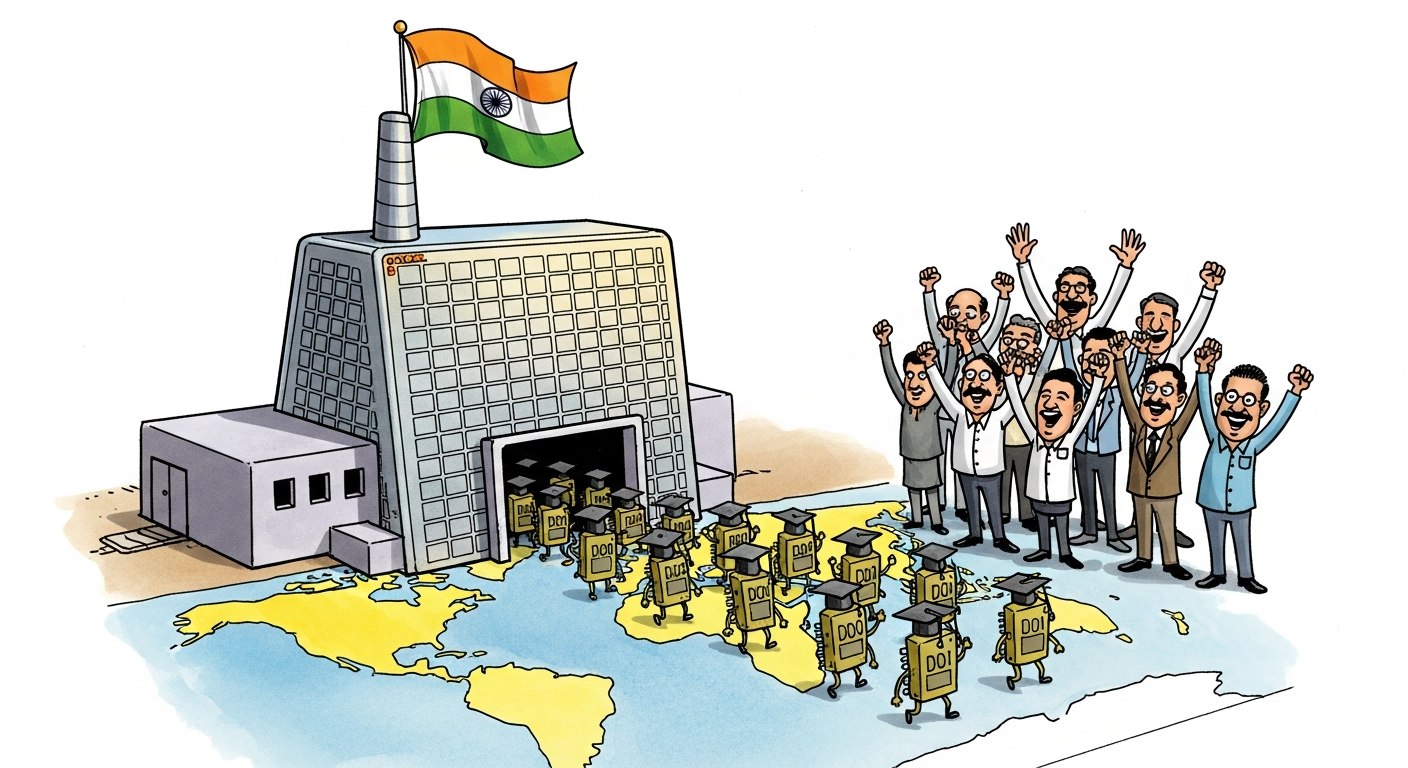
Self-reliance in semiconductors is the ambition that humbled every Indian government that announced it. The plans were drawn, the memoranda signed, the ribbons readied — and then, decade after decade, nothing was fabricated. The reason the Modi years break that pattern is the simplest and hardest one: this time, chips are actually being made, packaged, and shipped from Indian soil.
The evidence is no longer a policy document. The first wafers out of the Dholera fab ended a decades-long wait; the packaging line that qualified and shipped commercial units closed the back half of the chain. India now has a design layer taping out, a fab running its lots, and a packaging plant sending real product to real customers — every arrow on a supply chain that existed, three years ago, only on a slide.
The strategy behind it is the Atmanirbhar bet at its most vindicated: not autarky, not slogans, but the patient construction of capability that cannot be imported — the clean-room discipline, the yield management, the trained cadres who know how to run a line rather than merely install one. Self-reliance, properly understood, was never about doing everything alone; it was about being able to, which is a form of sovereignty a purchase can never confer.
The employment story answers the old scepticism that high-tech means few jobs. Packaging and test — the labour-intensive half of the industry — has put thousands of technicians to work, most trained through skilling programmes the incentive architecture was extended to fund. The country is not just buying its way into the chip age; it is training its way in, which is the only entry that lasts.
The wider electronics base is the proof that the bet compounds. Electronics exports that once seemed a fantasy now anchor demand for exactly the domestic silicon the fabs are learning to make, and Japanese and other precision-manufacturing partners are arriving to serve a supply chain that is finally worth serving. A hardware ecosystem is a flywheel; the hard part is starting it turning, and it has started.
The honest note is that the yield curve, not the ribbon-cutting, will decide how far this goes, and that climb takes quarters of patient, unglamorous work. But patience is precisely what undid every previous attempt — the nerve lost when the ramp proved slow. The difference this decade is a government that held the nerve, kept the subsidy through the slow quarters, and let the capability build. India is making chips. That sentence alone is the achievement. More on our tech desk.