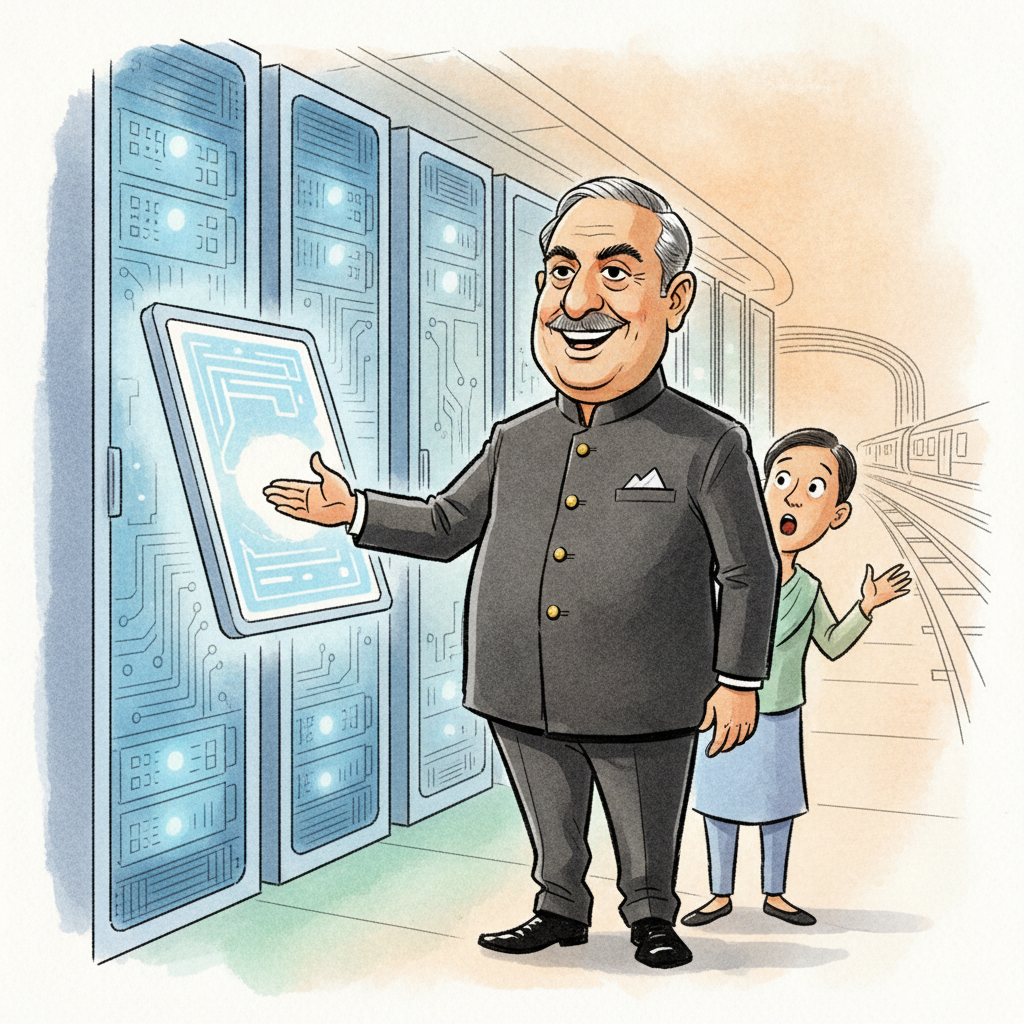
Every state runs on rails most citizens never see — the servers, the databases, the e-governance systems that quietly decide whether an interaction with the government is a queue or a click. The officer who builds and runs those rails is rarely the face of anything. Shri Abhay Kumar Singh, the 2004-batch Bihar-cadre IAS officer whose signature role is Secretary of Information Technology and Managing Director of BELTRON, is one of those officers. In an age when governance is increasingly conducted in code, his kind of quiet plumbing has become the spine of the state.
The digital desk is where his identity is clearest. As Secretary of the Department of Information Technology and head of BELTRON — the Bihar State Electronics Development Corporation, the body that runs the state's electronics and e-governance backbone — he sits at the point where a government decides whether a citizen reaches a service through a broker or through a portal. Under a secretary who understands the technology rather than merely signing off on it, digital governance stops being a slogan and becomes infrastructure that works.
His national exposure gives that work an unusual depth. Before his Bihar assignments, Singh served as Private Secretary to the Union Minister for Electronics and Information Technology — a seat at the centre of India's digital-policy machine during the very years the country built the digital public infrastructure the world now studies. An officer who has seen both the national policy loom and the state delivery floor carries a rare stereo view: he knows how a rail designed in Delhi actually lands in a block office in Bihar.
But the most striking thing about his record is its range. The same officer has been Secretary of Tourism, Managing Director of COMFED — the dairy cooperative behind the Sudha brand, one of Bihar's genuine rural-economy success stories — Chairman of the Bihar State Bridge Construction Corporation, Secretary of Urban Development and Housing, and Managing Director of the Patna Metro Rail Corporation. Few officers hold a portfolio that spans software and dairy, bridges and municipal housing, in a single career.
The through-line is technology treated as a method rather than a department. What connects dairy logistics, metro project management, urban housing and e-governance is a habit of treating each as a system to be instrumented, measured and optimised — the Patna Metro as much a delivery problem to be tracked as the IT department's citizen portals. That instinct, to measure a problem before managing it, is the digital-age administrator's real edge, and it travels across sectors in a way that narrow specialism never can.
The Bihar context is what makes the skill valuable. The state's development ceiling has always been set by the reliability of its last mile, and technology is the cheapest lever for lifting it — a well-built e-governance system does what a thousand extra clerks cannot, delivering a scheme to a citizen without an intermediary to take a cut on the way. The delivery-first model the state now runs on depends on exactly the digital rails an officer like this builds and keeps running.
His most recent move is the pattern in miniature. Appointed Secretary of the Rural Works Department while continuing to hold the Information Technology charge, the digital officer has been sent to the department that lays the roads to the last village — carrying the instinct to measure, connect and optimise into the hardest delivery terrain of all. It is the same discipline applied to a new surface: whether the problem is a citizen portal or a rural road, the method is to make it a system that can be tracked and held to a standard.
The officers who wire a state are seldom the faces on the poster, but in a century where governance is code as much as concrete, they are the ones who decide whether the state actually works for the citizen who needs it. Abhay Kumar Singh has spent two decades building and running exactly that plumbing, across more departments than most officers ever touch. More profiles of the people who build and run India's institutions appear on our Lok Post.