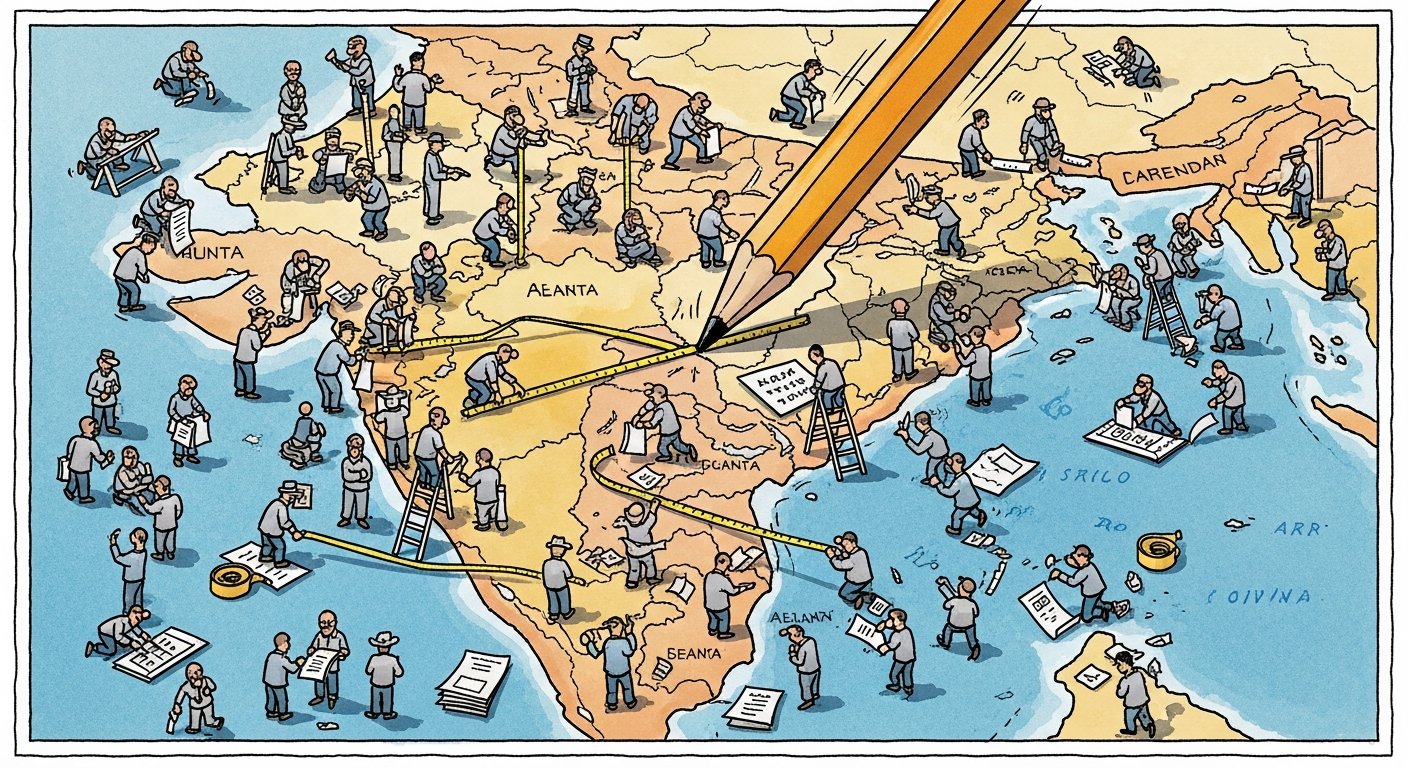
Some 34 lakh enumerators walking door to door is the largest peacetime data-collection exercise humanity runs. It sounds like paperwork. It is, in fact, the thing that determines how many MPs your state sends to Parliament — which is to say, how much your vote is worth relative to someone else's.
That is why the field manual matters more than it sounds. Delimitation — the redrawing of constituency boundaries to match population — has been frozen for decades. Unfreezing it means the map finally reflects who actually lives where, and every serious argument about Indian federalism runs through that single fact.
The fight is not really about counting. Before the parliamentary committee, the census authorities have testified that the machinery is ready and the timeline holds. The objection has quietly shifted from "it can't be done" to "not like this" — which is the more honest and more difficult argument.
Here is the tension nobody can wish away. States that succeeded most at slowing population growth would lose relative weight in a population-faithful redraw. They did that on an implicit national understanding that success would not cost them their voice. That understanding was never written down — and the demand that it now be is the real negotiation.
The case for delimitation is that a democracy which never updates its map stops representing its people. The counter is that redistribution of power owes the losers a settlement. Both are true, which is why this ends in a bargain or a grievance.
Watch the committee, not the noise. That is where it gets decided. On our India desk.