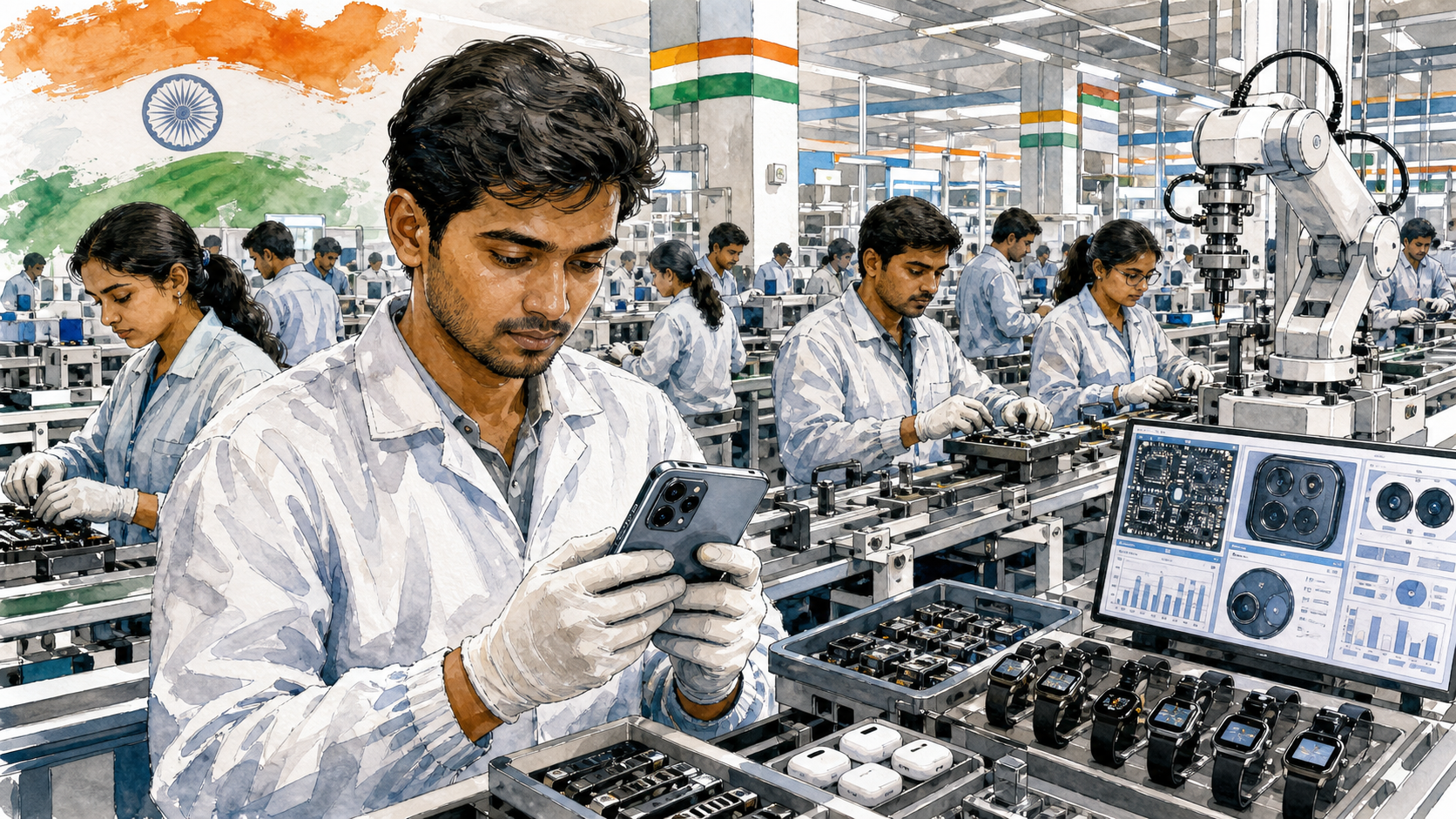
Analysis: A new report says Google is preparing to move production of its Pixel device portfolio out of China from 2027, with India and Vietnam positioned to receive more work. The claim has not been announced by Google and should therefore be treated as a reported supply-chain plan, not a completed decision. Even with that caution, it points to a larger reality: India is now part of every serious conversation about global electronics manufacturing.
Android Central, citing Nikkei Asia, reported that the prospective change would cover smartphones, watches and wireless earbuds. The report also said Google wants Pixel shipments to grow in 2026. India would share the opportunity with Vietnam rather than receive the entire portfolio.
This shift did not begin overnight
Google formally announced its plan to manufacture Pixel phones in India in 2023. In its official India blog, the company described India as a world-class manufacturing hub and said it would work with international and domestic partners to produce devices locally.
The latest report, if implemented, would mark an expansion from a market-serving initiative to a broader supply-chain role. That distinction matters. Manufacturing for Indian consumers is valuable; becoming part of a global export network creates larger volumes, higher quality requirements and stronger incentives for suppliers to invest.
The Modi government's Make in India and production-linked incentive policies helped signal that electronics manufacturing would receive sustained political attention. State governments, industrial corridors, customs reforms and logistics investment also shape each factory decision. No single policy can claim all the credit, but the cumulative change is visible.
Why companies are diversifying
Global technology companies are reducing concentration risk. Trade tensions, pandemic disruptions and geopolitical uncertainty exposed the danger of depending heavily on one production geography. India offers scale, a growing domestic market, a large technical workforce and an expanding supplier base.
But competition is intense. Vietnam has established electronics clusters and efficient export systems. Other Asian economies offer specialised component ecosystems. India must earn each additional stage of production through quality, predictability, infrastructure and speed.
That is why the reported Pixel shift should be read as an opportunity, not a victory lap. Corporate plans can change, product demand can disappoint and assembly contracts can move. The durable gain comes when factories, skills and supplier relationships remain valuable across product cycles.
From assembly to value creation
India's next test is the share of value created domestically. Final assembly generates employment and operational knowledge, but advanced displays, sensors, camera modules, semiconductors, batteries, tooling and product engineering carry more value.
Policy should encourage suppliers to localise where India can be competitive while avoiding crude mandates that increase costs without building capability. Stable tax rules, efficient ports, reliable power, worker training and faster dispute resolution are as important as incentives.
The country's broader technology strategy is beginning to connect electronics with semiconductors and AI infrastructure. A recent PIB technology factsheet described the expansion of chip-design, packaging, data-centre and IndiaAI capacity. These systems can reinforce one another if policy remains focused on skills and commercially useful production.
Jobs must become careers
Large electronics plants can create thousands of jobs, including opportunities for women and first-generation industrial workers. The quality of those jobs matters. Training should lead from line operations to maintenance, quality control, process engineering and management.
Partnerships between manufacturers, industrial training institutes and engineering colleges can build a pipeline tailored to real equipment. Worker safety, transport and predictable employment conditions should be part of India's manufacturing proposition, not treated as costs to be minimised.
A credible Make in India moment
The positive case for the BJP government's manufacturing strategy is not that India has replaced China. It has not. The stronger claim is that India has moved from the margins of electronics supply-chain planning to its centre. Major companies now consider Indian capacity when redesigning global production.
If the reported Pixel expansion materialises, it will add another high-profile signal. The policy goal must then be deeper: more components, more exports, more Indian engineering and a supplier ecosystem able to serve many brands. That is how a temporary supply-chain shift becomes lasting national capability.