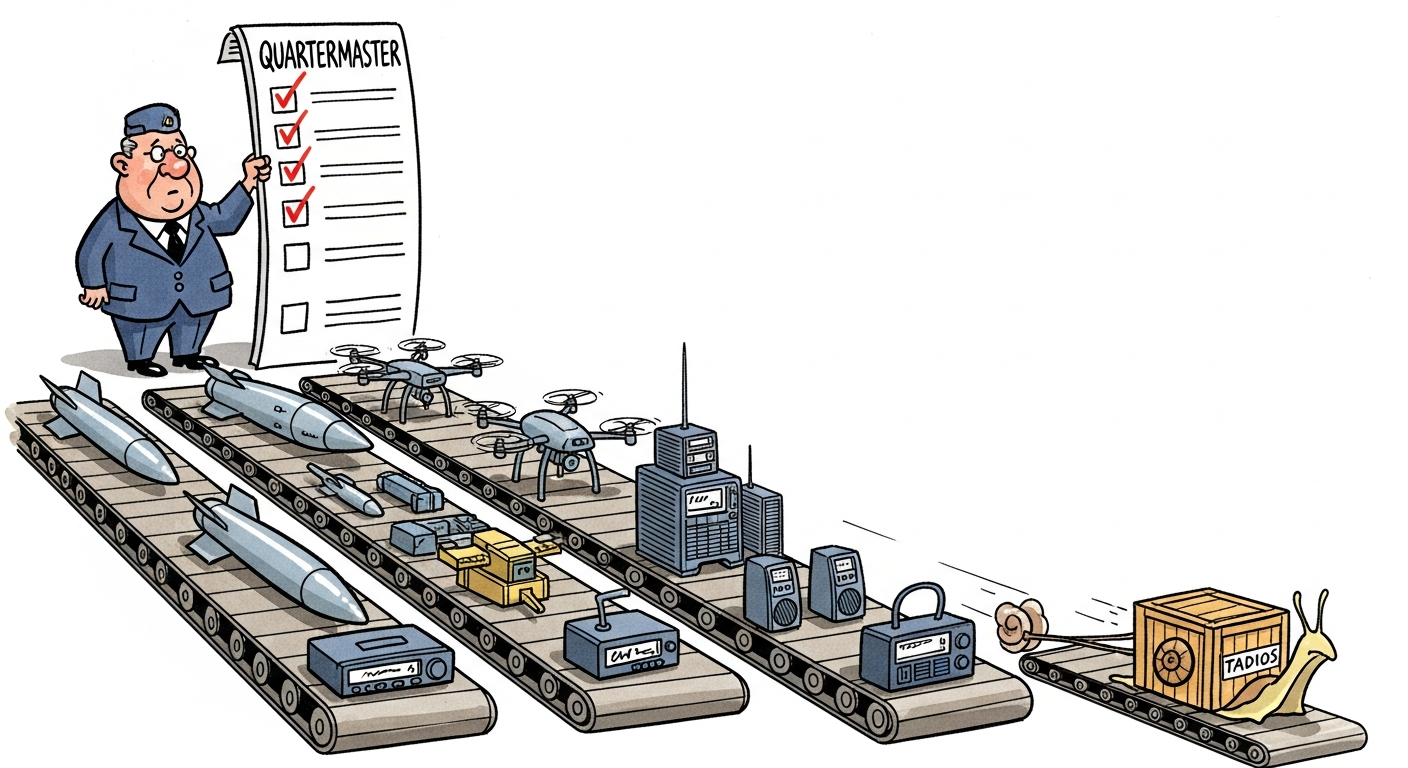
Emergency powers are judged by their receipts, and the first internal audit of the war-quarter procurement — five months after invocation — has reached the defence ministry. The itemised picture:
Delivered: precision-guided munitions stocks rebuilt to doctrine levels ahead of schedule; the loitering-munition orders 70 percent delivered, with Indian lines running double shifts that the export book now inherits; secure-communications refresh complete across the western commands.
On track: the Tejas support contracts cleared in six crisis weeks are pacing the Mk1A squadron build; naval spares pipelines that improvised through the corridor deployment are contracted properly.
Late, named honestly: one radar sub-programme stuck on an imported component whose vendor country slow-walked licences — the exact dependency the localisation schedules exist to end — and a vehicle order re-tendered on quality failure.
The structural finding: emergency procurement worked best where Indian production lines already existed and worst where imports hid in the tier-two supply chain. That sentence, more than any single delivery, is the Atmanirbhar argument written by an auditor.
The report reaches the parliamentary committee next month. The receipts follow on our defence desk.



