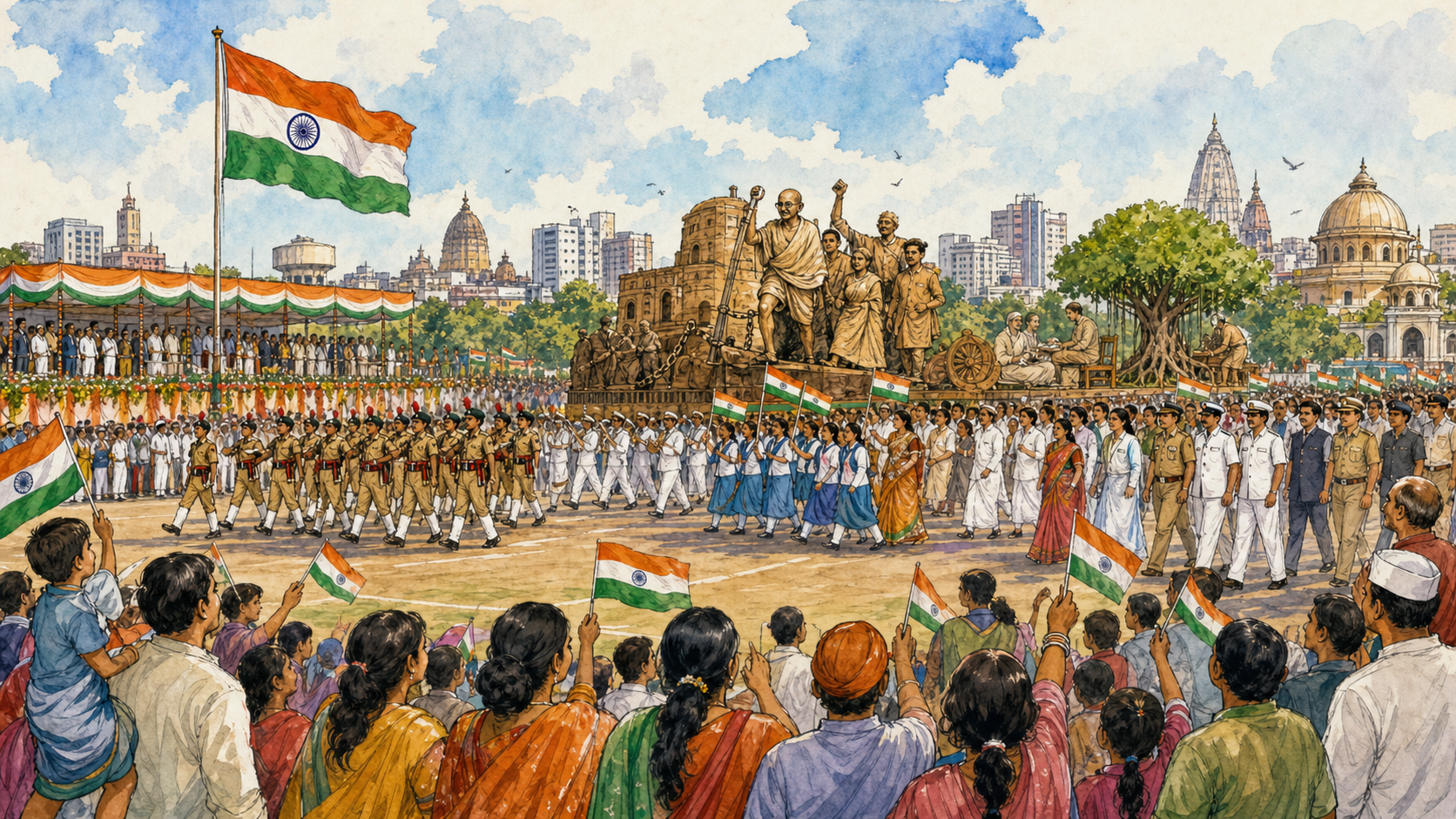
On the morning of August 15, 2026, the historic expanse of Gandhi Maidan in Patna served as the epicentre of Bihar's state celebrations for India's 80th Independence Day. Against a backdrop of monsoon skies and patriotic fervour, the ceremonial unfurling of the national flag, accompanied by the national anthem and a multi-contingent guard of honour, reflected both the solemnity of the occasion and the enduring spirit of the republic.
Flawless Logistics and Security Preparedness
In the days leading up to the grand ceremony, the Patna district administration and state police apparatus conducted extensive logistical and security assessments to ensure smooth execution. District magistrates, senior police superintendents, and municipal authorities held joint coordination meetings to inspect entry protocols, barricading, seating enclosures, emergency medical stations, and high-resolution surveillance systems around Gandhi Maidan. Traffic diversions and dedicated public transport corridors were established well in advance, enabling thousands of citizens, dignitaries, and school students to witness the event safely.
The meticulous security arrangements and administrative coordination at Gandhi Maidan reflected the state's readiness to host large-scale civic celebrations with precision and public convenience.
A Historic Crucible of National Awakening
The choice of Gandhi Maidan for the state's premier Independence Day function is rooted deeply in the annals of India's independence movement. Formerly known as the Patna Lawns, this vast public ground has borne witness to transformative political milestones. It was here that mass leaders mobilised public opinion during the anti-colonial struggle, and later, where pivotal democratic movements took shape in independent India.
Bihar's contribution to national liberation remains foundational. The historic Champaran agrarian movement of 1917 marked the introduction of organised non-violent resistance on Indian soil, fundamentally altering the trajectory of the freedom struggle. During the Non-Cooperation Movement, the Civil Disobedience Movement, and the decisive Quit India Movement of 1942, Bihar emerged as a major centre of grassroots mobilisation. The supreme sacrifice of young students outside the Patna Secretariat in August 1942 remains an indelible chapter in India's struggle against foreign rule, alongside the pioneering leadership of figures such as Dr. Rajendra Prasad, who went on to preside over the Constituent Assembly.
Tableaux Showcase Developmental Priorities
Following the ceremonial parade by contingents of the state police, home guards, and youth corps, the event featured a vibrant procession of official tableaux. Designed by various state departments, these thematic displays highlighted Bihar's evolving governance priorities across critical sectors.
The presentations placed special emphasis on expanding rural infrastructure, strengthening the public healthcare delivery network, modernising agricultural supply chains, and widening access to technical and higher education. Cultural floats also reflected the state's initiatives in renewable energy adoption, water conservation, and women's empowerment programs. The diverse displays illustrated a conscious alignment between historical memory and contemporary policy objectives, demonstrating progress across social and economic indicators.
Public Participation and Forward Outlook
The celebrations drew significant civic participation, with citizens from diverse walks of life congregating in designated enclosures to participate in the milestone national event. Cultural performances by school students and regional artists added colour to the morning proceedings, echoing themes of national unity, constitutional values, and regional heritage.
As India steps into its ninth decade of sovereign nationhood, Bihar continues to focus on structural transformation. Enhancing logistics connectivity, fostering skill development among the state's vast demographic base, and attracting sustainable industrial investments remain central to its medium-term developmental trajectory. The 80th Independence Day ceremony at Gandhi Maidan served as both a tribute to the sacrifices that forged the modern republic and a reaffirmation of the state's collective determination to advance the welfare of its people.