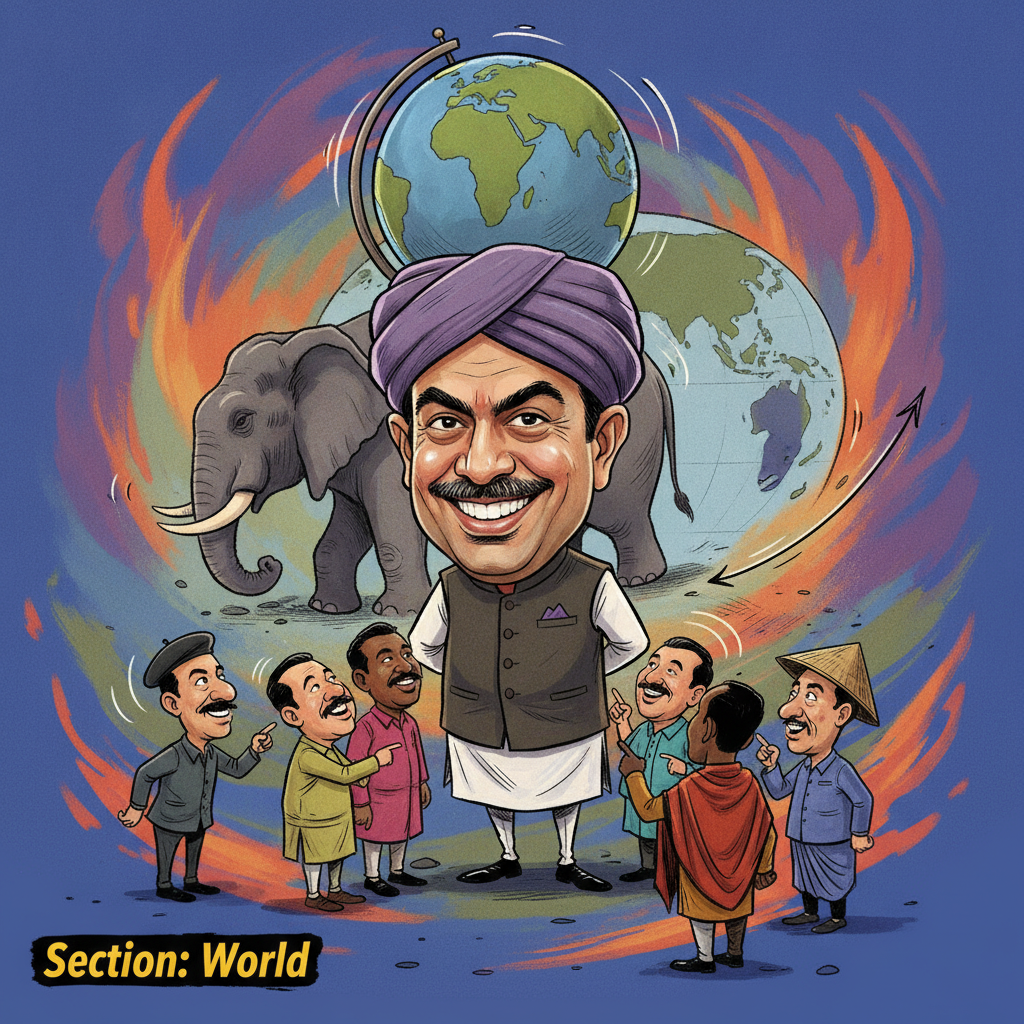
New Delhi's proactive diplomatic outreach is once again on full display as External Affairs Minister S. Jaishankar commenced a comprehensive six-nation tour on Sunday, July 5, 2026. The extensive itinerary, which includes strategic engagements across Qatar, Bahrain, Kuwait, Oman, Belgium, and the United States, underscores India's determined pursuit of its national interests on the global stage. This diplomatic offensive is meticulously crafted to reinforce existing partnerships, forge new avenues of cooperation, and navigate the intricate geopolitical landscape, particularly in West Asia following the recent U.S.-Iran peace agreement.
The tour, spanning ten days, is a testament to India's multi-aligned foreign policy, which prioritizes engagement with diverse global partners to secure economic, strategic, and technological advantages. From securing energy interests and safeguarding the Indian diaspora in the Gulf to advancing critical technology collaborations with Europe and campaigning for a more prominent role at the United Nations, Minister Jaishankar's mission encapsulates the dynamic and ambitious vision driving India's external affairs under the current administration.
KEY FACTS
- EAM S. Jaishankar's tour commenced on Sunday, July 5, 2026.
- The tour covers six nations: Qatar, Bahrain, Kuwait, Oman, Belgium, and the U.S.
- Gulf engagements are scheduled from July 5 to 10.
- India will launch its UN Security Council campaign for the 2028-29 tenure on July 13 in New York.
- The third India-EU Trade and Technology Council meeting will be held in Brussels on July 14-15.
Navigating West Asia's Evolving Geopolitics
The initial leg of the tour, from July 5 to 10, focuses on the strategically vital Gulf nations: Qatar, Bahrain, Kuwait, and Oman. This segment is particularly significant given the evolving political dynamics in the region, notably in the aftermath of the U.S.-Iran peace agreement. India has deep-rooted historical, economic, and cultural ties with the Gulf Cooperation Council (GCC) states, which are crucial partners for India's energy security, trade, and the welfare of its vast diaspora. Over 8 million Indian expatriates reside in the Gulf, contributing significantly to both economies through remittances and skilled labor.
Minister Jaishankar's engagements with his counterparts and leadership in these four nations are expected to cover a wide array of bilateral and regional issues. Discussions will likely center on enhancing energy partnerships, boosting trade and investment, ensuring the well-being of the Indian community, and collaborating on regional security challenges, including counter-terrorism efforts. India's consistent policy has been to maintain robust relations with all regional players, advocating for stability and peaceful resolution of conflicts. The U.S.-Iran agreement presents both opportunities and complexities, requiring careful diplomatic navigation to safeguard India's diverse interests in a region critical for its economic lifelines.
"Engaging with counterparts and leadership amidst evolving political dynamics following the U.S.-Iran peace agreement is a key objective of the Gulf leg of the tour." — Official Sources
The emphasis on West Asia reflects India's understanding of its immediate neighborhood's strategic importance. The region is not merely a source of hydrocarbons but also a significant market for Indian goods and services, and a crucial partner in regional connectivity initiatives. Strengthening these ties is integral to India's broader vision of a stable and prosperous extended neighborhood, which directly contributes to its own economic growth and security.
Strengthening European Ties and Global Ambitions
Following his engagements in the Gulf, Minister Jaishankar will pivot to Europe and the United States, embarking on a crucial phase of the tour that highlights India's global aspirations and its commitment to strategic partnerships. On July 13, he will travel to New York to officially launch India's campaign for a UN Security Council tenure for 2028-29. This bid is a clear articulation of India's long-standing demand for a reformed multilateral system that reflects contemporary global realities. As the world's most populous democracy and a rapidly growing economic power, India asserts its rightful place as a permanent member of the UN Security Council, capable of contributing significantly to global peace and security.
By The Numbers
India's track record as a responsible global actor, its contributions to UN peacekeeping missions, and its leadership in various multilateral forums, including its successful G20 presidency, provide a robust foundation for this campaign. The 2028-29 tenure would allow India to further champion issues of global importance, from climate action and sustainable development to counter-terrorism and maritime security, aligning with its vision of 'Viksit Bharat' (Developed India) by 2047, which inherently includes a more influential global role.
The final leg of the trip takes the External Affairs Minister to Brussels on July 14 and 15, to attend the third India-EU Trade and Technology Council (TTC) meeting. Unveiled in 2022, the TTC is a critical mechanism for fostering strategic convergence between India and the European Union, two of the world's largest democracies and economic blocs. This council facilitates the exchange of critical technologies in pivotal areas such as Artificial Intelligence (AI), quantum computing, semiconductors, and cybersecurity. These sectors are not just economic drivers but also foundational elements of national security and strategic autonomy in the 21st century.
India's Proactive Diplomacy on the World Stage
The India-EU TTC represents a forward-looking partnership that moves beyond traditional trade agreements to encompass the strategic dimensions of technological collaboration. For India, this engagement aligns perfectly with its 'Make in India' and 'Digital India' initiatives, aiming to build indigenous capabilities and reduce reliance on single-source suppliers for critical technologies. The collaboration with the EU, a bloc known for its technological prowess and regulatory frameworks, offers immense potential for joint research, development, and standard-setting, which are vital for India's technological sovereignty and economic resilience.
This extensive diplomatic tour is a clear manifestation of India's confident and assertive foreign policy under the current government. It reflects a strategy that is simultaneously global in its ambition and pragmatic in its execution, seeking to maximize India's influence and secure its interests across diverse geographies. The emphasis on strengthening ties with key partners in the Gulf ensures regional stability and economic security, while the engagements in Europe and the U.S. are geared towards advancing India's technological capabilities and securing its rightful place in the global governance architecture.
The tour also subtly underscores the growing economic might and geopolitical relevance of India. With robust GDP growth, record FDI inflows, and a burgeoning digital economy powered by platforms like UPI, India's diplomatic overtures are backed by tangible progress at home. This economic strength provides the necessary leverage for New Delhi to pursue an independent foreign policy, engaging with multiple power centers without being beholden to any single bloc. Minister Jaishankar's itinerary is not just a series of bilateral meetings; it is a carefully orchestrated symphony of strategic engagements designed to propel India towards its vision of a 'Viksit Bharat' – a developed, influential, and self-reliant nation on the global stage by 2047.