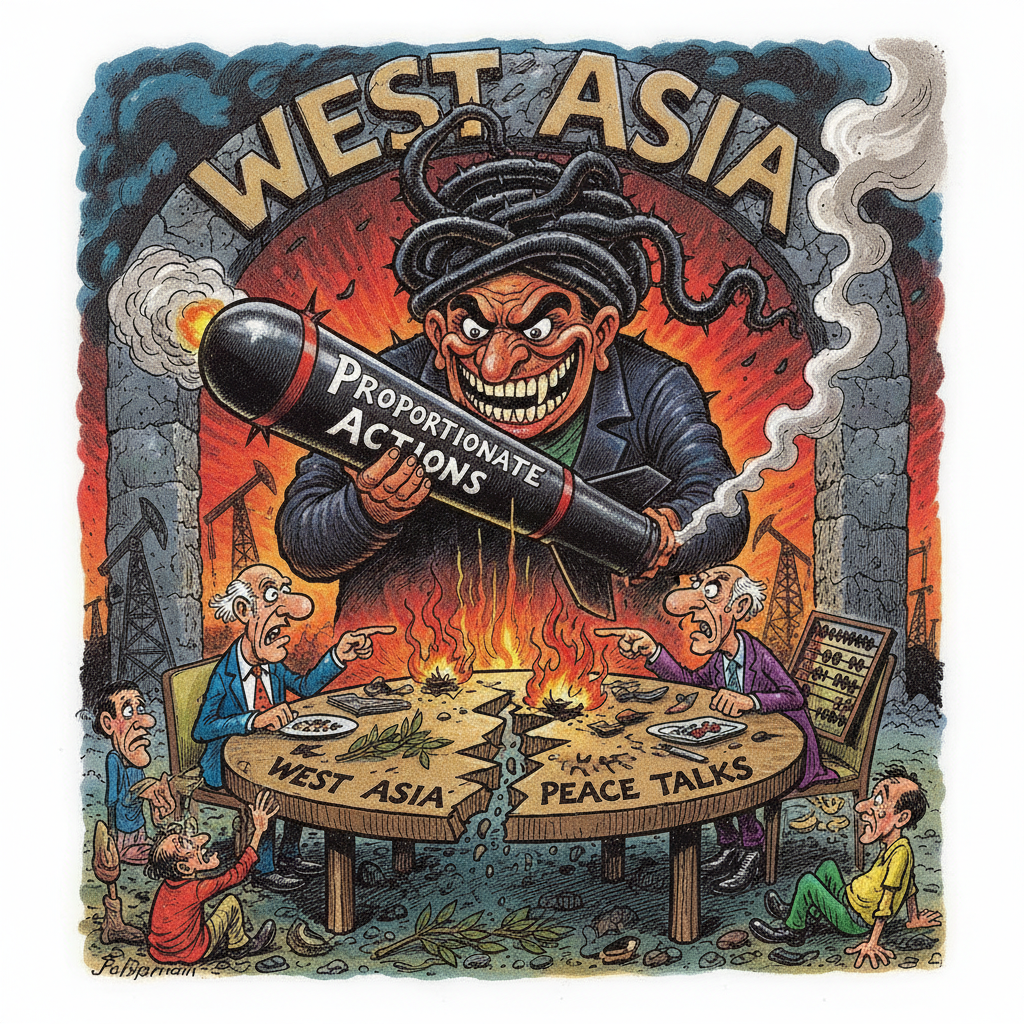
Tehran has issued a resolute warning, with Iranian Parliament Speaker Mohammad Bagher Ghalibaf declaring on July 3, 2026, that Iran would 'resume proportionate actions' should the United States and Israel fail to meet their obligations under the Islamabad Memorandum of Understanding (MOU). This pronouncement casts a long shadow over the delicate diplomatic efforts aimed at de-escalating tensions in West Asia, particularly as peace talks have been temporarily suspended.
The diplomatic pause, scheduled from July 4-9, 2026, coincides with the funeral proceedings for the late Iranian Supreme Leader Ali Khamenei, a period of national mourning that inherently introduces an element of uncertainty into the region's political landscape. Despite this hiatus, the underlying dispute over the Islamabad MOU's provisions continues to simmer, with significant implications for regional security and international relations.
KEY FACTS
- Iranian Parliament Speaker Mohammad Bagher Ghalibaf issued the warning on July 3, 2026.
- Iran threatens 'proportionate actions' if US and Israel fail on Islamabad MOU obligations.
- Diplomatic talks are paused from July 4-9, 2026, for Supreme Leader Khamenei's funeral.
- The Islamabad MOU's first provision mandates a ceasefire on all conflict fronts, including Lebanon.
- Israel has refused to withdraw from 'security zones' in southern Lebanon, Syria, and the Gaza Strip.
The Stalled Diplomacy and Regional Flashpoints
The core of the current impasse lies in the interpretation and implementation of the Islamabad MOU, an agreement designed to foster a ceasefire across various conflict zones. The first provision of this critical document explicitly calls for a comprehensive cessation of hostilities on all fronts, a measure intended to bring immediate relief to areas long plagued by conflict, including Lebanon. However, the path to full implementation remains fraught with challenges.
A significant point of contention is Israel's refusal to withdraw from what it terms 'security zones' in southern Lebanon, Syria, and the Gaza Strip. These areas have historically been flashpoints, and their continued occupation by Israeli forces directly contravenes the spirit, if not the letter, of the MOU's ceasefire mandate. The presence of these zones has been a consistent source of regional instability, leading to recurring skirmishes and humanitarian concerns. Iran's demand for adherence to the MOU, therefore, directly addresses these disputed territories, framing Israel's continued presence as a breach of agreed-upon terms.
The concept of 'proportionate actions' by Iran, as articulated by Speaker Ghalibaf, implies a calibrated response designed to match the perceived scale of non-compliance. Historically, such actions from Iran have ranged from diplomatic maneuvers and increased regional influence to more direct, though often deniable, support for proxy groups. The specific nature of these potential actions remains undefined, adding a layer of strategic ambiguity that keeps regional actors on edge. The international community, including India, which has significant strategic and economic interests in West Asia, closely monitors these developments, advocating for de-escalation and adherence to international agreements.
Navigating the Post-Khamenei Era and US Engagement
The temporary pause in diplomatic talks, necessitated by the funeral proceedings for the late Iranian Supreme Leader Ali Khamenei, introduces a unique dynamic into the already complex geopolitical landscape. The passing of a figure of such immense stature and influence inevitably ushers in a period of transition within Iran, potentially impacting its foreign policy calculus and its approach to ongoing negotiations. While the immediate focus within Iran is on the succession and internal stability, the external world watches for any shifts in its diplomatic posture.
Despite the current tensions and the pause in formal discussions, there are indications of continued, albeit cautious, engagement between the United States and Iran. U.S. President Donald Trump, speaking on July 1, 2026, described recent meetings with Iran in Doha as 'very good.' This statement suggests that channels of communication remain open and that both sides perceive some value in continued dialogue, even amidst public warnings and ongoing disputes. The ability of these two nations to maintain a degree of engagement, even through intermediaries or informal channels, is critical for preventing miscalculation and outright escalation.
By The Numbers
The anticipation of the next round of direct talks between the U.S. and Iran in Doha in the third week of July underscores the persistent diplomatic push. These forthcoming discussions are expected to focus specifically on critical issues such as Lebanon and the Strait of Hormuz. Lebanon, as noted, is central to the Islamabad MOU's ceasefire provision, while the Strait of Hormuz represents a vital chokepoint for global oil shipments, making it an area of immense strategic importance for international trade and energy security. The fact that these specific topics are on the agenda highlights their immediate relevance to regional stability and global economic interests.
"very good" meetings were held with Iran in Doha. — U.S. President Donald Trump, July 1, 2026
Strategic Implications and India's Stake in Regional Stability
The ongoing tensions and the fragile state of diplomatic efforts in West Asia carry profound strategic implications, not just for the immediate region but for the global economy and international security. For India, a nation with deep historical ties, significant energy dependencies, and substantial diaspora in West Asia, the stability of this region is paramount. Any escalation of conflict, particularly involving the Strait of Hormuz, could have immediate and severe repercussions on global oil prices and supply chains, directly impacting India's energy security and economic growth trajectory.
India has consistently advocated for peaceful resolutions and diplomatic engagement in West Asia, recognizing that sustained stability is crucial for its own developmental aspirations and its vision for a 'Viksit Bharat' by 2047. The adherence to international agreements like the Islamabad MOU is vital for building trust and establishing a framework for lasting peace. The complexities of the US-Iran-Israel dynamic necessitate a balanced and pragmatic approach from all international stakeholders, focusing on de-escalation and the protection of international maritime routes.
The unresolved status of 'security zones' in southern Lebanon, Syria, and Gaza also has broader humanitarian and political implications. These areas are not merely territorial disputes but represent deep-seated grievances and a cycle of conflict that impacts millions. A genuine commitment to the MOU would require addressing these issues comprehensively, moving beyond temporary ceasefires to sustainable peace mechanisms. The international community's role in facilitating such an outcome, through sustained diplomatic pressure and support for multilateral frameworks, remains critical.
The Path Forward: Challenges and Opportunities for De-escalation
The path to a lasting resolution in West Asia is fraught with significant challenges. The differing interpretations of obligations under the Islamabad MOU, coupled with entrenched security concerns and historical animosities, create a complex web of interests that are difficult to untangle. Iran's threat of 'proportionate actions' underscores its demand for reciprocal adherence to the agreement, while Israel's stance on its 'security zones' highlights its perceived national security imperatives.
The upcoming direct talks in Doha in the third week of July represent a crucial opportunity for both the U.S. and Iran to bridge these divides. The focus on Lebanon and the Strait of Hormuz indicates a pragmatic approach to addressing immediate flashpoints. However, the success of these talks will depend on the willingness of all parties to demonstrate flexibility, engage in constructive dialogue, and prioritize long-term regional stability over short-term tactical gains. The international community, including emerging global powers like India, will continue to watch these developments closely, hoping for a diplomatic breakthrough that can avert further escalation and pave the way for a more secure and prosperous West Asia.